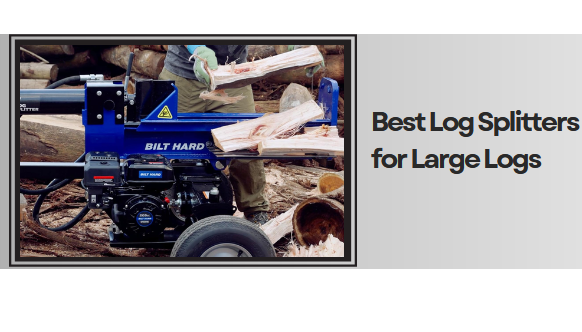
Splitting thick hardwood and oversized logs by hand takes time, effort, and considerable strength, but the Best Log Splitters for Large Logs make firewood preparation faster, easier, and more efficient.
Powerful hydraulic systems, reliable engines, generous log capacity, and short cycle times help these machines tackle demanding splitting jobs with less manual effort. Still, choosing the right model requires careful attention to splitting force, durability, portability, and ease of maintenance.
In this guide, I’ll explore the top picks, their key advantages and drawbacks, the essential factors to consider before buying, and answers to common questions to help you find the right log splitter for your needs and budget.
Our Top Picks at a Glance
- BILT HARD 35-Ton Horizontal/Vertical Gas Powered Hydraulic Full Beam Log Splitter — Best Overall
- Landworks Portable 20-Ton Gas Log Splitter — Best Portable Option
- SuperHandy 20-Ton Hydraulic Log Splitter — Best Compact Option
- BILT HARD 27-Ton Towable Gas Powered Log Splitter — Best for High-Volume Firewood
- SuperHandy Portable 25 Ton Gas Log Splitter — Best Horizontal/Vertical Option
- Ezasin 20 Ton Gas Log Splitter — Best Budget Option
How We Tested the Best Log Splitters for Large Logs
To evaluate the best log splitters for large logs, we focused on the features that affect splitting performance, efficiency, durability, and ease of use. We considered hydraulic splitting force, engine power, cycle time, and log capacity to determine how well each machine handles hardwood, knotty rounds, and seasoned firewood. We also assessed hydraulic pump designs, automatic ram return systems, and wedge construction to understand how efficiently each splitter processes repeated loads.
Portability and operating flexibility were also important. We examined machine weight, wheel design, towing capabilities, and whether each model supports horizontal and vertical splitting. Additionally, we considered assembly requirements, maintenance needs, included fluids, and customer feedback on reliability, build quality, and value for money. This approach highlights the strengths and limitations of each splitter, helping buyers select a machine that suits their workload, log sizes, and available budget.
Best Log Splitters for Large Logs
1)BILT HARD 35-Ton Horizontal/Vertical Gas Powered Hydraulic Full Beam Log Splitter
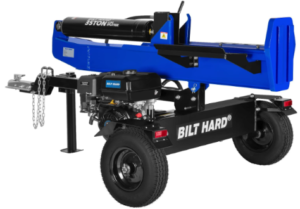
The BILT HARD 35-Ton Horizontal/Vertical Gas Powered Hydraulic Full Beam Log Splitter is designed for demanding firewood preparation, particularly when working with large hardwood logs and stubborn pieces with knots. Its 301cc, 10 HP OHV engine delivers 35 tons of hydraulic splitting force, providing the power needed to process dense wood more efficiently than manual splitting methods.
A two-stage gear pump supplies hydraulic power, while the 8-inch hardened steel wedge handles logs up to 24 inches long. The splitter completes a cycle in approximately 16 seconds, making it suitable for processing substantial quantities of firewood. Additionally, its automatic return mechanism helps streamline repeated splitting operations and reduces the need for manual resetting.
One of its practical advantages is the dual-position design. Operators can switch between horizontal and vertical configurations depending on log size and handling requirements. Horizontal operation suits manageable pieces, whereas vertical positioning helps reduce the need to lift heavy logs onto the beam. The full-beam steel construction also provides a sturdy foundation for demanding workloads.
For transportation, the splitter features 16-inch DOT-certified tires, a 2-inch ball coupler, and 24-inch safety chains. These components support towing behind compatible ATVs or UTVs, with a stated maximum towing speed of 45 mph. Its substantial weight, however, means assembly and positioning may require assistance. The hydraulic system holds approximately 6–7 gallons of oil, although buyers should confirm the reservoir capacity for their specific model.
Best Suited For: This BILT HARD model is best suited to landowners, firewood producers, and homeowners who regularly split large logs or dense hardwoods for heating and other uses. It is particularly useful for preparing winter firewood, managing fallen trees, and handling high-volume splitting tasks. Occasional users with small logs may find its size, weight, and gas-powered operation excessive for their needs.
Specifications
- Engine: 301cc, 10 HP single-cylinder OHV, four-stroke
- Splitting force: 35 tons
- Maximum log length: 24 inches
- Cycle time: Approximately 16 seconds
- Splitting wedge: 8-inch hardened steel
- Hydraulic pump: Two-stage gear pump, 14 GPM
- Operating positions: Horizontal and vertical
- Tires: 16-inch DOT-certified
- Hitch: 2-inch ball coupler with 24-inch safety chains
- Return mechanism: Automatic
Pros
- Splits hardwood or knotty logs with ease
- Switches between horizontal mode or vertical mode in seconds
- Fast 16 second cycle with auto return
- Tows behind an ATV or UTV at up to 45 MPH
- Includes hydraulic oil along with engine oil
- Comes with clear instructions plus an assembly video
- Sturdy full beam steel frame that owners praise for durability
Cons
- Heavy main beam needs a second person or a tractor during assembly
2)Landworks Portable 20-Ton Gas Log Splitter
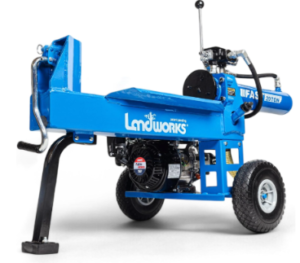
The Landworks Portable 20-Ton Gas Log Splitter is a compact, gas-powered machine designed to make firewood preparation easier for homeowners and property owners handling large logs. Its 7 HP gasoline engine delivers 20 tons of splitting force, while the two-stage Bucher hydraulic gear pump provides the pressure needed to process hardwood rounds. It accommodates logs up to 20 inches long and 16 inches in diameter, making it suitable for many routine firewood tasks.
One of its main advantages is its rapid 7.5-second cycle time, which helps reduce waiting between splits. The automatic return mechanism also simplifies repeated operation, allowing users to maintain a steady pace when processing a large woodpile. Its horizontal full-beam construction and steel splitting wedge support everyday splitting jobs without requiring an electrical connection.
Portability is another practical benefit. Weighing approximately 130 pounds, the splitter features sturdy 10-inch transport wheels that help users move it around a property or between suitable work locations. Its relatively compact design also makes storage easier than with larger, heavy-duty machines. However, its horizontal-only configuration may be less convenient when handling exceptionally heavy rounds that require frequent lifting.
Despite its strong splitting performance, durability is a significant concern. Customer feedback includes reports of hydraulic pump failures, oil leaks, bent cylinder rods, and cracked mounting brackets. Although some owners praise its power, speed, and value, these reliability concerns make long-term performance less predictable. The hydraulic fluid also comes separately, with AW32 recommended, so buyers should account for this additional requirement before operating the machine.
Best Suited For: This Landworks model is best suited to homeowners, small-scale firewood producers, and rural property owners who need a portable splitter for seasonal wood preparation and occasional large-log jobs. Its fast cycle and 20-ton capacity suit users who prioritize mobility and productivity over commercial-grade durability. Those planning frequent, heavy-duty operation should carefully weigh the reported reliability issues before purchasing.
Specifications
- Engine: 7 HP gasoline engine
- Splitting force: 20 tons
- Maximum log length: Approximately 20 inches
- Maximum log diameter: 16 inches
- Cycle time: Approximately 7.5 seconds
- Hydraulic pump: Two-stage Bucher gear pump
- Operating position: Horizontal
- Transport wheels: 10 inches
- Weight: Approximately 130 pounds
Pros
- Splits hardwood rounds with steady power
- Fast 7.5 second cycle with rapid auto return
- Starts easily, even in cold weather
- Light enough to move by hand, fits in an SUV
- Simple assembly with most parts preassembled
- Runs without electricity
- Budget friendly price for a 20 ton machine
Cons
- Many owners report early failures, such as pump breakdowns or bent cylinder rods
3)SuperHandy 20-Ton Hydraulic Log Splitter
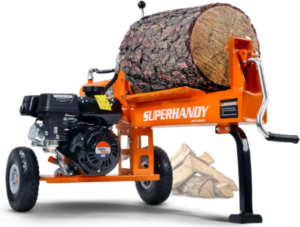
The SuperHandy 20-Ton Hydraulic Log Splitter is a portable, gas-powered machine designed to simplify firewood preparation and handle substantial logs without relying on an axe. It uses a 7 HP AlphaWorks four-stroke OHV engine and a two-stage Bucher hydraulic gear pump to deliver 20 tons of splitting force. The machine accommodates logs up to 20 inches long and 16 inches in diameter, making it suitable for many household firewood tasks involving hardwood and other dense timber.
Its 7.5-second cycle time helps speed up repetitive splitting, while the automatic return mechanism prepares the wedge for the next log. The steel wedge and full-beam frame provide a solid structure for regular use. However, logs wider than the recommended 16-inch diameter can sit unstably in the splitting area, potentially placing excessive strain on the hydraulic cylinder and other components.
Portability is another useful feature. Weighing approximately 130 pounds, the splitter includes 10-inch tubeless polyurethane wheels and a folding handle for easier movement and compact storage. Its gasoline engine also allows operation in outdoor locations without access to an electrical outlet. However, the unit has a fixed horizontal splitting configuration, and its handle supports manual movement rather than towing behind a vehicle.
Buyers should also account for additional setup and maintenance requirements. Hydraulic fluid is not included, and the manufacturer recommends AW32 fluid. Engine oil must also be supplied separately. Although customer feedback frequently praises the machine’s power, assembly, and splitting performance, reports of engine failures, leaking hydraulic hoses, and bent components raise concerns about long-term reliability. Some customers have also reported slow responses from customer support.
Best Suited For:This model is best suited to homeowners, small-scale firewood producers, and rural property owners who need a portable splitter for regular household wood preparation. It can handle many logs up to its rated dimensions, but it is less appropriate for oversized tree rounds or continuous commercial workloads. Buyers who prioritize long-term reliability should carefully consider the reported durability and warranty-support concerns.
Specifications
- Engine: 7 HP AlphaWorks four-stroke OHV gasoline engine
- Splitting force: 20 tons
- Maximum log length: Approximately 20 inches
- Maximum log diameter: 16 inches
- Cycle time: Approximately 7.5 seconds
- Hydraulic pump: Two-stage Bucher gear pump
- Splitting position: Horizontal
- Transport wheels: 10-inch tubeless polyurethane
- Weight: Approximately 130 pounds
Pros
- Splits hardwood or softwood quickly
- Strong power, even at idle speed
- Easy starting, steady operation for hours
- Fast cycle with automatic return
- Light enough for one person to move
- Fits in an SUV or short pickup bed
- Simple assembly with clear instructions
Cons
- Logs wider than 16 inches become unstable in the cradle
4)BILT HARD 27-Ton Towable Gas Powered Log Splitter
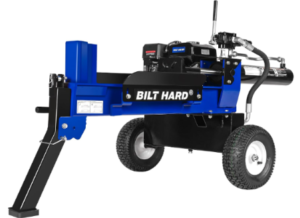
The BILT HARD 27-Ton Towable Gas Powered Log Splitter is designed for demanding firewood preparation, particularly when working with large hardwood logs and seasoned wood. Although the product title advertises a 27-ton model, the supplied specifications identify it as a 22-ton log splitter. Buyers should verify the actual splitting force before purchasing.
Powered by a 209cc four-stroke gasoline engine, this machine delivers 22 tons of hydraulic splitting force. Its two-stage 14 GPM gear pump helps balance speed and pressure, while the seven-second cycle time allows users to process firewood efficiently. This quick operation can reduce the time and physical effort required to prepare large quantities of wood.
The splitter accommodates logs up to 21 inches long and uses a 3.5-inch by 19-inch hydraulic cylinder with a maximum operating pressure of 25.5 MPa. Its heavy-duty steel frame provides a stable base during operation. In addition, the horizontal splitting design keeps the machine in one working position, so it does not offer the flexibility of models that switch between horizontal and vertical modes.
For transport, the unit features 13-inch pneumatic wheels and a removable tow bar. It weighs approximately 274 pounds and has a rated towing speed of up to 25 MPH. Engine oil and hydraulic fluid are included, while the supplied assembly instructions and video help simplify setup. However, its substantial weight means two people may find assembly and initial positioning easier.
Best Suited For:This splitter is best suited to homeowners with large properties, farmers, and firewood users who regularly split bulky hardwood or seasoned logs. It also suits people preparing substantial quantities of firewood throughout the year. Its horizontal-only design and heavy frame may be less convenient for users who need vertical splitting or frequent manual repositioning.
Specifications
- Engine – 209cc OHV four-stroke gasoline engine
- Splitting Force – 22 tons
- Hydraulic Pump – Two-stage 14 GPM gear pump
- Cycle Time – Approximately 7 seconds
- Maximum Log Length – 21 inches
- Hydraulic Cylinder – 3.5 × 19 inches
- Maximum Operating Pressure – 25.5 MPa
- Operating Position – Horizontal only
- Weight – 274 pounds
Pros
- Splits large hardwood and seasoned logs with 22 tons of hydraulic force
- Processes firewood quickly with a 7-second cycle time
- Handles logs up to 21 inches long
- Uses a two-stage hydraulic pump for efficient splitting performance
- Moves around properties on 13-inch pneumatic wheels
- Includes engine oil and hydraulic fluid
- Comes with assembly instructions and a setup video
- Features a sturdy steel frame designed for demanding outdoor work
Cons
- Heavy 274-pound construction can make assembly and repositioning difficult
5)SuperHandy Portable 25 Ton Gas Log Splitter
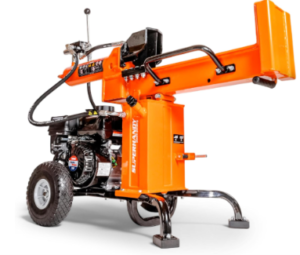
The SuperHandy Portable 25 Ton Gas Log Splitter combines strong hydraulic performance with a compact design for processing large logs around the property. Its 7HP AlphaWorks four-stroke gasoline engine powers a two-stage Bucher hydraulic gear pump, delivering up to 25 tons of splitting force. This setup provides the strength needed for demanding firewood preparation, including splitting hardwood such as oak.
The splitter handles logs up to 20 inches long in horizontal mode and accommodates larger rounds in vertical mode. Its 12-second cycle time supports steady firewood processing, while the automatic return function helps simplify repeated splitting. Switching between horizontal and vertical positions also gives users more flexibility when handling bulky logs, reducing the need to lift heavy rounds onto the beam.
Unlike heavier commercial models, this splitter uses a lightweight half-beam steel frame and weighs approximately 90 pounds. Its 10-inch polyurethane wheels and folding handle make it easier to move and store, although it does not include a towing hitch. Assembly is required, and buyers should arrange the necessary fluids before starting because neither engine oil nor hydraulic fluid comes included. The manufacturer recommends AW32 hydraulic fluid.
Best Suited For:This log splitter is well suited to homeowners, small-scale firewood users, and property owners who need to split large hardwood rounds without handling a heavy commercial machine. Its horizontal and vertical operating positions are useful when processing logs of different sizes, while its portable design suits properties with limited storage space. However, the additional cost of fluids and the assembly requirements should be considered before purchase.
Specifications
- Engine – 7HP AlphaWorks four-stroke gasoline engine
- Splitting Force – 25 tons
- Hydraulic Pump – Two-stage Bucher gear pump
- Cycle Time – Approximately 12 seconds
- Maximum Log Length – Up to 20 inches horizontally
- Operating Modes – Horizontal and vertical
- Wheels – 10-inch polyurethane
- Weight – Approximately 90 pounds
- Hydraulic Fluid – Not included; AW32 recommended
Pros
- Splits large hardwood rounds with up to 25 tons of hydraulic force
- Switches between horizontal and vertical positions for greater flexibility
- Handles logs up to 20 inches long in horizontal mode
- Uses a two-stage Bucher gear pump for consistent hydraulic performance
- Weighs approximately 90 pounds for easier transport and storage
- Features 10-inch polyurethane wheels and a folding handle
- Includes an automatic return function for smoother repeated operation
Cons
- Requires separate purchases of hydraulic fluid and engine oil
6)Ezasin 20 Ton Gas Log Splitter
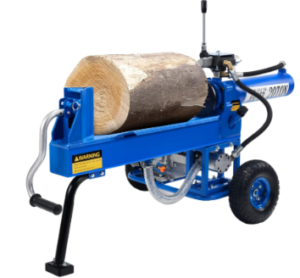
The Ezasin 20 Ton Gas Log Splitter earns a spot among the best log splitters for large logs, as long as those logs stay under 16 inches wide. A 209cc 7 HP engine feeds a 20 ton hydraulic ram. Owners report clean splits through oak, knotty hardwood, and tough rounds. One buyer said it splits oak like cardboard. Another said nothing has refused to split yet.
Speed is a clear plus. A full cycle takes about 8 seconds. The maker rates it at up to 450 logs per hour, though real output depends on how fast you load each piece. The auto return detent valve pulls the ram back after each push. So you shove the handle, load the next log, and keep going. That rhythm cuts fatigue during a long session.
The hydraulic setup matches the work well. A dual stage aluminum gear pump moves the ram fast at first. Then it shifts to high pressure once the wedge meets resistance. Because of this, the engine strains less on tough wood. The 90 degree alloy steel wedge has multi point welds. Reviewers describe the splits as consistent, even on knots.
Moving it around is simple. The machine weighs about 135 pounds. It rolls on 10 inch pneumatic tires and has a folding handle for storage. One person can shift it around a yard, a farm, or a job site. However, no hitch is listed, so plan to pull it by hand.
Prepare a few things before the first run. Hydraulic fluid, engine oil, and gasoline do not come with the unit. You need about 1.6 gallons of AW32 or AW46 hydraulic oil, a small amount of SAE 15W 40 engine oil, and regular 87 octane gas. One owner added almost two quarts of fluid after the first use. Another found a loose nut from vibration, so check every fastener before you start.
Best Suited For:This splitter suits homeowners, small farm owners, and weekend wood cutters who handle logs up to 16 inches wide. It works well for anyone who wants a portable machine with a quick cycle. People who regularly split oversized rounds should pick a model with a larger diameter limit.
Specifications
- Engine: 209cc 7 HP gas, recoil start
- Splitting force: 20 tons
- Cycle time: 8 seconds
- Maximum log size: 20.5 inches long, 16 inches wide
- Hydraulic pump: dual stage aluminum gear pump
- Wedge: 90 degree alloy steel with multi point welds
- Wheels: 10 inch pneumatic
- Weight: about 135 pounds
- Position: horizontal full beam
Pros
- Splits oak or knotty hardwood with ease
- Fast 8 second cycle
- Auto return valve cuts waiting time
- Dual stage pump saves engine strain
- Starts right away in owner reports
- Light enough for one person to move
- Folding handle makes storage simple
- Fair price for the power
Cons
- Logs wider than 16 inches become unstable
You may also like to read: 6 Best 308 Hunting Ammo
Advantages of Using Log Splitters for Large Logs
Powerful Splitting Performance
Log splitters deliver substantial hydraulic force, making it easier to break apart thick hardwood, knotty rounds, and dense seasoned logs. Unlike manual tools, which rely heavily on repeated swinging and physical strength, hydraulic machines apply controlled pressure to split challenging wood. Choosing a suitable splitting force helps reduce frustration when dealing with demanding logs.
Faster Firewood Preparation
A dedicated log splitter can process firewood much faster than manual splitting, particularly when preparing large quantities. Short cycle times help users complete repeated splitting tasks efficiently, while automatic ram return systems reduce unnecessary handling between cycles. These features are valuable for homeowners, farmers, and anyone preparing firewood for regular heating or outdoor use.
Capacity for Large Logs
Log splitters designed for substantial rounds can accommodate longer and wider pieces of wood than many basic manual tools. This makes them useful for processing sections of tree trunks, thick branches, and large hardwood rounds. However, capacity varies between machines, so checking maximum log length and diameter is essential before attempting to split oversized wood.
Reduced Physical Effort
Hydraulic splitting reduces the force users must exert to break apart difficult logs. This can make firewood preparation less exhausting, especially during extended work sessions. Models with vertical splitting capability offer an additional advantage because heavy rounds can remain upright instead of being lifted onto a horizontal beam, reducing the effort required to position bulky wood.
Consistent Results
Hydraulic systems provide controlled splitting force throughout each cycle, helping users process different types of firewood with predictable performance. Two-stage pumps can combine rapid ram movement with increased pressure when the machine encounters resistance. This arrangement supports efficient splitting while reducing the need for repeated manual attempts on stubborn logs.
Improved Productivity for Large Workloads
For properties with many trees or households that rely on wood heating, a log splitter can simplify seasonal firewood preparation. Higher splitting force and efficient cycle times help users work through larger woodpiles with less manual labor. As a result, preparing and storing firewood can become a more manageable task.
Flexible Operation and Portability
Some models offer horizontal and vertical splitting positions, allowing users to choose a suitable setup for different log sizes. Wheels, folding handles, and towable frames can also make moving equipment around a property more convenient. The most suitable design depends on the terrain, available storage, machine weight, and whether the splitter needs to travel between work locations.
Long-Term Value
A durable log splitter can provide years of service when users maintain it correctly and follow operating guidelines. Strong frames, reliable engines, and serviceable hydraulic components help support regular use. Although the initial purchase price can be substantial, frequent firewood users may benefit from reduced manual labor and improved productivity over multiple seasons.
Factors to Consider When choosing Best Log Splitters for Large Logs
Hydraulic Splitting Force
Splitting force, measured in tons, indicates how much pressure a machine can apply to wood. Higher ratings are generally useful for dense hardwood, knotty logs, and difficult grain patterns. Many demanding home and farm applications can be handled by machines in the 20- to 25-ton range, although the ideal capacity depends on the wood being processed. Consider the toughest logs you expect to split rather than choosing a machine based on its tonnage alone.
Engine Power and Type
Engine power affects how effectively a gas-powered splitter drives its hydraulic system during demanding work. Gas engines are useful for outdoor locations without convenient electrical access, while electric models can suit lighter workloads and noise-sensitive environments. Compare horsepower, engine displacement, starting method, fuel consumption, and maintenance requirements. A suitably powered engine helps support reliable operation without adding unnecessary running costs.
Log Length and Diameter Capacity
Maximum log dimensions determine whether a splitter can safely accommodate the rounds you need to process. Check both length and diameter because a machine may accept long logs but struggle with particularly wide pieces. The log cradle and support system also matter, since they help keep wood stable during splitting. Always remain within the manufacturer’s stated capacity and avoid logs that cannot be positioned securely.
Cycle Time and Hydraulic Pump
Cycle time describes how long the ram takes to complete its movement and return to its starting position. Shorter cycles can improve productivity when processing large quantities of wood, although actual output also depends on log handling and wood density. Two-stage hydraulic pumps help balance rapid movement with the higher pressure needed to split resistant timber. Compare cycle time alongside splitting force to find a suitable balance of speed and power.
Horizontal and Vertical Operation
Horizontal splitters process logs positioned on a beam, while vertical models allow suitable rounds to be split upright. Machines that support both orientations provide greater flexibility when handling heavy logs that are difficult to lift. Horizontal-only models may be adequate for smaller, manageable rounds. Consider the size and weight of your typical logs, your preferred working position, and the effort needed to change modes.
Build Quality and Durability
A robust steel frame, reliable hydraulic components, and a well-constructed wedge help a splitter withstand repeated pressure. Examine the beam, cylinder, wheels, fasteners, and general assembly quality when comparing machines. Customer feedback can reveal recurring issues such as hydraulic leaks, excessive vibration, loose hardware, or premature wear. Regular inspections and proper maintenance also contribute to safe operation and a longer working life.
Portability and Transportation
Weight, wheel size, handle design, and towing provisions affect how easily a splitter can be moved between work areas. Lighter models may be easier to reposition manually, whereas heavier machines can require additional help during setup. If transportation behind a vehicle is important, verify that the machine includes an appropriate towing arrangement and follow its rated speed limits. Wheels alone do not mean a splitter is suitable for road towing.
Maintenance, Safety, and Overall Cost
The purchase price is only one part of the overall cost of owning a log splitter. Consider fuel, engine oil, hydraulic fluid, replacement parts, and routine servicing. Some machines require buyers to supply essential fluids before the first use, so check the specifications and manual carefully. Also assess assembly instructions, parts availability, and safety features. Wear appropriate protective equipment, keep bystanders clear, and never bypass the machine’s safety mechanisms.
FAQs
How Much Splitting Force Is Needed for Large Logs?
The required splitting force depends on the wood species, moisture content, grain pattern, knotting, and log dimensions. Machines rated around 20 to 25 tons can handle many demanding home and farm firewood tasks, provided the logs remain within the machine’s stated limits. Denser, twisted, or oversized rounds may require a higher-rated splitter. Always consider both tonnage and maximum log capacity when choosing a model.
Are Gas-Powered Log Splitters Better for Large Logs Than Electric Models?
Gas-powered splitters are often suitable for demanding outdoor work because they operate independently of an electrical outlet and are available in high-force configurations. Electric models can be quieter and convenient for lighter workloads near a power source. Neither type is automatically best for every user. Compare splitting force, log capacity, portability, noise, maintenance, and expected workload before deciding.
Is a Horizontal or Vertical Log Splitter Better for Large Logs?
A splitter with both horizontal and vertical modes offers greater flexibility when working with different log sizes. Vertical operation can reduce the need to lift heavy rounds onto a beam, while horizontal operation works well for logs that are easier to position. A horizontal-only model can still be effective for logs within its capacity. Choose according to the size and weight of your usual rounds and the machine’s operating limits.
Conclusion
The best log splitters for large logs combine powerful hydraulic systems, capable engines, suitable log capacity, and efficient cycle times to make demanding firewood preparation faster and less physically strenuous. Features such as two-stage pumps, automatic ram return, durable steel frames, and practical mobility systems can further improve usability. However, splitting force alone does not determine whether a machine is suitable; maximum log dimensions, operating positions, maintenance requirements, and overall cost also matter. By comparing these factors with the type and quantity of wood you regularly process, you can choose a log splitter that delivers dependable performance for your home, farm, or property.

Moran is an outdoor gear reviewer with a passion for testing and evaluating equipment that enhances real-world adventures. With a focus on accuracy, durability, and performance, Moran provides honest insights to help readers choose the right gear for their needs. From optics and hunting equipment to everyday outdoor essentials, each review is built on careful research and practical understanding. Moran’s goal is to simplify buying decisions by delivering clear, reliable, and experience-driven recommendations.