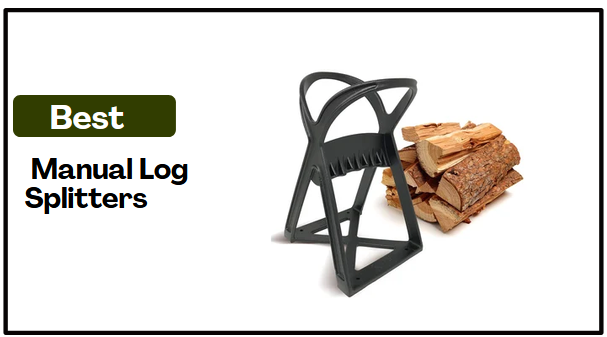
Splitting firewood does not always require fuel, electricity, or a heavy powered machine. I find the Best Manual Log Splitters useful because they offer a practical, economical way to prepare firewood while giving me control over each split. Depending on the design, these tools can handle kindling, small logs, or larger pieces using hydraulic pressure, a fixed wedge, or manual striking force. Must-have features include sturdy construction, suitable splitting capacity, stable bases, safe operation, portability, and easy maintenance. In this guide, I’ll cover the key features of the Best Manual Log Splitters, highlight my top picks, explain the factors to consider when choosing one, and answer common FAQs.
Our Top Picks at a Glance
I have reviewed the following Best Manual Log Splitters:
- Sun Joe Cordless Manual 10 Ton LJ10M Hydraulic Log Splitter — Best Overall
- ESTWING 5 lb Sure Split Wedge — Best Heavy-Duty Wedge
- KABIN Kindle Quick Log Splitter — Best for Kindling
- Kindling Splitter L Cast Iron Manual Wood Splitter — Best Budget
- Kindling Cracker King XL Cast Iron Kindling Splitter — Best Premium Option
- Fiskars X27 Super Splitting Axe — Best Long-Handle Option
- SPEED FORCE Firewood Kindling Log Wood Splitter — Best Compact Option
How We Tested the Best Manual Log Splitters
I evaluated the Best Manual Log Splitters by looking at their splitting performance, construction, ease of use, portability, and suitable wood sizes. I also considered how each tool handles different types of wood, including seasoned, green, dense, knotty, and cross-grained pieces. In addition, I assessed the effort required to operate each splitter and the type of striking tool needed. Stability also mattered, especially for models that require mounting or securing before use. Finally, I considered storage, safety features, durability, accessories, and the type of user each splitter suits. This approach helped identify options for kindling, occasional firewood preparation, and larger manual splitting tasks.
Best Manual Log Splitters
1)Sun Joe Cordless Manual 10 Ton LJ10M Hydraulic Log Splitter
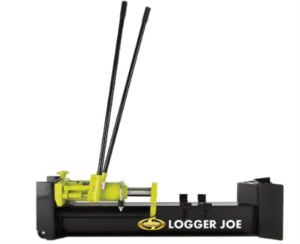
The Sun Joe Cordless Manual 10 Ton LJ10M Hydraulic Log Splitter is a manually operated hydraulic log splitter designed to handle firewood without gas, electricity, or batteries. It delivers up to 10 tons of hydraulic force, allowing it to split logs up to 18 inches long and 8 inches wide. Its hand-operated two-speed pump provides a practical way to work through tough timber while avoiding the fuel and electrical requirements of powered equipment.
A solid steel frame and steel beam give the splitter a sturdy structure for outdoor wood-splitting tasks. The fixed steel wedge uses a two-stroke action, letting the operator choose between easier and harder strokes depending on the resistance of the log. A built-in cradle also helps keep split pieces from falling away during operation.
For portability, the LJ10M includes rear wheels and a compact upright design that takes up relatively little storage space. However, its 87–97-pound weight makes it fairly heavy to move, particularly across uneven ground. The small wheels are better suited to smooth, level surfaces, while a separate dolly may make transportation easier.
The splitter also includes a ram return spring that helps reset the ram between logs. This supports repeated splitting without manually repositioning the ram each time. Still, the manual operation requires noticeable upper-body effort, and the splitting process can take around 30–40 seconds per log. Therefore, it is more suitable for homeowners handling smaller quantities of firewood than for large-volume wood processing.
Best Suited For:The Sun Joe LJ10M is most suitable for homeowners, campers, and users who split roughly one or two cords of firewood per season. It can work with hardwoods such as oak, mesquite, and knotty pine, although resistant or irregular logs may occasionally stick. Users with limited grip strength, arthritis, or difficulty moving heavy equipment may find its manual operation and weight challenging.
Specifications
- Splitting force: Up to 10 tons
- Log capacity: Up to 18 inches long × 8 inches wide
- Hydraulic system: Manual two-speed hand pump
- Wedge: Fixed steel wedge with two-stroke action
- Construction: Solid steel frame and beam
- Mobility: Rear wheels
- Weight: Approximately 87–97 pounds
- Power source: Manual operation
- Storage: Compact upright design
Pros
- Provides substantial hydraulic force without fuel or electricity
- Handles logs up to 18 inches long
- Can split several types of tough hardwood
- Two-speed pump provides greater control during splitting
- Built-in cradle helps keep split wood in position
- Return spring speeds up ram resetting
- Wheels assist with movement on suitable surfaces
- Compact design simplifies storage
Cons
- Heavy weight makes transportation difficult
2)ESTWING 5lb Sure Split Wedge
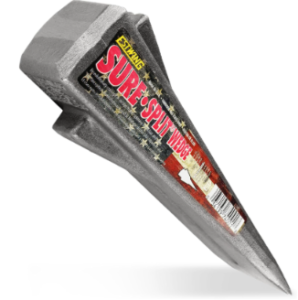
The ESTWING 5 lb Sure Split Wedge is a solid steel splitting wedge designed for breaking apart logs and firewood that may be difficult to split with an axe alone. Its 5-pound forged steel construction provides substantial striking weight, while the wedge-shaped profile helps drive deeper into resistant wood when used with a suitable sledgehammer or maul.
Its fin splitting design adds outward pressure as the wedge enters the log. This helps widen the split with each strike. The base also has a hand-sharpened cutting edge that fits into an existing crack or groove, making it easier to position the wedge accurately before striking.
The E-5 uses a one-piece forged steel construction for repeated impact. Its compact 9-inch length also makes it practical to carry for outdoor wood-splitting tasks. Estwing has manufactured its tools in Rockford, Illinois, since 1923, and this wedge continues that American-made construction approach.
However, the wedge is only one part of the splitting setup. You need a separate sledgehammer or maul to drive it into the wood, with heavier striking tools generally being more suitable for dense hardwood. Some users also report that the wedge can bounce out, particularly once the fins engage, while others find that the edge needs sharpening before use.
Best Suited For:The ESTWING E-5 is most suitable for campers, hunters, outdoor enthusiasts, and homeowners who occasionally split stubborn logs by hand. It can work with seasoned or green wood, including harder species such as oak, maple, and birch. However, users should expect significant physical effort, especially when working with large or dense logs.
Specifications
- Head weight: 5 pounds solid steel
- Overall length: 9 inches
- Cutting edge: 1-7/8 inches, single edge
- Blade material: Forged alloy steel
- Construction: One-piece forged steel
- Design: Flared fin wedge
- Dimensions: 8.88 × 2.5 × 1.75 inches
- Made in: Rockford, Illinois, USA
- Warranty: Manufacturer warranty included
Pros
- Heavy forged-steel construction handles repeated striking
- Fin-shaped sides help force the wood apart
- Hand-sharpened edge fits into established cracks
- Works with seasoned and green wood
- Suitable for many hardwood species
- Compact size makes it convenient for outdoor use
- Can also serve as a felling wedge in suitable situations
- Provides an affordable manual splitting option
Cons
- May bounce out of the log during use
3)KABIN Kindle Quick Log Splitter
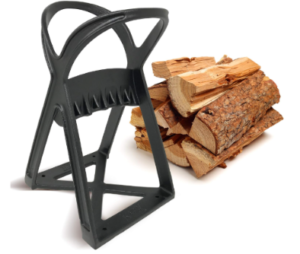
The KABIN Kindle Quick Log Splitter is a compact manual tool designed primarily for turning firewood into smaller pieces and kindling. Rather than relying on a conventional exposed cutting blade, it uses a pressure-splitting design with angled, alternating teeth. A mallet or sledge drives the wood into the splitting point, making it useful for users who prefer a controlled manual method.
Its extra-wide opening accommodates logs up to 6 inches in diameter, while the 15.5-inch-tall design provides room for longer pieces. The slanted teeth help guide the wood through the splitting area and are designed to reduce jamming. However, larger logs generally need to be split into smaller sections before they will fit.
The splitter is made from 12 pounds of cast steel and has an all-weather matte finish. Its X-shaped base provides a stable platform, while four mounting holes allow it to be secured to a stump or another suitable anchor. Bolting it down can provide greater stability during repeated use.
Curved handles make the KABIN easier to carry between locations. The base can also hold split wood, allowing users to move kindling after completing the job. This portability makes the tool particularly practical for campsites, cottages, RV trips, and occasional home firewood preparation.
Best Suited For: The KABIN Kindle Quick is best suited to homeowners, campers, and outdoor users who need to prepare small and medium-sized pieces for fireplaces, wood stoves, or campfires. It works most effectively with appropriately sized wood rather than large or very dense logs. Users should also have a 4–8 pound mallet or sledge available, as the striking tool is not included.
Specifications
- Weight: 12 pounds
- Dimensions: 10.25 × 9 × 15.5 inches
- Log capacity: Up to 6 inches in diameter and 15.5 inches long
- Material: Cast steel
- Splitting design: Slanted, alternating teeth
- Base: X-shaped frame with four mounting holes
- Operation: Mallet or sledge driven
- Handles: Curved carrying handles
- Finish: Matte black, all-weather coating
Pros
- Designed specifically for making kindling
- No conventional sharp blade is exposed during operation
- Wide opening accommodates medium-sized logs
- Tall design supports longer pieces
- Cast-steel construction provides a substantial structure
- Mounting holes allow the base to be secured for added stability
- Curved handles simplify carrying
- Base can also hold wood during transport
- Requires no blade sharpening during normal use
Cons
- Limited to logs around 6 inches in diameter
4)Kindling Splitter L Cast Iron Manual Wood Splitter
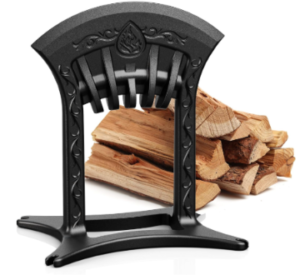
The Kindling Splitter L Cast Iron Manual Wood Splitter is a compact, hammer-driven tool designed to turn smaller logs into firewood and kindling. Its reinforced cast-iron construction provides a solid base, while the thickened wedge-style blade helps break wood apart with downward strikes from a hammer or mallet. It does not require fuel, electricity, or a powered motor.
The splitter has a 6.1-inch-wide opening that accommodates various smaller log sizes. Its 9.8-inch height keeps the unit compact, making it convenient for patios, decks, sheds, or other areas with limited storage space. The hand-ground blade is intended to enter the wood and create the split, although some users report that sharpening may be necessary before the first use.
For added stability, the heavy-duty cast-iron base includes four mounting holes. Securing the splitter to a suitable stump or solid surface can reduce movement while striking the wood. It also comes with a black protective blade cover for storage and handling when the tool is not in use.
At around 7 pounds, the splitter is relatively easy to carry between the yard, campsite, fireplace area, or other locations. Its manual operation is straightforward: place an appropriately sized log over the splitting point and strike downward with a suitable hammer or mallet. However, denser hardwoods can require considerably more force, and knotty pieces may occasionally become stuck.
Best Suited For: The Kindling Splitter L is most suitable for homeowners, campers, and outdoor users who regularly prepare smaller amounts of firewood or kindling. It can also be useful around pizza ovens, saunas, barbecues, and fireplaces. Softwoods such as pine are generally easier to split with this type of tool, while large or dense hardwood logs may exceed its practical capabilities.
Specifications
- Material: Reinforced cast iron
- Weight: 7.0–7.3 pounds
- Dimensions: 6.1 × 9.8 × 8.3 inches
- Blade width: 6.1 inches
- Blade type: Hand-ground cast-iron wedge
- Base: Cast iron with four mounting holes
- Finish: All-weather powder coating
- Operation: Hammer or mallet driven
- Safety: Protective black blade cover
Pros
- Compact design suits limited storage areas
- Cast-iron construction provides a sturdy structure
- Lightweight enough for convenient carrying
- Effective for preparing smaller pieces and kindling
- Particularly useful with softer woods such as pine
- Simple hammer-driven operation
- Mounting holes allow additional stability when secured
- Powder-coated finish helps protect against weather exposure
- Suitable for fireplaces, camping, pizza ovens, saunas, and barbecues
- Includes a protective blade cover
Cons
- Blade may require sharpening before effective use
5)Kindling Cracker King XL Cast Iron Kindling Splitter
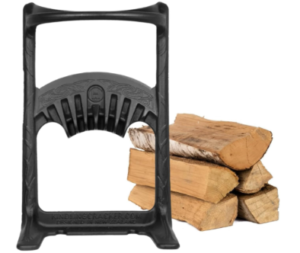
The Kindling Cracker King XL Cast Iron Kindling Splitter is a manual wood-splitting tool designed to make preparing firewood and kindling easier. Its large 9-inch opening accommodates bigger pieces of wood, while the fixed splitting wedge breaks logs apart when you strike them with a mallet or hammer. The design keeps the operator’s hands away from the splitting point, making it a practical option for users who want a more controlled way to prepare firewood.
The King XL uses a patented cast-iron safety ring that surrounds the splitting wedge. This structure helps keep your hands away from the impact area while you work. Unlike a conventional axe, the tool has no swinging blade. Instead, you place the wood inside the ring and strike downward on the top of the log.
Its 21-pound cast-iron construction gives it a substantial, stable frame for repeated use. The 17-inch-tall design provides clearance for longer pieces, while the 9-inch opening accommodates logs up to approximately 8–9 inches in diameter. However, large unsplit rounds may need to be cut into smaller sections before they fit comfortably.
The fixed wedge requires no routine sharpening, and the unit has no moving parts or welds. This reduces the maintenance involved in preparing kindling. For added stability, users can place it on a firm surface or secure it to a suitable stump. The heavy construction also makes it less convenient to carry over long distances.
Best Suited For: The Kindling Cracker King XL is most suitable for homeowners, campers, and outdoor enthusiasts who prepare firewood for fireplaces, fire pits, pizza ovens, saunas, or barbecues. It works particularly well for splitting smaller rounds and pre-split wood into kindling. Users should have a suitable 3–6-pound mallet or sledgehammer available, as the striking tool is not included.
Specifications
- Material: Premium cast iron
- Weight: 21 pounds
- Height: 17 inches
- Opening diameter: 9 inches
- Log capacity: Approximately 8–9 inches in diameter
- Blade: Fixed cast-iron splitting wedge
- Operation: Mallet or hammer driven
- Design: Patented safety ring
- Made in: Australia
Pros
- Safety ring keeps hands away from the splitting wedge
- Large opening accommodates bigger pieces of firewood
- Fixed wedge does not require sharpening
- Solid cast-iron frame provides a sturdy structure
- Simple downward striking method
- Suitable for fireplaces, fire pits, and camping
- Can be mounted to a stump for added stability
- No moving parts or welds
- Works with various types of firewood
Cons
- Heavy 21-pound construction reduces portability
6)Fiskars X27 Super Splitting Axe
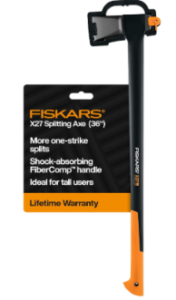
The Fiskars X27 Super Splitting Axe is a 36-inch manual splitting axe designed for medium to large firewood logs. Its long handle provides additional leverage, making it particularly suitable for taller users. The wedge-shaped forged steel head is designed to drive into wood efficiently and encourage clean splits with fewer strikes.
The axe features a 4.3-pound forged alloy steel head with a convex bevel profile and low-friction coating. This geometry helps the blade move through wood while reducing the tendency to stick. The insert-molded head is also designed to remain securely attached to the handle during use.
Its 36-inch FiberComp™ handle combines a textured, non-slip grip with shock-absorbing properties. This design helps improve control and reduce hand strain during repeated swings. The complete axe weighs about 6.28 pounds, providing a balance between striking weight and ease of handling.
The X27 is best suited to splitting seasoned medium to large logs, particularly pieces around 8–18 inches in diameter. It can handle larger rounds with additional strikes, although very large, knotty, or cross-grained logs may require more effort. The long handle is especially useful for taller users, while shorter users may find its length less comfortable.
Best Suited For: The Fiskars X27 can also be useful for preparing firewood, camping, and general yard cleanup. However, it is primarily designed to split wood along the grain rather than chop branches or cut across the grain. The sharp blade also requires care because striking rocks, the ground, or other hard surfaces can damage its edge.
Specifications
- Head weight: 4.3 pounds
- Total weight: 6.28 pounds
- Handle length: 36 inches
- Handle material: FiberComp™ composite
- Blade material: Forged alloy steel
- Blade design: Convex bevel with low-friction coating
- Recommended log size: Approximately 8–18 inches in diameter
- Grip: Textured, non-slip handle
- Warranty: Full lifetime warranty
Pros
- Long 36-inch handle provides useful leverage for taller users
- Forged steel head is designed for efficient splitting
- Convex blade geometry helps the axe release from wood more easily
- Low-friction coating reduces sticking
- Shock-absorbing handle improves comfort during repeated swings
- Non-slip grip helps maintain control
- Relatively manageable overall weight for its size
- Protective sheath included for storage and transport
- Suitable for firewood, camping, and yard work
Cons
- 36-inch handle can feel unwieldy for shorter users
7)SPEED FORCE Firewood Kindling Log Wood Splitter
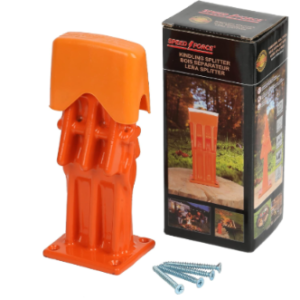
The SPEED FORCE Firewood Kindling Log Wood Splitter offers a simple way to turn smaller pieces of firewood into kindling without swinging an axe. Its wedge point and slanted fins guide wood into an angled split when you strike it with a mallet or sledgehammer. As a result, users can prepare kindling while keeping their hands away from the striking path.
The splitter uses nodular cast iron for its main construction, which gives the compact tool a solid feel. In addition, its all-weather powder coating helps protect the surface during outdoor use. The hand-ground wedge edge supports splitting along the wood grain, while the included honing stone lets users maintain the edge when it becomes dull.
For better stability, the base features four mounting holes and includes screws for attaching the unit to a suitable stump or anchor. Once secured, the splitter stays more firmly in position during repeated strikes. However, users may notice movement if they leave the unit unsecured, particularly when working with resistant pieces.
At just 3.3 pounds, the SPEED FORCE splitter remains easy to carry and store. Its 7-inch height also takes up little space, making it convenient for camping, RV trips, and backyard use. Moreover, the included safety cover protects the wedge when the tool sits in storage.
Best Suited For: The SPEED FORCE splitter suits homeowners, campers, and outdoor users who mainly prepare small quantities of kindling. It works well with appropriately sized wood that follows the grain, including several hardwood varieties. However, larger, stringy, or very dense pieces can require pre-splitting and more striking force.
Specifications
- Material: Nodular cast iron
- Weight: 3.3 pounds
- Dimensions: 3 × 2.5 × 7 inches
- Blade width: 3 inches
- Blade design: Round wedge with hand-ground edge
- Operation: Mallet or hammer driven
- Recommended striking tool: 2.5–5-pound mallet or sledge
- Base: Four mounting holes
- Included accessories: Safety cover, mounting screws, and honing stone
Pros
- Compact and lightweight for easy transport
- Slanted fins help guide wood into an angled split
- No swinging axe passes near the user’s hands
- Mounting holes allow secure attachment to a suitable stump
- Protective safety cover supports safer storage
- Included honing stone helps maintain the wedge edge
- Powder-coated surface provides weather protection
- Suitable for camping, RVs, fireplaces, and fire pits
- Affordable option for occasional kindling preparation
Cons
- Best suited to smaller pieces of wood
You may also like to read: 5 Best Fiskars Hedge Shears
Advantages of Using Manual Log Splitters
No Fuel or Electricity Required
Manual log splitters work without gasoline, electricity, or a battery. Therefore, you can use them in remote locations where power is unavailable. This makes them practical for campsites, cabins, gardens, and other outdoor areas.
Lower Operating Costs
Since manual models do not require fuel or electrical power, their ongoing operating costs remain low. You only need the splitter and, depending on the design, a suitable mallet, sledgehammer, or axe. As a result, they can provide an economical way to prepare firewood.
Portable and Easy to Store
Many manual splitters have compact designs that simplify transportation and storage. Lightweight wedges and kindling splitters can fit into camping gear or small storage areas. Meanwhile, larger hydraulic models may include wheels for easier movement around the property.
Simple Operation
Manual splitters generally use straightforward mechanical action rather than engines or complicated controls. Depending on the design, you may push a hydraulic handle, strike a wedge, or use an axe. Consequently, there are fewer operating components to manage.
Reduced Noise
Unlike powered log splitters, manual tools do not have engines or electric motors producing operating noise. This makes them useful around homes, campsites, and other areas where quieter operation is desirable.
Useful for Small Firewood Jobs
Manual splitters work particularly well when you only need to process a modest amount of wood. They can handle tasks such as preparing kindling, fireplace wood, fire-pit fuel, or pieces for outdoor cooking. Therefore, they suit occasional users who do not need a powered machine.
Greater Control During Splitting
Manual operation allows users to control the pace and force applied to each piece. You can inspect a log between strikes and adjust your technique when the grain changes. This control can be useful when working with irregular or smaller pieces.
Minimal Maintenance
Most manual splitters have fewer mechanical components than powered alternatives. Some designs consist mainly of a fixed wedge and supporting frame, while hydraulic models have more moving parts. Nevertheless, routine cleaning, edge care, and inspection can help maintain performance.
Factors to Consider When Choosing the Best Manual Log Splitters
Splitting Capacity
Consider the maximum log diameter and length that the splitter can accommodate. Smaller kindling splitters suit short pieces, while larger hydraulic models can accept substantially bigger logs. Therefore, match the splitter’s capacity to the wood you normally process rather than choosing based on size alone.
Construction Material
The material affects durability, weight, and resistance to repeated impact. Cast iron and steel provide sturdy construction for many manual designs, while forged steel works well for splitting wedges and axe heads. Also, examine the quality of the frame, wedge, handles, and mounting points.
Splitting Method
Manual log splitters use different approaches, including hydraulic pressure, fixed wedges, striking wedges, and splitting axes. Each method requires a different level of physical effort and technique. For this reason, consider whether you prefer pushing a hydraulic handle, striking a fixed wedge, or swinging an axe.
Required Physical Effort
Manual splitting still requires physical work, although the amount varies considerably between designs. Hydraulic models can reduce the effort needed to split suitable logs, while wedges and axes depend more heavily on striking force and technique. Consider your strength, experience, and how much wood you expect to process.
Stability and Safety
A stable splitter helps keep the tool in position during repeated splitting. Some compact models include mounting holes, while others rely on a wide or heavy base. In addition, look for features that keep hands away from the splitting area and protect sharp edges during storage.
Portability and Storage
Think about where you will use and store the splitter. Lightweight wedges and compact kindling splitters are convenient for camping and occasional outdoor work. On the other hand, larger manual hydraulic units may weigh considerably more, although wheels can make transportation easier.
Wood Type and Grain
Different woods can require very different amounts of force. Straight-grained pieces generally split more easily, while knotty, stringy, dense, or cross-grained wood can resist the wedge. Therefore, consider the types of firewood available to you and choose a tool capable of handling them.
Maintenance and Accessories
Check how much maintenance the splitter requires and what accessories come with it. Some tools may need periodic blade sharpening or edge care, while others use fixed wedges that require little attention. Also, consider included items such as safety covers, mounting hardware, or sharpening accessories.
FAQs
Are manual log splitters worth using?
Manual log splitters can be useful when you need to process small or moderate amounts of firewood without fuel or electricity. They also provide a practical option for camping, fireplaces, fire pits, and occasional home use.
Can manual log splitters handle large logs?
Some can handle relatively large logs, but capacity varies by design. Smaller kindling splitters have limited openings, while larger hydraulic models accommodate longer and wider pieces. However, very large, knotty, or cross-grained logs may require pre-splitting or additional effort.
Do manual log splitters require an axe or hammer?
It depends on the design. Hydraulic models typically use a hand-operated pump, while fixed-wedge kindling splitters usually require a mallet or sledgehammer. Splitting wedges and axes also require a separate striking or swinging tool.
Conclusion
The Best Manual Log Splitters provide practical ways to prepare firewood without relying on fuel or electricity. They range from compact kindling tools to hydraulic models designed for larger pieces, so the right choice depends on your workload, wood size, physical effort, and portability needs. For my top picks, I would categorize the Sun Joe Cordless Manual 10 Ton LJ10M Hydraulic Log Splitter as Best Overall, the SPEED FORCE Firewood Kindling Log Wood Splitter as Best Budget, and the Kindling Cracker King XL Cast Iron Kindling Splitter as Best Premium. Together, these options cover different manual splitting needs, from occasional kindling preparation to larger household firewood tasks.

Moran is an outdoor gear reviewer with a passion for testing and evaluating equipment that enhances real-world adventures. With a focus on accuracy, durability, and performance, Moran provides honest insights to help readers choose the right gear for their needs. From optics and hunting equipment to everyday outdoor essentials, each review is built on careful research and practical understanding. Moran’s goal is to simplify buying decisions by delivering clear, reliable, and experience-driven recommendations.