I find the Best Gas Log Splitters useful because they deliver powerful splitting performance, handle large logs, and make firewood preparation faster and easier. I look for features such as strong engines, high hydraulic force, fast cycle times, suitable log capacity, durable construction, towing capability, and horizontal or vertical operation. In this guide, I’ll discuss the key features, share my top picks, explain the factors to consider when buying, and answer common FAQs to help you choose the right gas log splitter.
Our Top Picks at a Glance
I have reviewed the following Best Gas Log Splitters:
- SuperHandy 20 Ton 7HP Portable Gas Log Splitter — Best Overall
- FULL BOAR 35 Ton 306cc Portable Gas Log Splitter — Best Heavy-Duty Option
- Landworks 20-Ton 7 HP Portable Gas Log Splitter — Best Budget
- BILT HARD 22 Ton 209cc Gas Log Splitter — Best for Fast Splitting
- Champion Power Equipment 40-Ton PRO Grade Horizontal/Vertical Full Beam Gas Log Splitter — Best Premium Option
- BILT HARD 27-Ton 209cc Towable Gas-Powered Log Splitter — Best Towable Option
How We Tested the Best Gas Log Splitters
I evaluated the Best Gas Log Splitters based on splitting power, engine performance, cycle time, log capacity, portability, and ease of use. I also considered hydraulic systems, frame construction, operating positions, towing features, and overall weight.I reviewed setup requirements, maintenance needs, included equipment, safety features, and reported user experiences. This helped me identify the strengths and limitations of each splitter and determine which models suit occasional, regular, or high-volume firewood processing.
Best Gas Log Splitters
1)SuperHandy 20 Ton 7HP Portable Gas Log Splitter
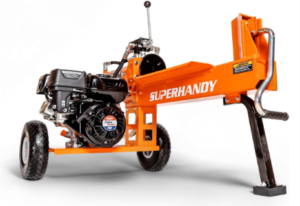
The SuperHandy 20 Ton Portable Gas Log Splitter combines a 7HP gasoline engine with a 20-ton hydraulic splitting system for demanding firewood preparation. Its two-stage Bucher hydraulic gear pump delivers consistent hydraulic force, while the rapid auto-return ram completes each cycle in about 7.5 seconds. The horizontal full-beam steel construction is designed to handle logs up to 20.5 inches long and 16 inches in diameter.
Its portable design makes this splitter practical for users who need to process firewood away from an electrical outlet. At around 130 to 140 pounds, it remains relatively manageable to move, while the 10-inch transport wheels help with positioning between work areas. The narrow 35-inch length also allows it to pass through many shed doors. However, it operates only in the horizontal position, so users cannot switch to vertical splitting.
The 7HP gasoline engine provides the power needed for consistent splitting without relying on electricity. The hydraulic system maintains steady pressure as the steel wedge moves through the log, while the auto-return function reduces the time between splits. Gas operation also makes it suitable for outdoor locations where electrical access is unavailable. Because it produces exhaust, it should only be operated outdoors in a properly ventilated area.
Best Suited For: This model is best suited to homeowners, property owners, and firewood users who regularly process hardwood or larger logs and need a portable gas-powered machine. It can also suit users preparing substantial amounts of firewood in remote areas. However, buyers should account for the additional fluids required before operation and inspect the hydraulic connections and structural components carefully because some users have reported durability and quality-control problems.
Specifications
- Engine: 7HP gasoline engine with one-pull start
- Splitting Force: 20 tons
- Hydraulic Pump: Two-stage Bucher gear pump
- Log Capacity: Up to 20.5 inches long × 16 inches diameter
- Cycle Time: Approximately 7.5 seconds with auto return
- Design: Horizontal full-beam steel construction with steel wedge
- Weight: Approximately 130 to 140.7 pounds
- Wheels: 10-inch transport wheels
- Fuel: Unleaded gasoline
Pros
- Strong 20-ton hydraulic force for demanding splitting jobs
- 7.5-second cycle with automatic ram return
- 7HP engine provides consistent operating power
- Two-stage Bucher gear pump supports efficient hydraulic operation
- Wheels and relatively compact design improve portability
- Does not depend on an electrical power source
- Suitable for processing larger and tougher firewood
Cons
- Horizontal-only operation limits splitting flexibility
2)FULL BOAR 35 Ton 306cc Portable Gas Log Splitter
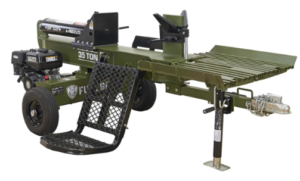
The FULL BOAR 35 Ton 306cc Portable Gas Log Splitter is a heavy-duty machine designed for processing large and difficult logs. Its 306cc gasoline engine delivers up to 35 tons of hydraulic splitting force, while the BOX-shaped beam provides a sturdy frame for demanding wood-processing tasks. A 32-inch log tray also gives the splitter plenty of room for handling substantial pieces of firewood.
One of its most useful features is the interchangeable blade system. Users can switch between 2-way, 4-way, and 6-way wedges without tools. The multi-way options allow a single pass to divide a log into several sections, which can reduce the number of individual splitting cycles needed. This makes the machine useful when preparing larger quantities of firewood.
The hydraulic wedge adjustment adds further control during operation. It provides 3.55 inches of vertical adjustment, allowing the operator to position the wedge for more centered splits across different log sizes. In addition, the hydraulic log lift can raise logs weighing up to 700 pounds and can also serve as a work table. This feature can reduce the need to manually lift extremely heavy logs onto the splitting area.
Best Suited For: This splitter suits property owners and small operations with a heavy, ongoing volume of wood to process. Its 1,045 pound frame is built to stay in one spot rather than travel with you. It fits best in a barn, workshop, or dedicated yard area with room for its large footprint. However, anyone who needs to move a splitter between job sites should look at a lighter, wheel mounted model instead.
Specifications
- Engine: 306cc heavy-duty gasoline engine
- Splitting Force: 35 tons
- Blade Options: 2-way, 4-way, and 6-way interchangeable blades
- Log Tray: 32-inch capacity
- Log Lift: Hydraulic lift rated for logs up to 700 pounds
- Wedge Adjustment: 3.55-inch hydraulic vertical range
- Frame: Heavy-duty BOX-shaped beam
- Weight: 1,045 pounds
- Dimensions: 112.2 × 59 × 47.2 inches
Pros
- 35-ton hydraulic force handles large and demanding logs
- Tool-free blade changes provide 2-way, 4-way, and 6-way splitting options
- Hydraulic wedge adjustment helps position the wedge for centered splits
- Hydraulic log lift handles logs weighing up to 700 pounds
- Log lift can also function as a work table
- 32-inch log tray accommodates substantial logs
- BOX-beam construction provides a robust structural platform
- Hydraulic fluid is included with the machine
- Assembly reportedly includes clear video guidance and required components
Cons
- Extremely heavy at approximately 1,045 pounds
3)Landworks 20-Ton 7 HP Portable Gas Log Splitter
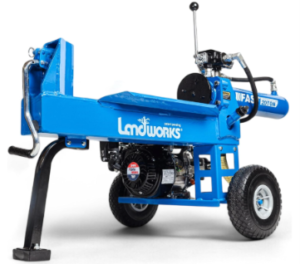
The Landworks 20-Ton Portable Gas Log Splitter uses a 7HP gasoline engine and a 20-ton hydraulic system to process firewood efficiently. Its two-stage Bucher hydraulic gear pump provides the hydraulic force, while the rapid auto-return ram completes each cycle in about 7.5 seconds. The splitter is rated for logs up to 20.5 inches long and 16 inches in diameter.
Portability is a major part of its design. The horizontal full-beam frame weighs about 130 to 148.7 pounds and has 10-inch transport wheels for moving it between locations. Its compact dimensions also make it easier to store, while the gas-powered system allows operation without access to an electrical outlet. However, it is designed for horizontal splitting only.
The 7HP engine provides consistent power during operation, and customer feedback indicates that the machine can handle common hardwoods, including oak. The rapid auto-return also reduces the waiting time between individual splits. Major components arrive partly assembled, which can simplify the initial setup for users with basic mechanical skills.
Best Suited For: This splitter is best suited to homeowners and property owners who regularly prepare firewood and need to work in areas without electrical power. Its portability also makes it useful for moving between different wood-processing locations. However, buyers should inspect the machine carefully and follow the correct hydraulic-fluid specifications, as users have reported durability problems, loose connections, and conflicting fluid-capacity information.
Specifications
- Engine: 7HP gasoline engine
- Splitting Force: 20 tons
- Hydraulic System: Two-stage Bucher gear pump
- Log Capacity: Up to 20.5 inches long × 16 inches diameter
- Cycle Time: 7.5 seconds with rapid auto return
- Design: Horizontal full beam with steel wedge
- Weight: Approximately 130 to 148.7 pounds
- Wheels: 10-inch transport wheels
- Fuel: Unleaded gasoline
Pros
- 20-ton hydraulic force provides substantial splitting power
- 7HP engine delivers consistent operating performance
- Rapid 7.5-second auto-return speeds up repeated splitting
- Two-stage Bucher gear pump supports the hydraulic system
- Transport wheels make the machine easier to reposition
- Compact dimensions simplify storage and transportation
- Gas operation allows use without an electrical outlet
- Major components arrive partially assembled
- Suitable for processing many common hardwood logs
Cons
- Reported durability issues include bent shafts, leaks, and damaged components
4)BILT HARD 22 Ton 209cc Gas Log Splitter
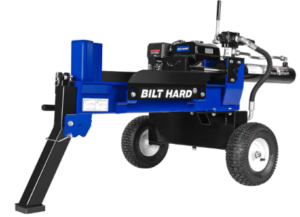
The BILT HARD 22 Ton Gas Log Splitter combines a 209cc gasoline engine with a 22-ton hydraulic system for processing hardwood and seasoned firewood. Its 14 GPM two-stage gear pump provides strong hydraulic performance, while the automatic return system completes each cycle in about 7 seconds. This combination allows users to keep splitting without long pauses between logs.
A 21-inch log capacity makes the splitter suitable for substantial firewood pieces. Its 3.5 × 19-inch hydraulic cylinder operates at pressures of up to 25.5 MPa, while the steel wedge supports consistent splitting. The rugged steel frame also provides a stable platform during operation.
Transport is another useful part of the design. The splitter has 13-inch pneumatic wheels and a removable stand and tow bar, allowing it to be repositioned around a property or towed at speeds of up to 25 MPH. However, its 344-pound weight means that moving it without towing equipment can require considerable effort.
Best Suited For: The BILT HARD model is well suited to homeowners, farmers, and property owners who process substantial amounts of firewood and need a towable machine for outdoor use. It can handle demanding splitting tasks while remaining practical to reposition around a larger property. Buyers should also allow enough storage space and plan for regular gasoline-engine maintenance.
Specifications
- Engine: 209cc gasoline engine
- Splitting Force: 22 tons
- Hydraulic System: 14 GPM two-stage gear pump
- Cycle Time: 7 seconds with automatic return
- Log Capacity: Up to 21 inches long
- Cylinder: 3.5 × 19 inches, up to 25.5 MPa
- Wheels: 13-inch pneumatic wheels
- Weight: 344 pounds
- Design: Horizontal operation with removable stand and tow bar
Pros
- 22-ton hydraulic force handles hardwood and seasoned firewood
- 7-second cycle time supports faster repeated splitting
- 21-inch log capacity accommodates sizeable firewood pieces
- Rugged steel frame provides a solid operating structure
- Pneumatic wheels make outdoor repositioning easier
- Removable tow bar allows towing around the property
- Engine and hydraulic fluid are included with the purchase
- Users report reliable starting and smooth engine operation
- Stable log positioning helps during splitting
Cons
- At 344 pounds, the splitter is heavy to move without towing
5)Champion Power Equipment 40-Ton PRO Grade Horizontal/Vertical Full Beam Gas Log Splitter
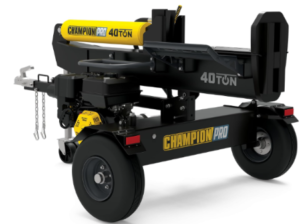
The Champion Power Equipment 40-Ton PRO Grade Gas Log Splitter is built for demanding firewood processing, combining a 338cc single-cylinder OHV engine with 40 tons of hydraulic splitting force. Its two-stage gear pump can adjust hydraulic flow according to the task, helping the machine move efficiently through different stages of the splitting cycle. An automatic return valve also allows repeated operation without manually resetting the ram.
A major advantage is its ability to work in both horizontal and vertical positions. The splitter can be converted between the two modes within seconds, making it more practical when dealing with large or heavy logs. Its 9-inch wedge and capacity for logs up to 24 inches long and 100 pounds provide substantial room for demanding wood-processing tasks.
The 11.3-second cycle time allows the machine to complete more than 300 cycles per hour under suitable operating conditions. Log catchers help keep split pieces within reach, while the steel engine guard and adjustable front support leg add useful functionality. Its 18-inch DOT-approved tires also allow highway towing at speeds of up to 70 MPH when properly connected to a suitable vehicle.
Best Suited For: This model is best suited to professional firewood processors, loggers, farms, and property owners who regularly handle large quantities of heavy wood. Its 767-pound weight, large footprint, and professional-grade price make it less practical for occasional household use. Buyers should also prepare for substantial assembly and purchase the required hydraulic fluid separately before full operation.
Specifications
- Engine: 338cc Champion single-cylinder OHV gasoline engine
- Splitting Force: 40 tons
- Hydraulic System: 24.7 GPM two-stage gear pump
- Cycle Time: 11.3 seconds with auto return
- Log Capacity: Up to 24 inches long and 100 pounds
- Operating Positions: Horizontal and vertical
- Wedge: 9-inch steel splitting wedge
- Weight: 767 pounds
- Towing: DOT-approved tires for towing up to 70 MPH
Pros
- 40-ton hydraulic force handles large and demanding logs
- Converts quickly between horizontal and vertical operation
- 338cc engine provides substantial power for heavy workloads
- Two-stage pump adjusts flow and pressure according to operating demands
- 11.3-second cycle supports high-volume splitting
- Handles logs up to 24 inches long and 100 pounds
- Highway-towable design expands its use across larger properties
- Log catchers help keep split wood within convenient reach
- Includes a 2-year limited warranty and lifetime technical support
Cons
- Requires substantial assembly and multiple tools
6)BILT HARD 27-Ton 209cc Towable Gas-Powered Log Splitter
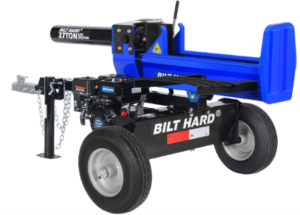
The BILT HARD 27-Ton Towable Gas Log Splitter combines a 7HP 209cc OHV engine with a 27-ton hydraulic system for demanding firewood processing. Its two-stage 11 GPM pump provides the hydraulic force needed for tough logs, while the 13-second automatic return cycle helps maintain a steady workflow. A 7-inch hardened steel wedge is designed to handle logs up to 24 inches long.
One useful feature is its dual-position design. The splitter converts between horizontal and vertical operation, allowing users to place large, heavy rounds directly onto the machine rather than lifting them onto a horizontal beam. A heavy-duty log catcher also keeps split pieces within reach and can reduce repeated bending during larger splitting jobs.
The towable frame uses 16-inch DOT-approved tires, a standard 2-inch ball coupler, and safety chains. This allows the machine to be moved behind a suitable ATV, UTV, or truck at speeds of up to 45 MPH. However, its 428 to 494-pound weight means that towing is more practical than manually moving it around a property.
Best Suited For: This model is well suited to homeowners, farmers, and property owners who process substantial amounts of firewood and need to move the splitter between work areas. Its horizontal and vertical positions make it useful for handling larger rounds, while the towable design suits woodlots and larger properties. Buyers should provide enough storage space and account for regular gasoline-engine maintenance.
Specifications
- Engine: 7HP 209cc OHV single-cylinder gasoline engine
- Splitting Force: 27 tons
- Hydraulic System: 11 GPM two-stage pump with 6-gallon reservoir
- Cycle Time: 13 seconds with automatic return
- Log Capacity: Up to 24 inches long
- Operating Positions: Horizontal and vertical
- Wedge: 7-inch hardened steel
- Weight: Approximately 428 to 494 pounds
- Towing: Up to 45 MPH with 16-inch DOT-approved tires
Pros
- 27-ton hydraulic force provides substantial splitting power
- Horizontal and vertical operation improves flexibility with heavy logs
- 13-second cycle supports efficient repeated splitting
- 7-inch hardened steel wedge suits demanding firewood tasks
- 16-inch DOT-approved tires support convenient towing
- Standard 2-inch coupler works with suitable ATVs, UTVs, and trucks
- Heavy-duty log catcher helps keep split wood accessible
- Engine oil and a partial hydraulic-fluid fill are included
- Customers report solid construction and reliable engine starting
Cons
- Approximately 428 to 494 pounds, so towing is needed for practical relocation
You may also like to read:7 Best Manual Log Splitters
Advantages of Using Gas Log Splitters
Strong Splitting Power
Gas log splitters provide the hydraulic force needed to break down tough and large logs. Their higher tonnage makes them useful for hardwood and demanding firewood tasks. This reduces the physical effort required compared with splitting large logs manually.
No Electrical Power Required
A gas-powered splitter does not need a nearby electrical outlet. You can use it in a yard, woodland, farm, or other outdoor location. This makes gas models practical for properties where running an extension cord or finding a power source is inconvenient.
Faster Firewood Processing
Gas log splitters can process multiple logs much faster than manual methods. Their hydraulic systems combine strong force with automatic return cycles. As a result, they can reduce the time needed to prepare larger quantities of firewood.
Handles Larger Logs
Many gas models accommodate logs that are too large or difficult to split by hand. Their hydraulic cylinders and sturdy wedges provide the force required for demanding jobs. This makes them useful when processing thick rounds or dense hardwood.
Greater Outdoor Flexibility
Gas models give you freedom to work away from buildings and electrical infrastructure. You can move the machine closer to your firewood pile or splitting area. This flexibility is especially useful on farms, large properties, and wooded land.
Horizontal and Vertical Operation
Some gas log splitters support both horizontal and vertical splitting. Horizontal operation works well for manageable logs, while vertical operation can reduce the need to lift heavier rounds onto the beam. This added flexibility can make large logs easier to handle.
Towable Designs
Towable models make it easier to move heavier splitters between locations. Features such as wheels, hitches, and safety chains support transportation around a property or between work areas. However, towing limits and local requirements should always be checked before moving one.
Suitable for High-Volume Work
Gas log splitters are well suited to people who process substantial amounts of firewood. Their powerful engines, hydraulic systems, and repeatable splitting cycles can handle demanding workloads. They therefore make more sense when manual splitting would take considerable time and effort.
Factors to Consider When Choosing the Best Gas Log Splitters
Splitting Force
Consider the hydraulic tonnage before choosing a gas log splitter. Lower-tonnage models can handle routine firewood, while higher ratings provide more force for thick or difficult hardwood. Match the splitting force to the size, type, and quantity of logs you expect to process.
Engine Power
Engine size affects how the hydraulic system performs under load. A suitable engine should provide enough power to operate the pump consistently during demanding jobs. Also, consider starting performance, fuel requirements, and routine engine maintenance.
Cycle Time
Cycle time determines how quickly the splitter completes one splitting movement and returns to position. A shorter cycle can increase productivity when you have a large pile of logs to process. Still, cycle speed should be considered alongside splitting force and overall machine usability.
Log Capacity
Check the maximum log length and diameter before buying. A splitter with a larger working capacity gives you more flexibility when handling thick or long rounds. You should also consider the weight of the logs, since larger rounds can be difficult to position even when the machine can split them.
Horizontal or Vertical Operation
Decide whether you need horizontal operation, vertical operation, or both. Horizontal splitting can work well for smaller logs that are easy to lift. Vertical operation can be more practical for heavy rounds because you can split them without lifting them onto the beam.
Portability and Towing
Weight, wheels, hitch design, and towing capacity affect how easily you can move the machine. A lighter splitter may be easier to reposition by hand, while heavier models may require a vehicle. Check the towing specifications and make sure your vehicle or utility machine is suitable.
Hydraulic System and Maintenance
Look at the hydraulic pump, fluid requirements, reservoir capacity, hoses, and cylinder design. Regular fluid checks and maintenance help keep the system operating properly. It is also useful to check whether hydraulic fluid and other required fluids come with the machine.
Build Quality and Safety Features
A strong frame, durable beam, stable wheels, and reliable controls are important for demanding work. Safety features such as log catchers, guards, support legs, and secure towing components can also improve operation. Choose a design that feels stable and manageable for the type of work you plan to do.
FAQs
Are gas log splitters suitable for large hardwood logs?
Yes. Gas log splitters are designed to deliver substantial hydraulic force, making them suitable for thick and dense hardwood. The appropriate tonnage depends on the log size and wood type.
Is a vertical gas log splitter better for heavy logs?
Vertical operation can be more convenient for heavy rounds because you do not have to lift the entire log onto the splitting beam. However, horizontal operation may be more practical for smaller and lighter logs.
How much maintenance does a gas log splitter require?
Maintenance typically includes checking engine oil, hydraulic fluid, fuel, hoses, fittings, and moving components. You should also follow the manufacturer’s service intervals and inspect the machine regularly for leaks, loose parts, or damage.
Conclusion
The Best Gas Log Splitters combine strong hydraulic force, dependable engines, practical log capacity, and faster firewood processing. After reviewing their performance, portability, operating options, and usability, I found different models suited to different needs. The SuperHandy 20 Ton 7HP is my Best Overall choice for its combination of power, portability, and fast cycle time. The Landworks 20-Ton 7HP is my Best Budget option for offering useful splitting performance at a lower price. For demanding users, the Champion Power Equipment 40-Ton PRO Grade is my Best Premium choice, with high splitting force, horizontal and vertical operation, large log capacity, and towing capability.

Moran is an outdoor gear reviewer with a passion for testing and evaluating equipment that enhances real-world adventures. With a focus on accuracy, durability, and performance, Moran provides honest insights to help readers choose the right gear for their needs. From optics and hunting equipment to everyday outdoor essentials, each review is built on careful research and practical understanding. Moran’s goal is to simplify buying decisions by delivering clear, reliable, and experience-driven recommendations.