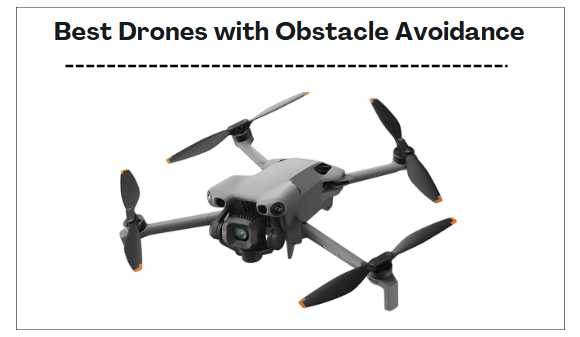
Join me as we go through the Best Drones with Obstacle Avoidance.
Drones with obstacle avoidance have transformed the way people capture aerial footage, making flying safer, smarter, and more accessible than ever before. Whether you are a beginner learning the basics or an experienced pilot shooting cinematic videos, obstacle avoidance plays a critical role in preventing crashes and ensuring smooth, controlled flights.
By using advanced sensors and intelligent algorithms, modern drones can detect objects in real time and either stop, hover, or automatically navigate around them, reducing the risk of damage and improving overall flight confidence.
When choosing the best drone with obstacle avoidance, it is important to look beyond just the feature itself. Factors such as sensor coverage, low light performance, intelligent tracking capabilities, flight time, and transmission stability all influence how effective the system will be in real-world conditions.
Additionally, ease of use, portability, and build quality should align with your specific needs, whether for travel, content creation, or professional applications.
Understanding these considerations ensures you select a drone that not only avoids obstacles effectively but also delivers a reliable and enjoyable flying experience
Here is a summary of the Best Drones with Obstacle Avoidance:
- DJI Mini 5 Pro Fly More Combo with DJI RC 2 — Best overall – Get it on Amazon
- SKYROVER X1 Fly More Combo — Best long-range and value-oriented option – Get it on Amazon
- DJI Mini 4 Pro Fly More Combo Plus with DJI RC 2 — Best for beginners with advanced features – Get it on Amazon
- Autel Robotics EVO 2 Pro V3 — Best premium professional drone – Get it on Amazon
- Holy Stone HS175G GPS Drone — Best budget-friendly option with basic obstacle avoidance features – Get it on Amazon
What is Obstacle Avoidance in Drones?
Obstacle avoidance in drones refers to a set of technologies that allow a drone to detect, assess, and respond to objects in its flight path to prevent collisions. This is typically achieved using sensors such as cameras, infrared sensors, ultrasonic sensors, or LiDAR. These sensors continuously scan the surroundings and send data to the drone’s onboard system, which processes the information in real time.
Based on this data, the drone can either stop, hover, or automatically reroute its path to safely avoid obstacles like trees, buildings, or people.
Modern drones enhance obstacle avoidance with intelligent software and AI-powered algorithms that improve accuracy and responsiveness. Advanced systems can detect obstacles in multiple directions and even track moving objects while maintaining a safe distance.
This not only reduces the risk of crashes but also enables smoother and more cinematic flight, especially when using features like subject tracking or autonomous flight modes.
As a result, obstacle avoidance plays a crucial role in making drones safer and easier to operate for both beginners and professionals.
Best Drones with Obstacle Avoidance
1) DJI Mini 5 Pro Fly More Combo with DJI RC 2
Get it on Amazon
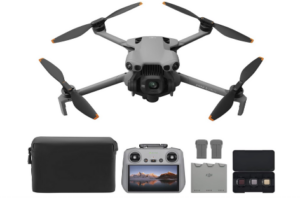
The DJI Mini 5 Pro Fly More Combo with DJI RC 2 stands out as the best drone with Obstacle Avoidance, combining advanced safety features with a highly portable design. Weighing just under 250 grams, it maintains a palm-sized, foldable form that makes it easy to carry anywhere while still delivering performance that rivals larger drones. Built-in storage ensures you can keep recording even without a memory card, making it practical for travel and quick shoots.
Image quality is a major strength thanks to the 1-inch CMOS sensor that captures detailed 4K video at 60 frames per second with HDR. Footage appears sharp with rich color depth, making it suitable for both casual users and content creators.
The flexible gimbal design allows for true vertical shooting and extended rotation, giving you more creative freedom when capturing social media content or cinematic angles from different heights.
Obstacle avoidance is where this drone truly excels. It uses a combination of LiDAR and vision sensors to detect objects in all directions, even in low-light conditions. This adds a strong layer of safety, especially for beginners or when flying in complex environments.
The upgraded ActiveTrack 360 system improves subject tracking, maintaining smooth and stable focus while automatically navigating around obstacles.
Battery performance is also impressive, offering extended flight time that supports longer shooting sessions. The Fly More Combo enhances usability by including multiple batteries, a charging hub, and ND filters, allowing you to adapt to different lighting conditions and keep flying with minimal interruption.
The included DJI RC 2 controller simplifies operation with an integrated screen for a more seamless flying experience.
Specifications
- Weight approximately 249.9 grams
- Camera 1-inch CMOS sensor
- Video resolution 4K at 60 fps, HDR
- Obstacle avoidance omnidirectional with LiDAR and vision sensors
- Gimbal rotation up to 225 degrees with vertical shooting support
- Flight time up to 36 minutes
- Internal storage 42GB
- Tracking system ActiveTrack 360
- Charging time about 115 minutes for three batteries
- Included accessories: three batteries, a charging hub, ND filters, spare propellers DJI RC 2 controller
Pros
- Compact and lightweight design suitable for travel
- Excellent obstacle avoidance with LiDAR support
- High-quality 4K HDR video with strong color accuracy
- Smooth and reliable subject tracking performance
- Versatile gimbal for creative shooting angles
- Long flight time with fast multi-battery charging
- Fly More Combo adds strong value with useful accessories
Cons
- App installation requires manual download outside Google Play
2) SKYROVER X1 Fly More Combo
Get it on Amazon
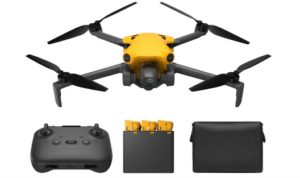
The SKYROVER X1 Fly More Combo positions itself as a feature-rich, travel-friendly drone with strong obstacle avoidance capabilities. Designed for portability, it weighs under 249 grams, making it easy to carry on trips while avoiding many regulatory restrictions in certain regions. Its compact build does not limit its capabilities, as it delivers advanced flight features suited for both beginners and content creators.
Image and video performance are impressive for its class. The drone captures highly detailed 8K photos along with 4K video at 60 frames per second in HDR, producing vibrant visuals with reduced noise.
This makes it suitable for capturing landscapes, travel moments, and dynamic outdoor scenes. Vertical shooting support enhances its appeal for social media creators, allowing full-frame content without the need for cropping.
Obstacle avoidance is a major highlight, with full 360-degree sensing that improves safety during flight. This system helps reduce collision risks and allows smoother navigation in complex environments such as urban areas or wooded locations.
Combined with intelligent tracking features like Smart Spotlight and Dual Tracking, the drone can lock onto moving subjects and maintain stable footage while automatically adjusting its path.
Flight performance is further strengthened by long-range transmission and extended battery life. The drone offers a strong connection over long distances with stable live video feeds, even in areas with potential signal interference.
The Fly More Combo includes three batteries, significantly extending total flight time and making it ideal for longer shooting sessions. Night capture capabilities also add versatility, enabling clearer low-light footage with improved detail.
Specifications
- Weight under 249 grams
- Camera capability 8K photos and 4K 60fps HDR video
- Obstacle avoidance with full 360-degree sensing
- Transmission range up to 50000 feet or 15 kilometers
- Live feed quality 1080p at 60fps
- Flight time up to 96 minutes with three batteries combined
- Tracking features: Smart Spotlight and Dual Tracking
- Night mode Super Night Mode for low light capture
- Shooting modes include vertical video for social media
- Included items: drone remote controller, three batteries
Pros
- Lightweight and highly portable design
- Full 360-degree obstacle sensing improves flight safety
- High resolution imaging with 8K photo capability
- Strong subject tracking for dynamic filming
- Long total flight time with multiple batteries
- Stable long-range transmission with smooth live feed
- Vertical shooting ideal for social media content
Cons
- Performance may be affected in stronger winds
3) DJI Mini 4 Pro Fly More Combo Plus with DJI RC 2
Get it on Amazon
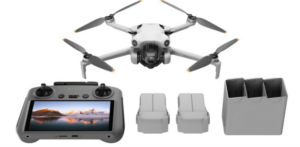
The DJI Mini 4 Pro Fly More Combo Plus with DJI RC 2 is a compact yet highly capable drone that delivers advanced obstacle avoidance in a lightweight and travel-friendly design. Weighing under 249 grams, it is easy to carry and simplifies flying in many regions by avoiding certain registration requirements. Its portable form makes it ideal for travelers and beginners who want a powerful drone without the bulk.
Image and video performance are impressive, offering 4K recording at 60 frames per second with HDR support. The drone also supports true vertical shooting, allowing you to capture social media-ready footage without extra editing.
Whether filming landscapes, city scenes, or low-light environments like sunsets and night views, the camera produces clear and vibrant results straight out of the device.
Safety is a strong focus with omnidirectional obstacle sensing that detects objects in all directions. This allows smoother navigation and reduces the risk of collisions, making it especially suitable for new pilots. Intelligent tracking has also been enhanced with ActiveShots 360, enabling customizable subject tracking paths and stable footage even during complex movements.
Flight performance is further enhanced by extended battery life and long-range transmission. With support for up to 20 kilometers of full HD video transmission, users can enjoy stable, real-time aerial views with minimal lag. The Fly More Combo Plus adds significant value by including three long endurance batteries, ensuring longer uninterrupted sessions and less downtime between flights.
The drone also supports an immersive flying experience when paired with compatible motion controllers and FPV goggles, offering a more engaging way to control and view flights. Combined with the DJI RC 2 controller, it provides a smooth and intuitive flying experience for both beginners and experienced users.
Specifications
- Weight under 249 grams
- Video resolution 4K at 60 fps, HDR
- Obstacle avoidance omnidirectional sensing
- Transmission range up to 20 kilometers
- Live feed full HD real-time transmission
- Flight time up to 45 minutes per battery
- Tracking system ActiveShots 360
- Shooting modes include vertical video
- Compatibility supports FPV goggles and motion controllers
- Included accessories: three batteries, a charging hub, a shoulder bag DJI RC 2
Pros
- Lightweight and highly portable design
- Reliable omnidirectional obstacle sensing for safer flights
- High-quality 4K HDR video with vertical shooting support
- Smooth and customizable subject tracking
- Long transmission range with stable live feed
- Extended flight time with multiple batteries included
- Beginner-friendly controls with advanced features
Cons
- Small size can limit stability in stronger winds
4) Autel Robotics EVO 2 Pro V3
Get it on Amazon
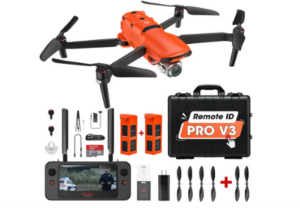
The Autel Robotics EVO 2 Pro V3 is a high-performance drone designed for professionals who need advanced imaging and reliable obstacle avoidance. Built with a 1-inch CMOS sensor and capable of recording up to 6K HDR video, it delivers exceptional image quality with strong detail, accurate color reproduction, and improved dynamic range.
Its adjustable aperture and high ISO capability make it especially effective for both daylight and low-light aerial work, including cinematic production and mapping tasks.
Image processing has been enhanced with improved noise control and dynamic range, allowing the drone to capture cleaner visuals even in challenging lighting. The inclusion of a 12-bit recording system greatly expands color depth, making it easier to fine-tune footage during post-production.
This level of flexibility is valuable for professionals who require precise control over highlights, shadows, and overall color grading.
Obstacle avoidance is comprehensive, using a combination of multiple vision sensors, sonar sensors, and intelligent algorithms to detect and navigate around obstacles in all directions.
This system supports safe and smooth flight even in complex environments. Dynamic Track 2.0 further improves usability by enabling real-time subject tracking while automatically avoiding obstacles, ensuring stable and continuous footage of moving subjects.
Flight performance is equally strong, with long endurance and reliable transmission. The drone offers extended flight time and stable long-range connectivity supported by tri-band communication with automatic frequency switching.
The included Smart Controller SE enhances the user experience with a large built-in display and responsive performance, allowing for clear real-time monitoring and control in various conditions.
Additional safety features, such as automatic return to home and intelligent landing assistance, help protect the drone during low battery or signal loss situations. The absence of geofencing provides greater operational freedom, though it requires users to stay aware of local regulations and fly responsibly.
Specifications
- Camera 1-inch CMOS sensor with 20 megapixels
- Video resolution up to 6K HDR
- Aperture range adjustable from F2.8 to F11
- Maximum ISO up to 44000
- Color depth: 12-bit recording
- Obstacle avoidance full 360-degree sensing with multiple sensors
- Transmission range up to 15 kilometers
- Communication tri-band with automatic frequency switching
- Flight time up to 40 minutes
- Controller 6.4-inch Smart Controller SE with OLED display
- Storage includes memory card support
Pros
- Excellent 6K video quality with strong dynamic range
- Advanced obstacle avoidance with a multi-sensor system
- High color depth for flexible post-production editing
- Reliable long-range transmission with anti-interference capability
- Long flight time suitable for professional use
- Smart controller with built-in display improves usability
- No geofencing restrictions for flexible operation
Cons
- No geofencing requires careful adherence to regulations
5) Holy Stone HS175G GPS Drone
Get it on Amazon
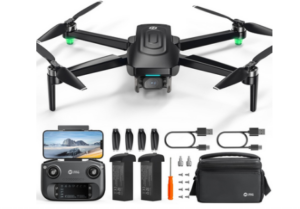
The Holy Stone HS175G GPS Drone is a beginner-friendly option that focuses on safety, stability, and ease of use rather than advanced sensor-based obstacle avoidance. While it does not include full vision-based obstacle detection like premium drones, it compensates with a range of intelligent safety systems that help prevent crashes and loss during flight. These features make it a reliable choice for new pilots who want confidence while learning to fly.
Camera performance is solid for its category, offering 4K recording supported by electronic image stabilization for smoother footage. The wide-angle lens and adjustable tilt allow for flexible framing, making it suitable for capturing landscapes, travel shots, and casual aerial videos. The addition of stable FPV transmission ensures a smoother live view, even when flying in moderate wind conditions.
Safety and flight assistance are key strengths. GPS-assisted return to home ensures the drone automatically flies back if the signal is lost, battery runs low, or it goes out of range.
Optical flow positioning and altitude hold help maintain stable hovering, reducing the chances of drifting or sudden drops. Features like headless mode and emergency stop further simplify control and add an extra layer of protection during unexpected situations.
The drone also includes intelligent flight modes such as Follow Me, waypoint flight, and orbit mode, allowing users to capture dynamic shots with minimal effort.
Combined with one key takeoff and landing and adjustable speed settings, the HS175G delivers a smooth and accessible flying experience. Its foldable design and lightweight build make it easy to carry, while the included case adds convenience for travel.
Battery performance is another advantage, with two batteries providing extended total flight time. Fast charging support reduces downtime, allowing users to spend more time flying and less time waiting. Brushless motors contribute to improved efficiency and durability, offering consistent performance across different flying conditions.
Specifications
- Weight under 249 grams
- Camera 4K with electronic image stabilization
- Sensor wide-angle lens with adjustable tilt
- Transmission 5GHz FPV live video
- Flight time up to 60 minutes with two batteries combined
- Positioning GPS and optical flow system
- Safety features include auto return to home, emergency stop, and altitude hold
- Flight modes: Follow Me waypoint flight orbit mode
- Motors, brushless motors with speed adjustment
- Design foldable with a carrying case included
Pros
- Beginner-friendly controls with strong safety features
- GPS return to home reduces the risk of losing the drone
- Stable hovering with optical flow and altitude hold
- Decent 4K video with smoother stabilization
- Long total flight time with dual batteries
- Lightweight and portable design for travel
- Useful intelligent flight modes for easy filming
Cons
- Lacks true vision-based obstacle avoidance sensors
Next Read:7 Best 3 Axis Gimbal Drones
Factors to Consider when Choosing the Best Drones with Obstacle Avoidance
Choosing the best drones with obstacle avoidance requires looking beyond just the presence of sensors. Here are most important factors to consider:
Type of Obstacle Avoidance System
Not all obstacle avoidance systems are equal. Some drones rely on basic front or downward sensors, while more advanced models use omnidirectional sensing with cameras, infrared, or LiDAR. A full 360-degree system provides much better protection because it detects obstacles from all directions. This is especially important when flying in complex environments like forests or urban areas, where hazards can come from any angle.
Sensor Accuracy and Low Light Performance
The effectiveness of obstacle avoidance depends heavily on how well sensors perform in different lighting conditions. Some systems struggle in low light or at night, increasing the risk of collisions. Drones equipped with enhanced vision systems or LiDAR technology can maintain reliable detection even in dim environments, making them safer for early morning, evening, or night flights.
AI and Intelligent Flight Capabilities
Obstacle avoidance is not just about detection but also how the drone reacts. Advanced drones use intelligent algorithms to analyze surroundings and make real time decisions, such as rerouting around objects instead of simply stopping. This is particularly useful during automated flight modes like subject tracking, where the drone must navigate dynamically without user input.
Tracking and Subject Following Performance
For users interested in filming moving subjects, strong tracking capabilities are essential. A good system should be able to lock onto a subject and maintain smooth footage while avoiding obstacles along the path. Reliable tracking ensures that the drone keeps the subject in frame without sudden interruptions or collisions, even in challenging environments.
Flight Time and Battery Efficiency
Longer flight time allows more flexibility and reduces interruptions during shooting sessions. Drones with efficient battery systems and optimized power management can maintain obstacle avoidance functions without significantly reducing flight duration. This is important because advanced sensors and processing can consume more power.
Transmission Range and Signal Stability
A strong and stable connection between the drone and controller ensures that obstacle avoidance systems function effectively at longer distances. Weak signals can lead to delayed responses or loss of control, increasing the risk of accidents. Reliable transmission also provides smooth real-time video feedback, helping pilots make better decisions during flight.
Ease of Use and Beginner-Friendly Features
For many users, especially beginners, ease of operation is critical. Features such as automatic return to home, one-key takeoff and landing, and stable hovering modes work alongside obstacle avoidance to create a safer flying experience. A well-designed system should simplify flying while still offering advanced safety features.
Build Quality and Portability
The physical design of the drone affects both durability and usability. Lightweight and foldable drones are easier to carry and travel with, while more robust builds may offer better stability in windy conditions. Choosing the right balance between portability and durability ensures that the drone performs well in different environments without compromising safety.
These factors together determine how effective and reliable a drone’s obstacle avoidance system will be.
Obstacle Avoidance in Drones: Advantages
Here are the key advantages of obstacle avoidance in drones, each explained clearly:
1. Enhanced Flight Safety
Obstacle avoidance significantly reduces the risk of crashes by detecting and responding to objects in the drone’s path. This is especially useful when flying in areas with trees, buildings, or other obstacles, helping protect both the drone and its surroundings.
2. Beginner-Friendly Operation
For new users, flying a drone can be challenging. Obstacle avoidance acts as a safety net by preventing common mistakes such as flying too close to objects. This makes it easier for beginners to learn and operate drones with greater confidence.
3. Smoother and More Cinematic Footage
Advanced systems allow drones to navigate around obstacles seamlessly without abrupt stops. This results in smoother flight paths and more professional-looking video, especially when using automated modes like subject tracking or waypoint flights.
4. Improved Autonomous Flight Capabilities
Obstacle avoidance enables drones to perform intelligent tasks such as tracking moving subjects or following preset routes while avoiding collisions. This reduces the need for constant manual control and allows for more complex and creative aerial shots.
5. Reduced Risk of Drone Loss or Damage
By preventing collisions and supporting features like automatic rerouting or safe hovering, obstacle avoidance helps extend the lifespan of the drone. It minimizes repair costs and reduces the chances of losing the drone due to accidents or difficult flying conditions.
Best Drones with Obstacle Avoidance FAQs
1. Do all drones have obstacle avoidance?
No, not all drones include obstacle avoidance. Entry-level and budget models often rely on basic stabilization features like GPS or altitude hold instead of true obstacle detection. Advanced drones include sensors and intelligent systems that actively detect and avoid objects, offering a much higher level of safety.
2. How does obstacle avoidance work in drones?
Obstacle avoidance works through a combination of sensors such as cameras, infrared, ultrasonic, or LiDAR. These sensors scan the surroundings and send data to onboard software, which processes the information in real time. The drone can then stop, hover, or automatically change direction to avoid collisions.
3. Is obstacle avoidance reliable in all conditions?
Obstacle avoidance is highly effective but not perfect. Performance can vary depending on lighting, weather, and the type of obstacles. For example, thin objects like wires or transparent surfaces may be harder to detect. Some advanced systems perform better in low light, but users should still fly cautiously.
4. Is obstacle avoidance necessary for beginners?
While not absolutely required, obstacle avoidance is highly recommended for beginners. It provides an added layer of protection against crashes and helps build confidence during early flights. Combined with features like return to home and stable hovering, it makes learning to fly much easier and safer.
Conclusion
In today’s drone market, obstacle avoidance is no longer a luxury but a key feature that enhances both safety and performance. It allows pilots to focus more on creativity and exploration while minimizing the risks associated with flying in complex environments.
From avoiding trees and buildings to enabling advanced tracking and autonomous flight modes, this technology significantly improves how drones operate in everyday scenarios.
Ultimately, the best drone with obstacle avoidance is one that balances intelligent safety features with strong overall performance. By carefully considering aspects such as sensor quality, AI capabilities, battery life, and user friendliness, you can make a well-informed decision that suits your skill level and intended use.
Investing in a drone with reliable obstacle avoidance not only protects your device but also elevates your entire flying and filming experience.
Next Read: Understanding Obstacle Avoidance

Albert, the founder of Outdoormoran, is a dedicated outdoor enthusiast with a passion for delivering the most current, accurate, and easy-to-understand information on all different outdoor gear and optics. He shares his expertise with beginners by teaching the technical aspects of outdoor gear and optics through his comprehensive collection of guides.