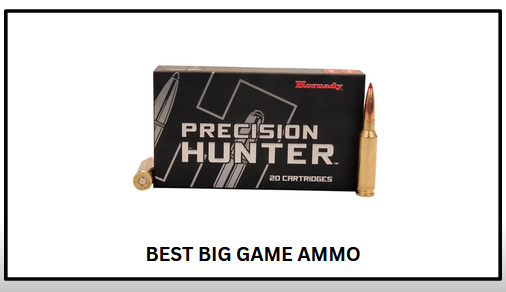
Searching for the best Big Game Ammo can quickly become confusing when different cartridges, bullet weights, and hunting bullet designs are built for very different applications.
I reviewed these loads with a focus on the features that matter in the field, including bullet construction, weight, expansion design, ballistic coefficient, muzzle velocity, energy, case quality, and suitability for different types of game.
The best big game ammo should match your rifle, intended game, hunting conditions, and ammunition requirements rather than simply having the highest velocity or heaviest bullet.
In this guide, I’ll take you through my top picks, the key features I looked at, how I evaluated each load, the factors worth considering before buying, and FAQs to help you make a more informed choice.
Our Top Picks at a Glance
- Hornady American Whitetail .243 Winchester 100 Grain InterLock Boat-Tail SP Centerfire: Best for Deer Hunting
- Barnes Vor-Tx .270 Winchester Short Magnum 140gr TSX BT: Best Lead-Free Option
- Winchester Copper Impact 6.8 Western 162 Grain Copper Extreme Point Brass Cased Centerfire: Best for Large Game
- Nosler .308 Winchester 168 Grain E-Tip Lead-Free Brass Cased Centerfire: Best .308 Winchester Option
- Berger 6.5 Creedmoor 156 Grain Elite Hunter Extreme Outer Limits Rifle Ammunition: Best Premium Hunting Load
- Hornady Precision Hunter 6.5mm Creedmoor 143 Grain Extremely Low Drag, Expanding Centerfire Rifle Ammunition: Best for Extended-Range Hunting
How We Tested the Best Big Game Ammo
6 Best Big Game Ammo
1) Hornady American Whitetail .243 Winchester 100 Grain InterLock Boat-Tail SP Centerfire
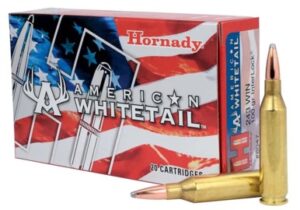
The Hornady American Whitetail .243 Winchester 100 Grain InterLock Boat-Tail SP is centerfire rifle ammunition designed for medium and large game hunting. It uses a 100-grain InterLock bullet with an exposed lead tip and an internal ring that helps keep the bullet’s core and jacket together during expansion.
The load produces a listed muzzle velocity of 2,960 feet per second and muzzle energy of 1,945 foot-pounds. Its brass case and matched powder load are designed to provide consistent ammunition characteristics, while the manufacturer specifies conventional loading pressures and velocities.
The bullet uses Hornady’s InterLock design, which incorporates a raised ring inside the jacket that mechanically connects the jacket and core. The ammunition also uses Hornady cases and primers, with the manufacturer emphasizing consistency across its components.
This ammunition is most suitable for hunters using a .243 Winchester rifle for deer and other medium or large game where a 100-grain hunting bullet is appropriate. It is particularly suited to hunters looking for a conventional hunting load with a controlled-expansion bullet design.
Specifications
- Manufacturer: Hornady
- Caliber: .243 Winchester
- Bullet weight: 100 grains
- Bullet type: InterLock Boat-Tail SP
- Case material: Brass
- Muzzle velocity: 2,960 ft/s
- Muzzle energy: 1,945 ft-lbs
- Primer: Centerfire
- Application: Medium and large game
Pros
- 100-grain InterLock hunting bullet
- Internal InterLock ring helps retain the core and jacket during expansion
- Exposed lead tip for controlled expansion
- Brass cases and quality primers
- Matched powder loads
- 2,960 ft/s listed muzzle velocity
- Suitable for medium and large game
Cons
- Intended specifically for .243 Winchester chambers
2) Barnes Vor-Tx .270 Winchester Short Magnum 140gr TSX BT
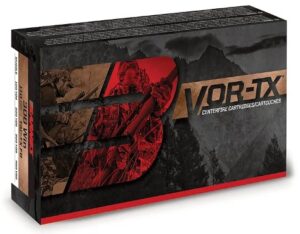
The Barnes Vor-Tx .270 Winchester Short Magnum 140gr TSX BT is centerfire rifle ammunition designed specifically for big game hunting. It uses a 140-grain TSX BT bullet made with all-copper construction and is listed as lead-free, giving hunters an option for applications where lead-free ammunition is preferred or required.
The bullet is designed with a boat-tail hollow-point configuration and uses Barnes’ copper construction to support controlled expansion and deep penetration. Barnes states that the TSX design is intended to retain its weight during expansion, helping maintain penetration through the target.
This load has a listed muzzle velocity of 3,135 feet per second and muzzle energy of 3,056 foot-pounds. It uses brass cases and centerfire primers, with a G1 ballistic coefficient of 0.404. Each box contains 20 rounds.
This ammunition is most suitable for big game hunters using a .270 Winchester Short Magnum rifle. It is particularly relevant to hunters looking for a lead-free hunting load with a 140-grain bullet and the characteristics of an all-copper projectile.
Specifications
- Manufacturer: Barnes
- Caliber: .270 Winchester Short Magnum
- Bullet weight: 140 grains
- Bullet type: Boat Tail Hollow Point
- Case material: Brass
- Muzzle velocity: 3,135 ft/s
- Muzzle energy: 3,056 ft-lbs
- G1 ballistic coefficient: 0.404
- Rounds per box: 20
Pros
- Lead-free all-copper bullet construction
- 140-grain TSX BT bullet
- Designed for big game hunting
- Brass cartridge cases
- 3,135 ft/s listed muzzle velocity
- 3,056 ft-lbs listed muzzle energy
- Boat-tail hollow-point design
- 20 rounds per box
Cons
- Limited to .270 Winchester Short Magnum rifles
3) Winchester Copper Impact 6.8 Western 162 Grain Copper Extreme Point Brass Cased Centerfire
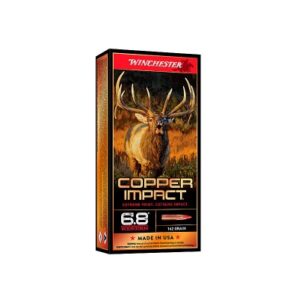
The Winchester Copper Impact 6.8 Western 162 Grain Copper Extreme Point is centerfire rifle ammunition designed for deer and other large game. It uses a 162-grain Copper Extreme Point bullet with solid copper construction and a polymer tip designed to promote rapid expansion on impact.
The bullet features an engineered boat-tail profile and a high ballistic coefficient, which Winchester says helps improve its flight characteristics at longer distances. The solid copper construction is also designed to retain a high percentage of the bullet’s weight during penetration.
This load has a listed muzzle velocity of 2,875 feet per second and muzzle energy of 2,973 foot-pounds. It uses brass cases and centerfire primers, while the lead-free construction makes it suitable for hunters seeking a non-lead ammunition option.
This ammunition is most suitable for hunters using a 6.8 Western rifle for deer and other large game. Its 162-grain bullet, boat-tail design, and high ballistic coefficient also make it relevant to hunters who regularly consider longer-range hunting conditions.
Specifications
- Manufacturer: Winchester
- Caliber: 6.8 Western
- Bullet weight: 162 grains
- Bullet type: Copper Extreme Point
- Case material: Brass
- Muzzle velocity: 2,875 ft/s
- Muzzle energy: 2,973 ft-lbs
- Application: Deer and large game
- Rounds per box: 20
Pros
- Lead-free solid copper construction
- 162-grain Copper Extreme Point bullet
- Polymer tip designed for rapid expansion
- Engineered boat-tail profile
- High ballistic coefficient
- 2,875 ft/s listed muzzle velocity
- 2,973 ft-lbs listed muzzle energy
- Brass cases
Cons
- Limited to 6.8 Western rifles
4) Nosler .308 Winchester 168 Grain E-Tip Lead-Free Brass Cased Centerfire
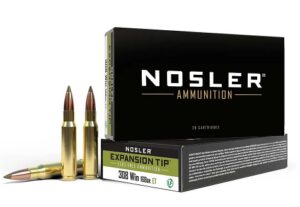
The Nosler .308 Winchester 168 Grain E-Tip is lead-free centerfire rifle ammunition designed for hunters using .308 Winchester rifles. It uses a 168-grain E-Tip bullet made from a solid copper alloy, providing a lead-free option for hunting applications where non-lead ammunition is preferred or required.
The bullet combines a spitzer boat-tail profile with a green polymer tip and Nosler’s Expansion Control Ring. The design also incorporates an Energy Expansion Cavity, which is intended to support controlled expansion while maintaining a high level of bullet weight during penetration. Nosler states that the E-Tip can retain 95% or more of its weight.
Each cartridge is loaded into Nosler headstamped brass with measured powder charges. The manufacturer also states that individual rounds are visually inspected and polished before packaging, with dedicated bullet production equipment used to promote consistency between cartridges.
This ammunition is most suitable for hunters using a .308 Winchester for deer and other appropriate hunting applications. It is particularly relevant to users looking for a lead-free 168-grain load with a boat-tail bullet and carefully controlled manufacturing.
Specifications
- Manufacturer: Nosler
- Caliber: .308 Winchester
- Bullet weight: 168 grains
- Bullet type: Spitzer Boat Tail
- Case material: Brass
- Muzzle velocity: 2,750 ft/s
- Application: Deer
- Primer: Centerfire
- Rounds per box: 20
Pros
- Lead-free copper-alloy E-Tip bullet
- 168-grain bullet weight
- Boat-tail design
- Green polymer tip
- Expansion Control Ring
- 95% or greater weight retention stated by the manufacturer
- Nosler headstamped brass cases
- Individual visual inspection
Cons
- Intended for .308 Winchester rifles
5) Berger 6.5 Creedmoor 156 grain Elite Hunter Extreme Outer Limits Rifle Ammunition
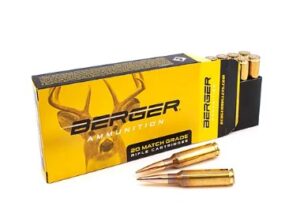
The Berger 6.5 Creedmoor 156 Grain Elite Hunter Extreme Outer Limits ammunition is designed for hunters using 6.5mm Creedmoor rifles, particularly those using custom or high-end factory rifles. It uses a 156-grain Elite Hunter bullet with a boat-tail hollow-point design and a high listed ballistic coefficient of 0.679 G1.
The bullet uses Berger’s hybrid ogive, combining tangent and secant shapes to balance ease of tuning with aerodynamic efficiency. The boat-tail profile is also designed to maintain favorable flight characteristics at longer ranges. Berger specifies a 0.347 G7 ballistic coefficient for the load.
The Elite Hunter bullet uses a thinner J4 Precision Jacket intended to support expansion after initial penetration. Berger also emphasizes consistent bullet cores and tightly controlled jacket dimensions as part of the manufacturing process. The ammunition uses brass cases and centerfire primers, with a listed muzzle velocity of 2,680 feet per second and muzzle energy of 2,488 foot-pounds.
This ammunition is most suitable for hunters pursuing deer, medium game, big game, or predators with a 6.5 Creedmoor rifle. Its bullet design and ballistic characteristics make it particularly relevant to hunters who place emphasis on aerodynamic performance and consistent ammunition characteristics.
Specifications
- Manufacturer: Berger
- Caliber: 6.5mm Creedmoor
- Bullet weight: 156 grains
- Bullet type: Boat Tail Hollow Point
- Case material: Brass
- Muzzle velocity: 2,680 ft/s
- Muzzle energy: 2,488 ft-lbs
- G1 ballistic coefficient: 0.679
- Application: Predator, deer, medium game, and big game
Pros
- 156-grain Elite Hunter bullet
- Hybrid tangent and secant ogive
- Boat-tail design
- High listed G1 ballistic coefficient
- J4 Precision Jacket
- Consistent core construction
- Brass cases
- Designed for multiple hunting applications
Cons
- Limited to 6.5mm Creedmoor rifles
6) Hornady Precision Hunter 6.5mm Creedmoor 143 Grain Extremely Low Drag
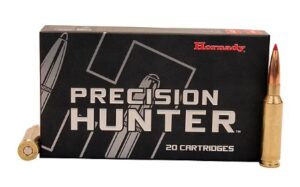
The Hornady Precision Hunter 6.5mm Creedmoor 143 Grain ELD-X is a centerfire hunting load designed for medium and large game. It uses a 143-grain ELD-X bullet with a streamlined spitzer boat-tail profile and a Heat Shield tip designed to maintain its shape during flight.
The bullet combines a secant ogive, boat-tail profile, concentric AMP jacket, and Heat Shield tip to support aerodynamic efficiency. Hornady lists a G1 ballistic coefficient of 0.625 and a G7 coefficient of 0.315, with the Heat Shield tip designed to resist aerodynamic heating and maintain its shape throughout the bullet’s trajectory.
The load has a listed muzzle velocity of 2,700 feet per second and muzzle energy of 2,315 foot-pounds. Hornady’s ELD-X design incorporates an InterLock ring and a thicker jacket shank, with the manufacturer describing different expansion and weight-retention characteristics depending on impact velocity.
This ammunition is most suitable for hunters using a 6.5mm Creedmoor rifle for medium or large game. Its aerodynamic bullet design makes it particularly relevant to hunters who value consistent flight characteristics and want a factory hunting load built around the ELD-X projectile.
Specifications
- Manufacturer: Hornady
- Caliber: 6.5mm Creedmoor
- Bullet weight: 143 grains
- Bullet type: Spitzer Boat Tail
- Case material: Brass
- Muzzle velocity: 2,700 ft/s
- Muzzle energy: 2,315 ft-lbs
- G1 ballistic coefficient: 0.625
- Application: Medium and large game
Pros
- 143-grain ELD-X bullet
- Heat Shield tip
- High listed ballistic coefficient
- Streamlined secant ogive
- Boat-tail design
- AMP bullet jacket
- InterLock ring for core and jacket retention
- Brass cases
Cons
- Limited to 6.5mm Creedmoor rifles
Why Buy Big Game Ammo? (Advantages)
1. Designed for Hunting Applications
Big game ammunition is specifically developed for hunting larger animals. Bullet construction, weight, expansion characteristics, and cartridge performance are selected with hunting use in mind, making these loads different from ammunition primarily intended for target practice.
2. Controlled Bullet Expansion
Many hunting bullets incorporate features designed to control how the projectile expands after impact. Polymer tips, hollow points, internal rings, and specialized jacket designs can influence expansion while maintaining the bullet structure needed for penetration.
3. High Weight Retention
Many modern hunting bullets are engineered to retain a substantial portion of their original weight during penetration. Maintaining bullet mass after expansion can help the projectile continue penetrating, depending on the bullet design and impact conditions.
4. Performance Across Different Hunting Distances
Some big game loads use boat-tail bullets, streamlined ogives, and higher ballistic coefficients to improve aerodynamic efficiency. These characteristics can help the projectile maintain velocity over distance, although actual performance depends on the rifle, ammunition, environment, and shooter.
5. Options for Different Game
Big game ammunition covers a broad range of hunting applications, including deer, medium game, large game, and other appropriate species. Having different bullet weights and cartridge options allows hunters to select ammunition suited to their particular hunting requirements.
6. Availability of Lead-Free Options
Hunters who prefer or are required to use non-lead ammunition can choose loads made with copper or copper-alloy bullets. These provide an alternative to conventional lead-core projectiles and can be particularly useful where hunting regulations restrict lead ammunition.
7. Consistent Cartridge Components
Quality hunting ammunition uses carefully manufactured bullets, cases, primers, and powder charges. Consistent components can help provide predictable ammunition characteristics when sighting in a rifle and preparing for a hunting trip.
8. Wide Selection of Bullet Designs
Hunters can choose from different bullet weights, profiles, construction methods, and expansion designs. This variety makes it possible to select a load based on the rifle, intended game, expected distance, and the type of bullet performance desired.
Factors to Consider When Choosing The Best Big Game Ammo
1. Caliber Compatibility
The ammunition must match the rifle’s chambering. Cartridges with similar names or dimensions are not automatically interchangeable, so always verify the caliber marked on the firearm against the ammunition specification before use.
2. Bullet Weight
Bullet weight affects the characteristics of a hunting load, including its trajectory and terminal behavior. The appropriate weight depends on the cartridge, rifle, intended game, and manufacturer’s recommendations, rather than simply choosing the heaviest available projectile.
3. Bullet Construction
Bullet construction is an important consideration when selecting hunting ammunition. Lead-core, copper, and copper-alloy projectiles can use different designs for expansion and penetration. Examine the manufacturer’s specifications to understand what the particular bullet is intended to do.
4. Muzzle Velocity and Energy
Muzzle velocity and muzzle energy provide useful information about a cartridge’s performance at the barrel. However, these figures alone do not determine how the ammunition will perform at hunting distance because velocity and energy decrease as the projectile travels downrange.
5. Ballistic Coefficient
Ballistic coefficient indicates how efficiently a bullet moves through the air. It can be useful when comparing the aerodynamic characteristics of different hunting loads, although trajectory also depends on muzzle velocity, environmental conditions, sight height, and the rifle’s zero.
6. Expansion and Weight Retention
Look at how the manufacturer describes the bullet’s expansion and weight retention. Features such as polymer tips, controlled-expansion rings, specialized jackets, and solid copper construction can affect how the bullet behaves after impact.
7. Case and Primer Quality
The case and primer are important components of a centerfire cartridge. Brass cases are common among quality hunting loads, while consistent primers and powder charges can contribute to predictable cartridge characteristics and reliable ignition.
8. Intended Game and Hunting Conditions
Consider the animal being hunted and the conditions in which the ammunition will be used. Loads may be designed for deer, medium game, large game, or broader hunting applications. Local regulations, expected distances, environmental conditions, and the rifle’s specifications should all be considered before selecting ammunition.
Best Big Game Ammo FAQs
1. What makes ammunition suitable for big game hunting?
Big game ammunition generally uses bullets specifically designed for hunting, with characteristics such as controlled expansion, penetration, and weight retention. The appropriate ammunition also depends on the rifle’s caliber and the particular species being hunted.
2. Is heavier ammunition always better for big game?
No single bullet weight is automatically appropriate for every big game application. Bullet construction, caliber, velocity, intended game, and the rifle all contribute to how a particular load performs. The manufacturer’s recommended application is an important starting point when choosing a hunting load.
3. Are lead-free bullets suitable for big game hunting?
Lead-free ammunition can be suitable for big game hunting when the cartridge and bullet are appropriate for the intended application. Copper and copper-alloy bullets are available in several hunting loads, and some hunting areas require non-lead ammunition. Hunters should check the regulations applicable to their location.
Conclusion
See Also:
- 5 Best 223 Ammo for Self Defense ,Coyotes and Deer Hunting
- 7 Best Ammo Reloading Kits (Complete & Starter Kits)
- 4 Best 17 HMR Ammo for Varmint,Coyotes,Foxes Hunting

Charles is an outdoor gear writer with a passion for exploring and reviewing outdoor equipment, optics, hunting gear, hiking essentials, and other adventure-focused products. He creates informative, practical content designed to help readers understand product features and make confident buying decisions.