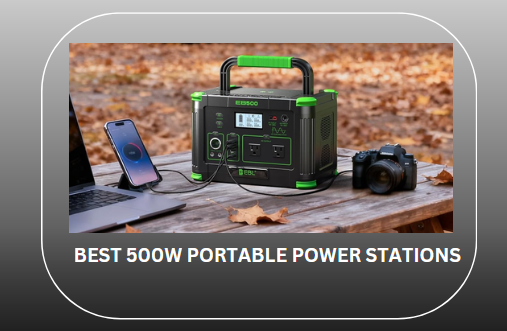
The best 500W portable power stations might be the single most useful piece of equipment you can add to your camping kit, RV setup, or home emergency plan, and I have tested and researched enough of them to say this with confidence.
Whether the power grid fails during a storm or you simply need to keep your phone and laptop charged on a weekend trip, these compact units deliver clean, quiet energy when you need it most. Because they use rechargeable lithium batteries instead of gasoline, they produce no fumes and very little noise.
As a result, you can use them indoors, in a tent, or beside your bed without the drawbacks of a traditional generator. The best 500W portable power stations also pack in must-have features such as pure sine wave AC output, fast recharge times, multiple charging ports, solar charging, long-lasting batteries, and built-in safety protection.
In this guide, I will walk you through the key features that matter most, share my top picks for the best 500W portable power stations, explain the factors you should consider before buying, and answer the most common questions.
By the end, you should have a clearer idea of which 500W power station best matches your camping, RV, outdoor, or emergency backup needs.
Here is a summary of the Best 500w Portable Power Stations:
- EF EcoFlow River 2 Max 500 Portable Power Station — Best Overall -Get it on Amazon
- EBL 500W Portable Power Station — Best for Multiple Devices -Get it on Amazon
- ALLWEI 500W Portable Power Station — Best for Home Backup -Get it on Amazon
- Jackery Explorer 500 v2 and 100W Solar Panel — Best Premium Option -Get it on Amazon
- GRECELL 500W Portable Power Station — Best Budget Pick -Get it on Amazon
Best 500w Portable Power Stations
1) EF ECOFLOW River 2 Max 500 Portable Power Station
Get it on Amazon
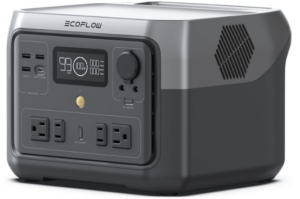
The EF EcoFlow River 2 Max 500 Portable Power Station is a compact 499Wh unit. It earns its place among the best 500W portable power stations on the market. So whether you need backup power at home or a companion for weekend camping, this station covers the basics well. It also works well for RV trips.
It pairs a LiFePO4 battery with fast charging and solar capability. Because of that combination, it appeals to buyers who want dependable power without hauling around a heavy unit.
Charging speed is where this station pulls ahead of many competitors. Thanks to EcoFlow’s X-Stream fast charging technology, the River 2 Max 500 can go from empty to full in around one hour.
This happens when it is plugged into a standard AC outlet. That matters because most power stations in this class take several hours to recharge. So a one-hour turnaround means less downtime between uses. Customers echo this in their feedback. They describe the charging time as fast and, in some cases, almost surprisingly quick.
Output capability is another area worth highlighting. The unit is rated for 500W. But its X-Boost technology allows it to push output up to 1,000W for short bursts. This lets it run higher-draw appliances like coffee makers and rice cookers.
With 11 total ports, it can power up to 11 devices simultaneously. These ports include 300W AC outlets, a 100W USB-C port, USB-A connections, and a 12V car port.
However, buyers should understand that the 1,000W figure applies specifically to X-Boost mode. It does not apply to the base AC rating, and some reviewers have found this distinction confusing at first.
Battery longevity is built around LiFePO4 cell chemistry. This chemistry typically lasts over 3,000 charge cycles and can serve a household for more than a decade. An advanced battery management system also tracks voltage, current, and temperature continuously.
So the cells stay protected from the kind of wear that shortens the life of standard lithium-ion batteries. Because of this monitoring, the unit tends to hold up well even with frequent daily use.
For those who want to charge off-grid, the River 2 Max 500 accepts up to 220W of solar input. It can reach a full charge in roughly 2.3 hours under strong sunlight. This makes it a solid pick for campers and outdoor enthusiasts who want a clean power source away from wall outlets.
Weighing in at around 13.3 pounds, it also remains easy to carry. Its compact dimensions of 10.6 by 10.2 by 7.7 inches make it simple to move from the car to a campsite or between rooms during a power outage.
Specifications
- Brand and Model: EF ECOFLOW RIVER 2 Max 500
- Battery Capacity: 499Wh
- Battery Type: LiFePO4
- Rated AC Output: 500W
- Maximum X Boost Output: Up to 1,000W for compatible devices
- AC Output: 300W
- USB-C Output: Up to 100W
- USB-A Output: Standard USB charging
- 12V Car Port: Yes
- Total Output Ports: 11
- Solar Input: Up to 220W
- Solar Input Voltage: 11 to 50V DC
- AC Recharge Time: Approximately 1 hour
- Solar Recharge Time: Approximately 2.3 hours
- UPS Function: Yes, with approximately 30ms transfer time
- App Control: Yes
- Operating Voltage: 120V
- Weight: Approximately 13.3 lb
- Dimensions: 10.6 × 10.2 × 7.7 inches
- Runtime: About 2 hours at full load, with longer runtime at lower loads
- Warranty: 5 years
- Charging Options: AC, solar, and car charging
- Included Accessories: Power station, AC charging cable, and user manual
Pros
- Very fast one-hour AC recharge
- Long-lasting LiFePO4 battery
- X Boost supports certain higher-wattage appliances
- Lightweight and easy to transport
- Compact design for camping and RV use
- 11 output ports provide good connectivity
- Supports up to 220W solar charging
- UPS function provides fast backup during power interruptions
- Smartphone app offers convenient monitoring and control
- Silent operation with no fumes or exhaust
- Supports AC, solar, and vehicle charging
- Five-year manufacturer warranty
Cons
- Runtime drops considerably when powering high-wattage appliances
2) EBL 500w Portable Power Station
Get it on Amazon
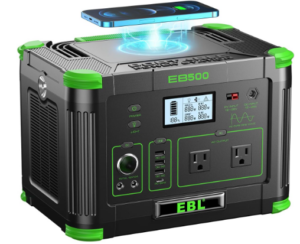
The EBL 500W Portable Power Station (Peak 1000W) is a compact 519.48Wh unit that earns a spot among the best 500W portable power stations available today. So whether you need backup power during an outage or a reliable companion for camping, this station handles the essentials well. It delivers pure sine wave AC output, so it safely runs sensitive electronics like laptops, CPAP machines, and mini fridges without noise or fumes.
Capacity is a real strength here. With 519.48Wh (140,400mAh) packed into a 14.1-pound frame, this unit provides extended runtime for low to medium-draw devices. Because the AC output stays clean and stable, it also protects delicate electronics from power fluctuations, so users can charge sensitive gear with confidence.
Output options are generous as well. The station includes ten total ports, covering two 120V AC outlets, three USB-A Quick Charge 3.0 ports, one 60W USB-C PD port, two 12V DC ports, a 12V car port, and a built-in wireless charging pad.
Because of this variety, it can power up to ten devices at once, and the QC and PD technology charges phones and laptops up to 2.5 times faster than standard charging.
Recharging is flexible, but it does take longer than some competitors. Wall charging takes around 6 to 7 hours, car charging takes 7 to 8 hours, and solar charging takes 6 to 9 hours with a compatible 100W or larger panel.
However, a built-in battery management system protects the unit through overvoltage, overcurrent, short circuit, and temperature control, so safety stays solid even during long charging sessions.
Portability rounds out the package nicely. At 11.45 by 7.95 by 7.95 inches with dual foldable carry handles, the unit moves easily between the house, the car, and the campsite. It also includes a built-in LED flashlight with constant, SOS, and strobe modes, which adds a practical touch for emergencies and nighttime use.
Specifications
- Brand and Model: EBL EB500
- Battery Capacity: 519.48Wh
- Battery Capacity: 140,400mAh
- Battery Type: Standard lithium cylindrical cells
- Rated AC Output: 500W
- Peak Output: 1,000W
- AC Waveform: Pure sine wave
- AC Outlets: 2 × 120V three prong outlets
- USB-A Ports: 3 × Quick Charge 3.0, up to 18W each
- USB C Port: 1 × PD, up to 60W
- DC Ports: 2 × 12V 5A
- Car Port: 1 × 12V 10A
- Wireless Charging: 1 × 10W charging pad
- Total Output Ports: 10
- Solar Charging: Yes
- Maximum Solar Input: Compatible with 100W or higher solar panel
- Wall Recharge Time: Approximately 6 to 7 hours
- Car Recharge Time: Approximately 7 to 8 hours
- Solar Recharge Time: Approximately 6 to 9 hours
- Display: LCD screen
- Built-in Light: Yes, with constant, SOS, and strobe modes
- Battery Management System: Yes
- Dimensions: 11.45 × 7.95 × 7.95 inches
- Weight: Approximately 18 lb
- Operating Voltage: 120V AC / 60Hz
- Charging Methods: AC outlet, 12V car connection, and solar
- Warranty: 2 years
- Fuel Type: Electric, battery-powered
Pros
- 519.48Wh battery provides useful capacity for everyday electronics
- Pure sine wave AC output is suitable for sensitive devices
- 1,000W peak capacity helps accommodate short startup surges
- Ten output connections provide excellent versatility
- USB-A Quick Charge 3.0 supports faster charging
- 60W USB-C PD port is useful for compatible laptops and mobile devices
- Built-in wireless charging pad adds convenience
- Supports AC, vehicle, and solar recharging
- Built-in BMS provides several layers of battery protection
- LED flashlight includes constant, SOS, and strobe modes
- Compact body with dual carry handles
- No gasoline fumes or exhaust during operation
- MPPT solar charging controller improves solar charging efficiency
- Cable storage bag helps keep accessories organized
- Rubber corner guards provide additional protection
- Two-year manufacturer warranty
Cons
- Wall charging takes considerably longer than some premium alternatives
3) ALLWEI 500w Portable Power Station
Get it on Amazon
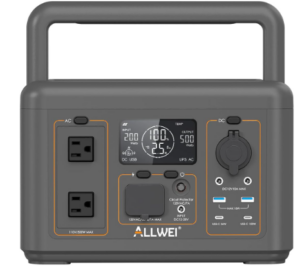
The ALLWEI 500W Portable Power Station, 512Wh LiFePO4 is a compact unit that earns a spot among the best 500W portable power stations available today. So whether you need backup power at home, a reliable companion for RV trips, or a source of energy for outdoor activities, this station covers the essentials well. Because it uses LiFePO4 battery cells, it also promises a longer lifespan than many competing models built with standard lithium.
Charging speed is one of the areas where this station performs strongly. In Q Mode, it can recharge fully from an AC outlet in about 2.5 to 3.5 hours, so downtime between uses stays short. However, charging even faster becomes possible when combining AC and solar input together, since that method can bring a full charge in around 2 hours. Also, three selectable charging modes give users flexibility depending on how quickly they need power restored.
Battery longevity stands out as well. Because the unit relies on LiFePO4 chemistry, it can handle more than 3,000 charge cycles and last up to ten years before dropping to 70 percent of its original capacity. Additionally, a built-in BMS and MPPT system work together to protect the battery and improve charging efficiency, so performance stays consistent over time.
Output options are generous, too. With nine total ports, including two AC outlets, a 100W USB-C port, a 27W USB-C port, two Quick Charge USB-A ports, two DC ports, and a car port, this station can power several devices simultaneously. So whether you need to charge a laptop, run a CPAP machine, or power a mini cooler, there is likely a port that fits the job. Because the AC output uses a pure sine wave, sensitive electronics also stay protected from power fluctuations.
Safety and portability round out the package nicely. The built-in UPS function switches to battery power in under 10 milliseconds, so desktops and file servers stay protected during sudden outages. Meanwhile, at just 13 lbs and with compact dimensions of 11.6 by 7.5 by 7.6 inches, the unit remains easy to carry from the house to the car or campsite.
Specifications
- Brand and Model: ALLWEI PPS600 1
- Battery Capacity: 512Wh
- Battery Type: LiFePO4
- Rated AC Output: 500W
- Peak Output: 1,000W
- AC Waveform: Pure sine wave
- AC Outlets: 2 × 110V / 60Hz
- USB C Ports: 1 × 100W PD and 1 × 27W PD
- USB-A Ports: 2 × Quick Charge 3.0, up to 24W each
- DC Ports: 2 × 13.8V / 10A
- Car Port: 1 × 13.8V / 10A
- Total Output Ports: 9
- Maximum Solar Input: 120W
- Solar Input: 12 to 24V / 10A
- Q Mode AC Recharge: Approximately 2.5 to 3.5 hours
- N Mode AC Recharge: Approximately 4 to 5 hours
- S Mode AC Recharge: Approximately 6 to 8 hours
- AC and Solar Recharge: Approximately 2 hours
- Solar Only Recharge: Approximately 6.5 to 7.5 hours
- Car Recharge: Approximately 4.5 to 5.5 hours using 24V or 6 to 7 hours using 12V
- UPS Switching Time: Less than 10ms
- Pass Through Charging: Yes
- MPPT Controller: Yes
- Battery Management System: Yes
- Built-in Light: Yes
- App Connectivity: No
- Dimensions: 11.6 × 7.5 × 7.6 inches
- Weight: Approximately 13 lb
- Operating Temperature: 32°F to 104°F
- Warranty: 2 years
- Fuel Type: Electric, battery-powered
Pros
- Long-lasting LiFePO4 battery with up to 3,000 charge cycles
- Approximately 10-year battery lifespan under specified conditions
- Fast AC recharge in Q Mode
- Can combine AC and solar charging for faster replenishment
- Lightweight 13-pound design
- Pure sine wave output is suitable for sensitive electronics
- 1,000W peak capacity handles short startup surges
- Nine versatile output ports
- 100W USB-C PD port supports laptops and other demanding devices
- Very fast UPS transfer time of less than 10ms
- Supports pass-through charging
- Built-in MPPT controller improves solar charging efficiency
- Comprehensive BMS protection
- Built-in LED light
- Silent and emission-free operation
- Suitable for CPAP machines and home office equipment
- Two-year manufacturer warranty
Cons
- Some users report inconsistent battery and charging performance
4) Jackery Explorer 500 v2 and 100W Solar Panel
Get it on Amazon
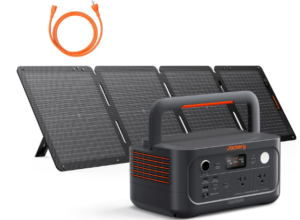
The Jackery Explorer 500 v2 and 100W Solar Panel bundle is a 512Wh power station that earns a strong spot among the best 500W portable power stations available today. So whether you need backup power at home, a companion for camping trips, or a source of energy during unexpected outages, this bundle covers the essentials well.
Because it pairs a LiFePO4 battery with a SolarSaga 100W panel, it also gives users a complete off-grid charging solution right out of the box.
Capacity and output stay dependable throughout daily use. With 512Wh of stored energy and 500W of rated power, plus a 1,000W surge capacity, this station reliably runs laptops, mini fridges, cameras, and small appliances.
Because it includes two pure sine wave AC outlets, sensitive electronics like CPAP machines and medical devices also stay protected from power fluctuations.
Portability is another area where this station performs well. At just 14 lbs, it ranks as one of the lightest LiFePO4 power stations in its class, so carrying it to a campsite or tucking it into an RV feels effortless. Also, a foldable handle and built-in LED light add convenience for tent use or nighttime emergencies, since users never have to search for a separate flashlight.
Battery longevity stands out as a major strength. The LiFePO4 cells are rated for 6,000 charge cycles, so the unit can deliver more than a decade of dependable service.
Additionally, the battery loses only about 5 percent of its charge after six months in storage, which makes it well suited for emergency preparedness. An energy-saving mode further extends battery life, so the unit stays ready when needed most.
Recharging speed is genuinely impressive. The station can go from 0 to 80 percent in about 52 minutes using a standard AC wall outlet, making it one of the fastest charging options in its class. However, solar and car charging remain available too, so users can recharge from a 12V outlet or the included 100W solar panel depending on their situation.
For home backup, a 10 millisecond UPS function switches to battery power seamlessly during blackouts, and because operation noise stays as low as 28 dB, the unit runs quietly enough for bedrooms and quiet campsites alike.
Specifications
- Brand and Model: Jackery Explorer 500 v2
- Battery Capacity: 512Wh
- Battery Type: LiFePO4
- Battery Cycle Life: Up to 6,000 cycles
- Rated AC Output: 500W
- Peak Surge Output: 1,000W
- AC Waveform: Pure sine wave
- AC Outlets: 2 × 110V / 60Hz
- Total Output Ports: 7
- Weight: Approximately 14 lb
- Dimensions: 11.8 × 7.6 × 9.2 inches
- Wall Recharge: Approximately 52 minutes from 0% to 80%
- Solar Recharge: Approximately 8 hours with the 100W panel under suitable conditions
- Solar Panel: SolarSaga 100W included
- Maximum Solar Input: Approximately 62W per connector
- Car Charging: Yes, 12V supported
- UPS Switching Time: 10ms
- Noise Level: As low as 28 dB
- Self Discharge: Approximately 5% after six months of storage
- Pass Through Charging: Yes
- Built in LED Light: Yes
- App Connectivity: No
- Warranty: 2 years
- Bundle Includes: Explorer 500 v2, SolarSaga 100W panel, AC cable, car charging cable, and user manual
Pros
- Long-lasting LiFePO4 battery rated for up to 6,000 cycles
- Potential service life of more than 10 years
- Very fast 52-minute AC recharge to 80%
- Lightweight 14-pound design
- Pure sine wave output for sensitive electronics
- 1,000W surge capacity for compatible startup loads
- Quiet operation as low as 28 dB
- Fast 10ms UPS switching
- Includes a 100W SolarSaga solar panel
- Supports AC, solar, and vehicle charging
- Low self-discharge makes it suitable for emergency storage
- Pass-through charging allows simultaneous charging and device operation
- Built-in LED light
- Foldable handle improves portability
- Suitable for camping, RV trips, and home backup
Cons
- Cannot power portable air conditioners
5) GRECELL 500W Portable Power Station
Get it on Amazon
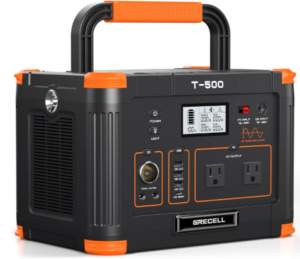
The GRECELL T-500 Portable Power Station 500W (Peak 1000W) is a 519.48Wh unit that earns a solid spot among the best 500W portable power stations available today. So whether you need backup power at home, a companion for camping trips, or a reliable source of energy for a road trip, this station covers the essentials well. Also, because it comes at a budget-friendly price, it appeals to buyers who want dependable performance without paying a premium.
Output options are generous here. With ten total ports, this station can power up to ten devices at once, so campers and homeowners alike rarely run out of connections. It includes two pure sine wave AC outlets, three Quick Charge 3.0 USB-A ports, a 60W USB-C PD port, two DC ports, a car port, and a built-in wireless charging pad. Because the QC and PD technology charges devices up to 2.5 times faster than a standard USB-C charger, phones and tablets fill up quickly.
Capacity stays strong throughout daily use as well. Because the battery holds 519.48Wh, it can run essential devices like laptops, routers, small blenders, and CPAP machines for extended periods. So whether the goal is powering a fan overnight or keeping a phone charged during a multi-day trip, this station has the reserve to handle it. Also, since the AC output uses a pure sine wave, sensitive electronics stay protected from voltage fluctuations.
Portability rounds out the experience nicely. At just 14.1 lbs with a solid carry handle, the unit stays easy to bring along on camping trips, fishing outings, or RV travel. So moving it from the car to a campsite feels effortless.
Additionally, a built-in LED flashlight with light, strobe, and SOS modes adds real value during power outages and nighttime emergencies, since it doubles as an emergency tool without extra gear.
Recharging remains flexible, though it does take longer than some premium competitors. Wall charging takes about 6 to 7 hours, car charging takes 7 to 8 hours, and solar charging takes 6 to 9 hours with a compatible 100W panel.
However, a comprehensive battery management system protects the unit through overvoltage, overcurrent, short circuit, and temperature control, so safety stays reliable even during longer charging sessions.
Specifications
- Brand and Model: GRECELL T 500
- Battery Capacity: 519.48Wh
- Battery Capacity: 140,400mAh / 22.2V
- Battery Type: Lithium-ion
- Rated AC Output: 500W
- Peak Surge Output: 1,000W
- AC Waveform: Pure sine wave
- AC Outlets: 2 × 120V / 60Hz
- USB A Ports: 3 × QC 3.0, up to 18W each
- USB C Port: 1 × PD, up to 60W
- DC Ports: 2 × 12V / 5A
- Car Port: 1 × 12V / 10A
- Wireless Charging: 1 × 10W
- Total Output Ports: 10
- Wall Recharge Time: Approximately 6 to 7 hours
- Solar Recharge Time: Approximately 6 to 9 hours with a 100W panel
- Car Recharge Time: Approximately 7 to 8 hours
- Maximum Solar Input: Approximately 105W
- Solar Input Voltage: 12V to 26V DC
- Operating Temperature: 14°F to 113°F
- Built in LED Light: Yes, with light, strobe, and SOS modes
- LCD Display: Yes
- Battery Management System: Yes
- UPS Function: No
- App Connectivity: No
- Dimensions: 11.6 × 7.9 × 7.9 inches
- Weight: Approximately 14.1 lb
- Warranty: 2 years
- Available Colors: Black, dark green, dark orange, green, grey, light green, and silver
Pros
- Generous 519.48Wh battery capacity
- Pure sine wave output for sensitive electronics
- 1,000W peak surge capability
- Ten output ports provide excellent versatility
- Built-in 10W wireless charging pad
- 60W USB-C PD supports faster charging
- Three USB-A Quick Charge ports
- Supports AC, vehicle, and solar charging
- Lightweight 14.1 pound design
- Solid carry handle improves portability
- Built-in LED light with SOS and strobe modes
- Built-in BMS provides multiple safety protections
- Silent, fume-free operation
- Suitable for CPAP machines and other sensitive electronics
- Two-year manufacturer warranty
Cons
- Standard lithium-ion battery has a shorter lifespan than LiFePO4 alternatives
You may also like to read:5 Best 600w Power Stations
Advantages of Using 500w Portable Power Stations
Clean, Fume-Free Power
A 500W portable power station offers dependable backup power without the bulk of larger units. Because these stations run on rechargeable batteries, they produce no gas fumes and no exhaust. So they stay safe for indoor use during a blackout, and they also work well inside a tent while camping. Also, this clean operation means no trips to the gas station for fuel. So users save time, and they also avoid the ongoing cost of running a traditional generator.
Lightweight and Easy to Transport
Portability stands out as another major advantage. Because most 500W stations weigh between 13 and 18 lbs, they fit easily into a car trunk, an RV cabinet, or a closet at home. So because of this lightweight design, campers, hunters, and road trippers can bring reliable power along without adding significant weight to their gear. So whether the destination is a remote campsite or a weekend cabin, portable power stays within reach.
Versatile Across Many Use Cases
Versatility across use cases also makes these stations appealing. They can charge phones, laptops, tablets, and cameras, but they can also run small appliances like mini fridges, fans, and CPAP machines.
Also, because pure sine wave AC output protects sensitive electronics from power fluctuations, medical devices and computers stay safe during use. So one station can realistically cover emergency preparedness, everyday device charging, and outdoor recreation all at once.
Quiet, Whisper Level Operation
Silent operation adds real value as well, especially compared to gas-powered generators. Because there are no moving engine parts creating combustion noise, these stations run quietly enough for bedrooms, hospitals, and quiet campsites. So users can keep essential devices powered overnight without disturbing sleep, and they can also avoid violating campground noise rules.
Flexible Recharging Options
Flexible recharging options also round out the appeal. Because most 500W stations can recharge from a wall outlet, a car’s 12V port, or a solar panel, users are never limited to a single power source. Additionally, many models include a built-in battery management system that protects against overvoltage, overcurrent, and overheating. So both the unit and connected devices stay safe throughout the charging process.
Reliable Emergency Backup
Finally, these stations also offer genuine peace of mind for emergencies. Because many include a UPS function that switches to battery power within milliseconds, sensitive equipment like desktops and file servers stay protected during sudden outages. So for anyone preparing for storms, power grid failures, or simply unpredictable weather, a 500W power station provides a reliable safety net.
Factors to Consider When Choosing the Best 500w Portable Power Stations
Battery Capacity
Battery capacity determines how long a station can power your devices before needing a recharge. So when comparing options, it helps to think about the specific devices you plan to run and how many hours of use you expect between charges. However, a higher capacity generally also means longer runtime, but it also tends to add weight. So finding the right balance matters for your intended use.
Battery Chemistry
Battery chemistry also plays a major role in long-term value. Because some stations use standard lithium-ion cells, they typically last between 500 and 800 charge cycles, while others use LiFePO4 cells, which can handle 3,000 cycles or more. So because LiFePO4 batteries tend to last over a decade with regular use, they often make more financial sense for anyone planning to rely on their station for years.
Rated and Peak Power
Rated power and peak surge capacity also affect which appliances a station can actually run. So the rated power reflects what the unit can sustain continuously, while the peak or surge rating reflects the short burst of extra power available when an appliance first turns on. So before buying, it helps to check the startup wattage of your most demanding devices, since some appliances draw significantly more power in the first few seconds than they do afterward.
Number and Variety of Ports
The number and variety of output ports also shape how many devices can charge at once. So it helps to look for a mix of AC outlets, USB-A, USB-C, DC ports, and a car port, since different devices require different connections. Also, some stations include a wireless charging pad, which adds convenience for anyone who wants to skip cables entirely.
Recharging Speed and Methods
Recharging speed and available charging methods also matter for anyone who needs power back quickly. So while wall outlet charging tends to be the fastest option, solar and car charging also offer flexibility for off-grid situations. So it helps to consider how you plan to use the station most often, since a slower solar recharge time may not matter much if you primarily charge from a wall outlet at home.
Weight and Portability
Weight and overall portability also influence how practical a station feels in daily use. So a lighter unit is easier to carry on camping trips or load into a vehicle, but weight often correlates with battery capacity. So there is usually a tradeoff between power and portability. Also, compact dimensions and a sturdy carry handle make a noticeable difference when moving the unit frequently.
Safety Features
Safety features also protect both the station and the devices connected to it. So a built-in battery management system should guard against overvoltage, overcurrent, short circuits, and overheating. Additionally, a fast UPS switchover function can seamlessly protect sensitive electronics like computers and medical equipment during sudden power outages. So this feature is worth prioritizing for home backup use.
Price and Warranty
Price and warranty coverage also help determine overall value. So because premium features like LiFePO4 batteries and faster charging often come at a higher price, it makes sense to weigh your budget against how often you expect to use the station. Also, a longer warranty period signals manufacturer confidence in the product. So it can offer useful peace of mind when comparing similar options.
FAQs
What Can a 500W Portable Power Station Run?
A 500W portable power station can typically operate laptops, phones, lights, routers, TVs, cameras, fans, CPAP machines, and other small appliances that remain within its rated output. It generally cannot continuously operate high-demand equipment such as large air conditioners, electric heaters, or powerful cooking appliances.
How Long Will a 500W Portable Power Station Last?
Runtime depends on battery capacity and the power consumption of the connected device. A power station with approximately 500Wh of capacity can provide several hours of operation for low-wattage electronics. However, a device drawing close to 500W may use most of the stored energy in roughly one to two hours.
Are 500W Portable Power Stations Good for Camping and Emergencies?
Yes. Their compact size, quiet operation, multiple charging methods, and ability to power essential electronics make them well suited to camping and emergency backup. Models with LiFePO4 batteries, solar charging, UPS functionality, and built-in lighting can be particularly useful for longer trips and unexpected power outages.
Conclusion
After weighing the features, comparing the top picks, and working through the buying guide, I can confidently say that the best 500W portable power stations earn their reputation for a good reason. Because they combine clean, silent power with genuine portability, they fit seamlessly into camping trips, RV travel, and home emergency preparedness alike.
Also, thanks to advances in battery chemistry, fast charging, and built in safety protection, today’s models deliver more reliability and value than ever before. However, no single station fits every need perfectly, so it helps to match your choice to your specific priorities, whether that means battery capacity, port variety, or recharge speed.
So whatever your situation calls for, investing in one of the best 500W portable power stations means you will always have dependable, quiet, and clean energy ready when it matters most.

Moran is an outdoor gear reviewer with a passion for testing and evaluating equipment that enhances real-world adventures. With a focus on accuracy, durability, and performance, Moran provides honest insights to help readers choose the right gear for their needs. From optics and hunting equipment to everyday outdoor essentials, each review is built on careful research and practical understanding. Moran’s goal is to simplify buying decisions by delivering clear, reliable, and experience-driven recommendations.