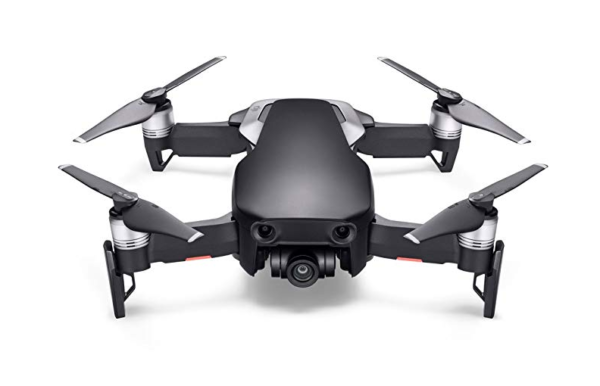
Best drones for photography and video: a detailed guide for all drone users with features, advantages, disadvantages, and other important factors to consider when purchasing drones.
Capturing stunning aerial photos and cinematic videos has never been more accessible, thanks to the latest generation of drones designed for photography and video.
Whether you are documenting travel adventures, creating social media content, or exploring professional filmmaking, the best drones for photography and video combine high-resolution cameras, intelligent flight features, and stable performance in a compact design.
From crisp 4K footage and advanced stabilization to smart shooting modes and extended flight times, these drones are built to help you create breathtaking visuals with ease.
Choosing the right drone means finding the perfect balance between image quality, portability, battery life, and user-friendly controls.
Here are the best drones for photography and video. From auto-follow to drones for kids’ photography.
Best Drones for Photography and Video
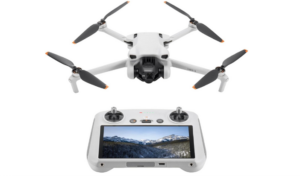
1) DJI Mini 3 (DJI RC)
Get it on Amazon
The DJI Mini 3 (DJI RC) is one of the best drones for photography and video, especially appealing to beginners and content creators who want quality without complexity. Weighing under 249 grams, it avoids many regulatory hurdles for recreational users, making it easy to get started right out of the box. Its compact build does not compromise performance, delivering a balanced mix of portability, stability, and imaging power.
Image quality is one of its strongest qualities. The drone records in 4K HDR, producing sharp, vibrant footage with excellent contrast. Thanks to dual native ISO technology, it handles both bright highlights and darker shadows effectively, whether shooting during the day or in low-light conditions.
The ability to shoot true vertical video adds extra flexibility, especially for social media creators capturing tall subjects like buildings or waterfalls without needing to crop.
Flight performance is reliable and confidence-inspiring. The drone can handle moderate winds and maintains smooth footage with its 3-axis mechanical gimbal. Brushless motors provide enough strength for stable flights even at higher altitudes.
With a transmission range of up to 10 kilometers, users can explore wide landscapes while maintaining a clear live feed. Battery performance is also impressive, offering extended flight sessions, especially when paired with the optional higher-capacity battery.
Ease of use is clearly a priority in its design. Features such as GPS Return to Home, automatic takeoff and landing, and precise hovering make it approachable for beginners. Built-in creative modes like QuickShots and Panorama simplify capturing cinematic footage.
File transfers are quick and convenient through Wi-Fi, allowing users to download clips directly to their phones without needing the controller.
The included DJI RC controller enhances the overall experience. It comes with a built-in 5.5-inch HD screen and pre-installed app, eliminating the need to use a smartphone. The display remains visible even in bright sunlight, making outdoor operation more comfortable and efficient.
Specifications
- Weight: under 249 grams
- Camera : 4K HDR video recording
- Gimbal 3-axis mechanical stabilization
- Max video transmission range: up to 10 km
- Wind resistance Level: 5 up to 38 kph
- Max flight altitude: up to 4000 meters
- Battery life: up to 51 minutes with the extended battery option
- Controller: DJI RC with 5.5-inch built-in display
- Connectivity: Wi-Fi QuickTransfer up to 25 MB per second
- Shooting modes: QuickShots, Panorama, vertical video
Pros
- Excellent 4K HDR image quality with strong dynamic range
- Lightweight design with fewer regulatory restrictions
- Long flight time compared to most compact drones
- Stable footage with reliable wind resistance
- Beginner-friendly controls and safety features
- Built-in screen controller removes the need for a smartphone
- Vertical video support ideal for social media
Cons
- Lacks advanced obstacle avoidance features
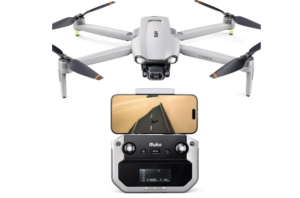
2) Ruko F11PRO 2 Drone
Get it on Amazon
The Ruko F11PRO 2 Drone is a compelling option for anyone seeking a capable and user-friendly drone for photography and video. Designed to balance performance with accessibility, it appeals to both beginners and enthusiasts who want reliable aerial imaging without a complicated setup. Its combination of high-resolution capture, intelligent flight features, and extended flight time makes it well-suited for capturing everything from travel moments to scenic landscapes.
Image and video quality are a major strength. The drone captures 6K still photos with impressive detail and records 4K video at 30 frames per second, producing clear and vibrant footage. A CMOS sensor helps maintain good image quality across different lighting conditions, while the 3-axis mechanical gimbal ensures stable results by reducing shakes and vibrations.
This allows for smooth footage even when flying in less-than-ideal conditions. The wide-angle perspective also makes it effective for capturing large scenes such as coastlines, parks, and city views.
Creative flexibility is supported through a variety of intelligent flight modes. Features like GPS Follow, Orbit Mode, and Waypoint Flight allow users to create dynamic shots with minimal effort.
Portrait shooting capability adds versatility for social media content, while real-time viewing helps with accurate framing during flights. These tools make it easier to achieve cinematic-looking results without advanced piloting skills.
Flight performance is designed for longer sessions and greater range. With two batteries included, the drone offers up to 70 minutes of total flight time, allowing extended shooting without frequent interruptions.
A transmission range of up to 10,000 feet provides the freedom to explore and capture distant scenes while maintaining a stable connection. Safety is reinforced through GPS-based return-to-home functionality, which automatically brings the drone back in case of low battery or signal loss.
Ease of use is another key advantage. The drone includes beginner-friendly features such as one-key takeoff and landing, along with a dedicated beginner mode that simplifies control.
This makes it approachable for first-time users while still offering enough capability for more experienced creators. Its versatility also makes it a practical choice for capturing family events, outdoor adventures, and travel experiences.
Specifications
- Camera 6K photo resolution and 4K video at 30fps
- Gimbal 3-axis mechanical stabilization
- Sensor CMOS image sensor
- Flight time up to 70 minutes total with two batteries
- Transmission range up to 10,000 feet
- Flight modes: GPS Follow, Orbit Mode, Waypoint Flight, Cruise Control
- Shooting options: portrait mode and wide-angle view
- Safety GPS return to home function
- Controls one-key takeoff and landing with beginner mode
- Live view real-time video transmission
Pros
- High-resolution 6K photos with detailed image capture
- Smooth and stable video thanks to the mechanical gimbal
- Long total flight time with dual batteries
- Beginner-friendly controls and easy setup
- Smart flight modes for creative shooting
- Reliable GPS safety features
- Wide-angle perspective for expansive scenes
Cons
- Limited advanced obstacle avoidance features
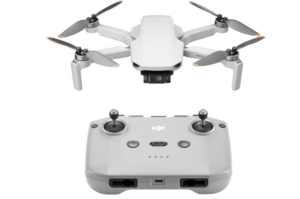
3) DJI Mini 4K
Get it on Amazon
The DJI Mini 4K is a compact and capable drone that delivers a strong balance of portability, image quality, and ease of use, making it a solid choice for photography and video. Weighing under 249 grams, it avoids many regulatory requirements for recreational flying, allowing users to focus more on capturing content rather than paperwork. Its lightweight design also makes it easy to carry on trips, outdoor adventures, or casual shooting sessions.
In terms of imaging, the drone captures sharp 4K Ultra HD video with impressive clarity across different lighting conditions, from bright daylight to softer sunrise and sunset scenes. The inclusion of a 3-axis mechanical gimbal helps maintain smooth and stable footage by minimizing unwanted motion. This ensures more cinematic results even when the drone is in motion or dealing with mild environmental disturbances.
Flight performance is dependable and consistent. With resistance to moderate wind conditions and brushless motors that provide efficient power, the drone maintains stable flight and can operate at higher altitudes. Battery options offer flexibility depending on user needs, with configurations that extend total flight time significantly. This allows for longer creative sessions without frequent interruptions for recharging.
Ease of use is a major focus, making it especially appealing for beginners. Features like one-tap takeoff and landing, stable hovering, and GPS-based return to home simplify operation and improve safety. Built-in intelligent shooting modes such as QuickShots enable users to capture dynamic, professional-looking clips with minimal effort, adding creative variety without requiring advanced piloting skills.
Specifications
- Weight: under 249 grams
- Camera: 4K Ultra HD video recording
- Gimbal 3-axis mechanical stabilization
- Wind resistance: Level 5 up to 38 kph
- Max altitude: up to 4000 meters
- Flight time options: 31 minutes, 62 minutes, or 93 minutes depending on battery set
- Flight features : GPS return to home, stable hover, auto takeoff and landing
- Smart modes: QuickShots including Helix, Dronie, Rocket, Circle, and Boomerang
- Motors: brushless motor system
- App compatibility: requires DJI Fly app installation from official source
Pros
- Lightweight design with fewer regulatory restrictions
- Crisp 4K video quality with stable footage
- Multiple battery options for extended flight time
- Beginner-friendly controls and safety features
- Intelligent shooting modes for creative results
- Reliable wind resistance for stable flights
Cons
- Not designed for professional-grade filmmaking
4) Potensic ATOM SE GPS Drone
Get it on Amazon
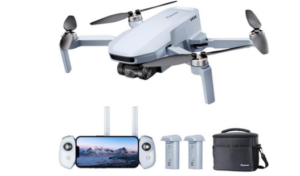
The Potensic ATOM SE GPS Drone is a well-rounded option for photography and video, offering a strong mix of image quality, portability, and user-friendly controls. Its lightweight build under 249 grams makes it easy to carry and removes many regulatory concerns for recreational users. The foldable design adds convenience for travel, allowing creators to capture moments on the go without bulky equipment.
Image performance is impressive for its class. The drone records 4K video at 30 frames per second and captures 12MP still images with a Sony CMOS sensor, delivering clear and detailed results. Electronic image stabilization helps reduce shake, producing smooth footage even without a mechanical gimbal.
The wide 118-degree field of view allows users to capture expansive landscapes, while adjustable camera tilt gives flexibility for different shooting angles during flight. Support for RAW photo formats also adds value for users who want more control during editing.
Creative features enhance its appeal for content creation. Intelligent flight modes such as Follow Me, Waypoint Flight, and Circle Flight make it easier to capture dynamic shots with minimal manual input.
Multiple resolution options allow users to adapt to different shooting needs, whether prioritizing detail or smoother frame rates. Real-time transmission ensures accurate framing and better control while capturing footage.
Flight performance is designed for both stability and extended use. With two batteries included, users can enjoy up to 62 minutes of total flight time, allowing longer sessions without frequent recharging. A transmission range of up to 4 kilometers provides enough distance for most aerial photography needs.
The drone maintains stable flight in moderate wind conditions, supported by brushless motors and optimized control systems. GPS return to home adds an extra layer of safety by automatically bringing the drone back when needed.
Ease of use makes it suitable for beginners while still offering room to grow. The control system includes a beginner mode along with multiple flight modes that adjust speed and responsiveness. This allows new users to learn gradually while giving more experienced pilots the ability to push performance further when needed.
Specifications
- Weight: under 249 grams
- Camera: 12MP photos and 4K video at 30fps
- Sensor: Sony 1/3 inch CMOS
- Stabilization electronic image stabilization
- Field of view: 118 degrees wide-angle
- Camera tilt range: from 20 degrees upward to 90 degrees downward
- Flight time: up to 62 minutes total with two batteries
- Transmission range: up to 4 km
- Wind resistance: Level 5 stability
- Flight modes: Follow Me, Waypoint Flight, Circle Flight
- Control system: SurgeFly with beginner, normal, and sport modes
- Photo format: JPG and RAW DNG support
Pros
- High-quality 4K video with smooth stabilization
- Lightweight and travel-friendly design
- Long total flight time with dual batteries
- Wide-angle lens for capturing large scenes
- Beginner-friendly controls with flexible flight modes
- RAW photo support for advanced editing
- Reliable GPS safety features
Cons
- Lacks a mechanical gimbal for maximum stabilization
5) Holy Stone GPS Drone
Get it on Amazon
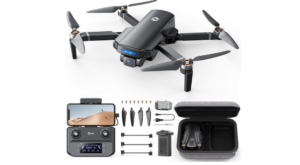
The Holy Stone HS360S GPS Drone is a lightweight and practical choice for photography and video, offering a balance of ease of use, reliable performance, and solid imaging capabilities. Weighing under 250 grams, it avoids many registration requirements for recreational flying, making it convenient for users who want a simple and portable aerial camera. Its compact design also makes it easy to carry for travel, outdoor activities, and everyday shooting.
Image quality is well-suited for casual and semi-serious creators. The drone records 4K UHD video and captures 8MP photos using a GalaxyCore CMOS sensor, delivering clear visuals with good detail. The camera features an adjustable wide-angle lens that can tilt up to 90 degrees, allowing for flexible framing and different perspectives during flight. Features like time-lapse photography and first-person view add more creative possibilities for capturing unique content.
Connectivity and control are designed to be efficient and user-friendly. The controller connects directly to a smartphone using a cable, enabling real-time video transmission without relying on WiFi signals alone. This setup improves stability and responsiveness during flights. With a transmission range of up to 10,000 feet, users can explore wider areas while maintaining a reliable connection and clear live view.
Flight performance is stable and supported by GPS functionality. Precise positioning helps maintain steady hovering and smoother control, while the return to home feature ensures the drone can automatically come back if the battery runs low or the signal is lost. The included battery provides up to 20 minutes of flight time, which is suitable for shorter shooting sessions and casual use.
Ease of use is a major focus, making the drone accessible to beginners. Features such as beginner mode and optical flow positioning help new users learn control gradually. Intelligent shooting modes, including Follow Me, Waypoint Flight, and Point of Interest, allow users to capture dynamic footage with minimal effort. Additional automated movements like Spiral Up and one-tap ascent further simplify the process of creating engaging aerial videos.
Specifications
- Weight: under 250 grams
- Camera: 4K UHD video and 8MP photos
- Sensor: GalaxyCore 1 by 3-inch CMOS
- Lens: 85-degree wide-angle with 90-degree adjustable tilt
- Flight time: up to 20 minutes
- Transmission range: up to 10,000 feet
- Connectivity: direct cable connection to the controller with a real-time view
- Flight features: GPS positioning, return to home, optical flow positioning
- Smart modes: Follow Me, Waypoint Flight, Point of Interest, automated shooting modes
- Control system: beginner mode with intelligent flight assistance
Pros
- Lightweight design with fewer regulatory requirements
- Clear 4K video and decent photo quality
- Stable connection with a direct controller to the phone link
- Beginner-friendly controls and learning features
- Reliable GPS safety functions
- Creative shooting modes for dynamic footage
- Portable and travel-friendly build
Cons
- Shorter flight time compared to some competitors
Next Read: 5 Best Drones with Obstacle Avoidance
Factors to Consider when Choosing the Best Drones for Photography and Videos
There are various photography drones out there in the market and selecting the best drone to suit your photography needs can be a little bit challenging. Here are some of the factors to consider.
- The type of camera.
The type of drone camera available is one of the major factors you should consider when choosing a drone for photography use. Some models come with their own camera while others will need a product like a GoPro attached to them.
It is best that you select a photography drone that comes with its own built-in camera. Built-in cameras have the advantage of being lighter than other cameras and are often more functional.
A few other considerations to look into include; how many megapixels the camera has, whether or not the camera angle is controllable, the distance of the camera and the video resolution given. as you plan on taking pictures or shooting videos when flying your drone, you will require a quality drone camera that is more suited to your needs.
- Live feed.
Live feed of the video being shot is not available with all drones. Drones for photography that have live feeds are costly but worth every penny. The feed will go over Wi-Fi and can be transferred to a variety of devices.
The live feed will be either given to a computer, tablet, or smartphone it can also be available right on the controller which is the best choice for precise flying. Controllers that have an LCD display will frequently have a feed that is sent which allows you to see what the camera is capturing in real-time.
If you intend to shoot aerial videos at parties or of real estate a live feed may be a crucial factor of all.
There are apps for streaming that enable you to stream the video you are capturing directly on your smartphone, tablet, or computer. These abilities will vary from one drone to the other.
The benefit of streaming to your computer or smartphone is that you are able to capture the video directly with no need for a USB transfer. With no live feed present, the video is stored on an SD card or flash drive. What this means is that precise videos for professional purposes will be virtually impossible to shoot.
- Safety features.
What safety features does the drone have? The major safety features you will find on most drones are collision avoidance and return to home (RTH) functions. Collision features vary relying on drone types. Drones can have forward, sideways, backward, and downward collision avoidance. The best drone contains all the collision avoidance features.
Drones also have the return to home feature where a drone may automatically return home when the battery is low, the GPS connection is lost or when you press the return to the home button. RTH normally is a direct flight path after flying to a pre-set height and avoiding obstacles on its path.
However, in advanced drones, the function can select the best route back home considering the environmental conditions. Drones pilots should not depend on the RTH to get them out of trouble though, as environmental factors need to be considered.
- Controllable range.
The range that you will be able to control the drone is very crucial. Most drones operate within a remote distance of 30m. This is the farthest you will be able to control the drone. Knowing the range of control is important when you intend to take aerial footage because you will need to know the range at which you can control your drone. Generally, the costly models will have a further range available.
- Replacement options.
Just like any other gadget or drone, at one point in time parts will require to be replaced or repaired. Some models will not allow for a simple replacement which means that the drone will become useless if anything breaks.
You should ensure that you get a drone whose parts are replaceable. In addition, replacement parts should be easily installed. You should also consider what type of maintenance, if any, will be required. Oiling the blades is important to keep your drone in good shape.
- Size and weight of the drone.
Drones come in different weights and sizes. You need to consider the following:
- As your drone is a camera gear you will want to take it as carry-on luggage on flights. The larger and heavier the drone means that you will have minimal space for other items.
- Will you require to carry your camera gear, including the drone, for lengthy periods during your travel? If you plan to do a lot of hiking, the heavier the drone and accessories, the more weight you will be carrying which might be tiresome.
- The size of the drone will also determine if you will require a separate bag for the drone and its accessories. Small-sized drones that can fold up can be placed in a camera bag or backpack.
- The weight of the drone will also determine if you will need to get a license to fly it. You should check the laws in your home country to determine if you need to register your drone.
- The heavier the drone, the more power it will require to fly. However, heavier models typically do better when gusts of wind are present.
- Height and speed.
Height and speed of your drone are more of a personal preference that has to be tailored to the user’s specific needs. If you have a drone that is meant for capturing live-action video during a certain game, let’s say a baseball game, you may require to reach a height of about 300 feet in order to capture the entire baseball field.
The speed of the drone is also another consideration. Most times, the speed of a drone will be between 10 to 15 miles per hour. The speed of your drone is confined to the range of your controller. Speed will be a consideration if you need to capture a video of sports games such as soccer, or if you want to capture your kid as they run through the yard while shooting a family video.
- Battery life.
The battery life of your drone is also an important factor you should pay attention to. The last thing you would want is your drone to be dead within minutes of use. Consider how long the batteries take to charge once they are depleted.
Keep in mind that most batteries take 2 hours to recharge. Consider how long the drones can fly before needing to be grounded and recharged. Also, consider how long your battery will last before buying and whether a spare battery can be used when a battery has died and how easily available the replacement is.
One factor that determines the longevity of your battery is how the camera is being charged. Most times, drone cameras have their own batteries that they use to operate therefore extending the flight time of your drone greatly.
FAQs
- Does weather affect the ability of your drone’s camera to shoot?
Yes. Photography drones are filled with sensitive electronics. If there is rain or snow, you can’t fly the drone. Winds above 12mph are problematic, not only for highly stable video but also for flight.
- Can you be able to control the camera from the ground?
Yes. You can be able to adjust the tilt, pan, and roll and see the image on the ground monitor in order to get the best shots.
- Can one see what is being filmed?
Yes. It is possible to stream the aerial drone footage in real-time to the pilot’s remote controller which enable the client on the ground to see what the aerial camera is capturing.
- What if the drone gets out of sight?
You may be shooting a video outdoors and your drone happens to get out of sight. If this happens, it will automatically get into the return to land mode. This means that the drone will get back to where it began.
- Is learning how to fly a drone difficult?
The difficult level of learning how to fly a drone differs depending on the person and what drone type they are flying. For instance, if a person has great sensorimotor skills and hand-eye coordination, then learning how to fly the drone will be simple for them.in addition learning how to fly a high-end drone might be simpler than learning to fly a cheap one. This is because the high-end drones normally have many built-in flight assistance features.
Advantages
- Simple to change settings.
With drone camera, you will be able to make some important changes to the camera settings while the drone is still flying especially if you have a first-person view camera. Without having to bring down the drone to make changes to the settings, you can simply do that when the drone is 500 feet above the ground. This gives you independence as well as saves you valuable time.
- Increase value to the quality of work.
Having a camera attached to your drone is essential as it allows you to do more work than if you didn’t have one. Unlike other aerial systems, drones with cameras allow you to shoot important videos and capture images from high above the ground. This is achievable at a much lower cost than if you had to collect data using a helicopter.
- Autonomous view.
Drone cameras give you the privilege of seeing where you are flying to without the need to physically look at the drone. You don’t have to keep looking up as this might have a negative effect on your vision especially if you have to look directly at the sun when looking at your drone.
- Safety
Safety is one crucial factor to consider when shooting videos or capturing pictures. Drones are able to fly high and reach places where it is very risky for people to reach.
- Versatility
Drones can be used at places where it is not feasible to use helicopters, people, or even airplanes. Drones are also able to fly close to buildings and take images from a closer view.
Disadvantages
- Requires expertise.
Taking photos and videos from above the ground using a drone camera requires some level of expertise and experience. There are too many obstructions when taking photos from high up in the ground which include cloud shadows and wind. An expert is needed who will be able to get the best shot.
- Limited flexibility.
A drone camera usually comes attached to the drone which limits its focal length. This makes it difficult to zoom in or out an object in order to capture high-quality images. You may end up getting poor footage or pictures especially if you are using a drone camera with a low shooting range.
Conclusion
The best drones for photography and video offer a powerful blend of creativity and convenience, making aerial content creation more exciting than ever. With features like high-quality cameras, smooth stabilization, intelligent flight modes, and reliable safety systems, these drones cater to both beginners and experienced creators.
Whether you are capturing sweeping landscapes or dynamic action shots, investing in the right drone can elevate your content and unlock new perspectives. By focusing on key factors such as camera performance, flight time, ease of use, and portability, you can confidently choose a drone that fits your needs and helps bring your creative vision to life.t.
See Also: Best Drones for Beginners

Albert, the founder of Outdoormoran, is a dedicated outdoor enthusiast with a passion for delivering the most current, accurate, and easy-to-understand information on all different outdoor gear and optics. He shares his expertise with beginners by teaching the technical aspects of outdoor gear and optics through his comprehensive collection of guides.