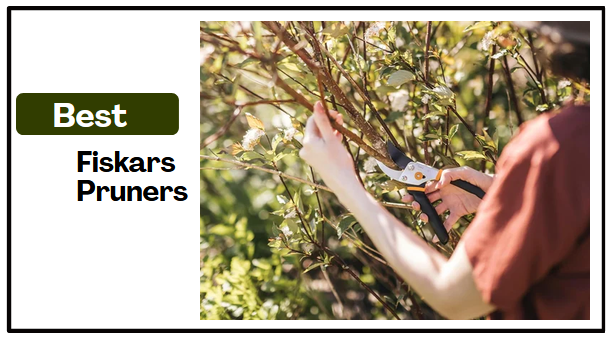
Keeping plants healthy and well-shaped becomes much easier when I have the right pruning tool for the job. The Best Fiskars Pruners offer sharp steel blades, comfortable grips, bypass cutting action, low-friction coatings, and different cutting capacities for handling various garden tasks.
In this guide, I cover the key features, my top picks, factors to consider when buying, and FAQs to help you choose the Best Fiskars Pruners for your garden.
Best Fiskars Pruners
1) Fiskars Bypass Pruning Shears
Get it on Amazon
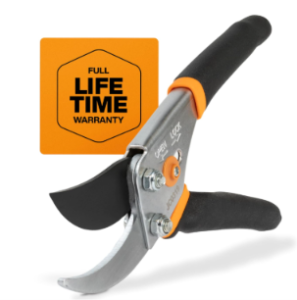
The Fiskars Bypass Pruning Shears provide clean cuts for flowers, green stems, herbs, and small branches. Their bypass blade passes over a fixed blade, helping reduce crushing when pruning live growth. With a 5/8-inch cutting capacity, they handle many routine gardening tasks. The lightweight design also makes them comfortable for regular plant maintenance.
The precision-ground steel blades deliver sharp and consistent cuts. A low-friction coating helps reduce sap buildup and gumming during use. It also adds resistance to rust with proper care. The built-in sap groove helps prevent the blades from sticking when cutting stems with more sap.
An ergonomic handle with a non-slip grip gives these pruners a secure feel during repetitive work. At 9.6 ounces, they remain light enough for extended pruning sessions.
The ambidextrous design accommodates both left- and right-handed users. A thumb-operated safety lock keeps the blades closed during storage and transport, although some users have reported sticking or inconsistent operation.
Best Suited For: These pruners suit home gardeners, beginners, flower arrangers, and houseplant owners who handle routine plant care. They work well for deadheading flowers, trimming herbs, pruning roses, and shaping small shrubs.
Their 5/8-inch cutting capacity handles light to medium pruning, while thicker hardwood branches may require more hand pressure. For heavier cutting tasks, larger loppers offer a more suitable option.
Specifications
- Cutting Capacity: 5/8 inch
- Blade Type: Bypass
- Blade Material: Precision-ground hardened alloy steel
- Overall Length: 9.07 inches
- Weight: 9.6 ounces
- Handle: Ergonomic non-slip grip
- Blade Features: Low-friction coating and sap groove
- Hand Orientation: Ambidextrous
- Warranty: Full Lifetime Warranty
Pros
- Makes clean cuts on live growth
- Sharp precision-ground steel blades
- Coating reduces friction and sap buildup
- Sap groove helps prevent sticking
- Lightweight for repetitive pruning
- Comfortable non-slip handle
- Useful for flowers, herbs, shrubs, and houseplants
- Backed by a Full Lifetime Warranty
Cons
- Locking mechanism may stick on some units
2) Fiskars SoftGrip Bypass Pruning Shears
Get it on Amazon
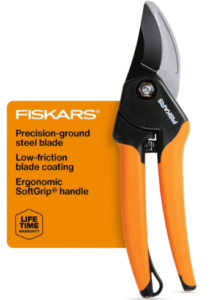
The Fiskars SoftGrip Bypass Pruning Shears are made for light pruning, flower cutting, and everyday plant care. Their bypass blade moves past a fixed blade to produce clean cuts on live stems and branches up to 5/8 inch thick. This action helps reduce crushing when trimming green growth, making the shears useful for roses, vines, herbs, shrubs, and houseplants.
A fully hardened, precision-ground steel blade provides sharp cutting performance for routine garden tasks. The low-friction coating helps the blade move smoothly through stems while reducing sap buildup and gumming. It also helps protect the blade from rust during outdoor use. A serrated edge provides additional grip while cutting.
The SoftGrip handle adds cushioning and improves control during repetitive pruning. At only 7 ounces, these shears remain light and easy to handle for detailed work. Their ambidextrous design allows both left- and right-handed users to operate them comfortably. A hang hole also provides a simple storage option.
Best Suited For: These pruners are best suited to budget-conscious gardeners who mainly handle light pruning and detailed plant care. They can work well for flower stems, herbs, vines, and houseplants, particularly when a lightweight tool is preferred. However, reported issues with blade bending, durability, and the locking mechanism should be considered before purchase. Regular cleaning and light blade oiling can help maintain the tool.
Specifications
- Cutting Capacity: 5/8 inch
- Blade Type: Bypass
- Blade Material: Hardened precision-ground steel
- Overall Length: 10.67 inches
- Weight: 7 ounces
- Handle: SoftGrip cushioned design
- Blade Coating: Low-friction, rust-resistant
- Hand Orientation: Ambidextrous
- Warranty: Lifetime Warranty
Pros
- Clean cuts on live stems and green growth
- Lightweight 7-ounce construction
- Comfortable SoftGrip handle
- Suitable for smaller hands
- Works for left- and right-handed users
- Low-friction coating reduces sap buildup
- Useful for flowers, herbs, vines, and houseplants
- Affordable option for light pruning
Cons
- Locking mechanism has reported reliability problems
3) Fiskars PowerGear2 Bypass Pruning Shears
Get it on Amazon
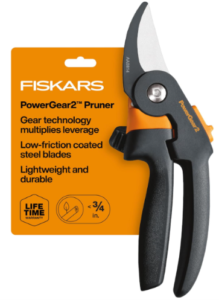
The Fiskars PowerGear2 Bypass Pruning Shears are designed for cutting tougher branches up to 3/4 inch thick. Their bypass blade moves past a stationary blade to make clean cuts on live growth. The PowerGear2 mechanism increases leverage through the cut, helping reduce the hand force needed for thicker branches.
A modified gear system concentrates cutting power around the middle of the branch, where resistance can increase. The fully hardened, precision-ground steel blades provide consistent cutting performance and can be sharpened when needed. A low-friction coating also helps reduce sap buildup, gumming, and friction while adding rust resistance.
The contoured rolling handle follows the natural movement of the hand during cutting. This design can reduce hand and wrist strain during repeated pruning.
At 8.8 ounces, the shears remain relatively lightweight for a larger, heavy-duty pruner. However, some users report that the handle can rotate during use, while others find the larger design uncomfortable for smaller hands.
Best Suited For: These pruners are best suited to gardeners who regularly cut thicker branches, tree limbs, tough stems, and similar growth. They can also benefit users who want more mechanical leverage during pruning, including some gardeners with limited hand strength. Consider reported issues with the locking mechanism, durability, and gear operation, especially if you expect reliable heavy-duty use.
Specifications
- Cutting Capacity: 3/4 inch
- Blade Type: Bypass
- Blade Material: Hardened precision-ground steel
- Overall Length: 11.5 inches
- Weight: 8.8 ounces
- Handle: Contoured rolling handle
- Blade Coating: Low-friction, rust-resistant
- Hand Orientation: Ambidextrous
- Warranty: Lifetime Warranty
Pros
- Strong leverage for thicker branches
- Clean bypass cuts on live growth
- Handles branches up to 3/4 inch
- Hardened steel blades
- Low-friction coating reduces sap buildup
- Rolling handle can reduce hand strain
- Suitable for tree limbs and tough stems
- Blades can be sharpened
Cons
- Locking mechanism has frequently reported failures
4) Fiskars 8″ SoftGrip Multipurpose Garden Snips with Sheath Pruning Shears
Get it on Amazon
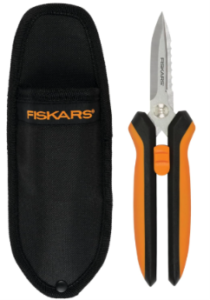
The Fiskars 8″ SoftGrip Multipurpose Garden Snips combine pruning and general cutting functions in one compact tool. Their straight edge handles bags and boxes, while the serrated edge works through rope and twine. A built-in wire-cutting section adds another useful function for light garden tasks.
The 3-inch micro-tip blades reach the end of the cutting area for precise work around flowers and plants. Their non-stick coating helps reduce sap buildup and sticking during use. Fully hardened steel also provides a durable cutting surface for routine gardening jobs.
Comfort comes from the SoftGrip handle and Easy Action spring, which helps the snips reopen after each cut. At 7.2 ounces, they remain light enough for detailed work and extended use. The ambidextrous design suits both left- and right-handed gardeners. A protective sheath provides safer storage when the snips are not in use.
Best Suited For: These garden snips are best suited to home gardeners, flower arrangers, houseplant owners, and anyone who needs one tool for several light cutting tasks. They work particularly well for deadheading, flower cutting, trimming small stems, opening bags, and cutting twine. They are not intended for thick branches or heavy materials, and the multiple sharpened edges require careful handling.
Specifications
- Overall Length: 8 inches
- Blade Length: Approximately 3 inches
- Blade Type: Straight, serrated, and wire-cutting sections
- Blade Material: Hardened precision-ground steel
- Blade Coating: Non-stick
- Weight: 7.2 ounces
- Handle: SoftGrip with Easy Action spring
- Hand Orientation: Ambidextrous
- Warranty: Lifetime Warranty
Pros
- Combines several cutting functions in one tool
- Micro-tip blades provide precise cuts
- Straight edge handles bags and boxes
- Serrated edge cuts rope and twine
- SoftGrip handle improves comfort
- Lightweight for detailed garden work
- Non-stick coating helps reduce sap buildup
- Includes a protective sheath
Cons
- Not suitable for thick branches
5) Fiskars Forged Steel Bypass Pruning Shears
Get it on Amazon
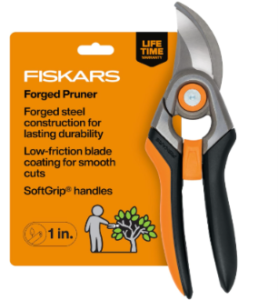
The Fiskars Forged Steel Bypass Pruning Shears are designed for demanding pruning jobs involving live stems and branches up to 1 inch thick. Their bypass cutting action allows the blade to pass a stationary blade, helping produce controlled cuts on living growth. The 1-inch capacity also makes them suitable for thicker branches than many compact hand pruners.
A fully hardened, precision-ground steel blade provides the cutting edge and can be sharpened to maintain performance. The replaceable blade design can also help extend the tool’s service life. A low-friction, rust-resistant coating reduces friction during cutting while helping limit sap buildup, gumming, and corrosion.
The forged steel construction gives the shears a substantial design, while the SoftGrip touchpoints provide a more comfortable hold. At 8.6 ounces, they offer a heavier feel than compact pruners. The ambidextrous handle also allows both left- and right-handed gardeners to use them. However, reported failures involving the recoil spring and safety lock raise concerns about long-term reliability.
Best Suited For:These pruners are best suited to serious gardeners who need to cut thick stems, larger branches, apple tree growth, and other demanding garden material. They may also suit users who prefer a larger hand pruner with a 1-inch cutting capacity. However, the reported spring, locking mechanism, and durability problems should be carefully considered before relying on them for frequent or professional use.
Specifications
- Cutting Capacity: 1 inch
- Overall Length: 11.5 inches
- Blade Material: Hardened precision-ground alloy steel
- Blade Type: Bypass
- Blade Design: Replaceable and sharpenable
- Blade Coating: Low-friction, rust-resistant
- Handle: Forged steel with SoftGrip touchpoints
- Weight: 8.6 ounces
- Hand Orientation: Ambidextrous
- Warranty: Lifetime Warranty
Pros
- Cuts branches up to 1 inch thick
- Forged steel construction
- Hardened, precision-ground blade
- Blade can be sharpened or replaced
- Low-friction coating reduces sap buildup
- SoftGrip touchpoints improve handling
- Ambidextrous design
- Suitable for thick stems and demanding pruning
Cons
- Recoil spring has frequent reported failures
You may also like to read:6 Best Fiskars Axe
Advantages of Using Fiskars Pruners
Clean Cutting Performance
Fiskars offers bypass pruners designed to cut through live stems and branches with a controlled shearing action. The cutting blade passes the stationary blade rather than crushing the stem between two surfaces. This makes bypass designs useful for pruning green growth, flowers, shrubs, vines, and other living plants.
Different Cutting Capacities
The range of cutting capacities allows gardeners to choose a pruner according to the thickness of the material they regularly cut. Smaller models suit delicate stems and routine garden maintenance, while larger designs can handle substantially thicker branches. This makes it easier to match the tool to a specific pruning task.
Sharp, Hardened Blades
Many Fiskars pruners use precision-ground, hardened steel blades. These blades are designed to provide a sharp cutting edge for repeated pruning. Some models can also be sharpened, allowing users to restore the cutting edge as it becomes dull.
Low-Friction Blade Coatings
Several models use low-friction coatings that help the blade move through plant material more smoothly. These coatings can also reduce sap buildup and gumming while providing additional resistance to rust. This is useful when pruners are used frequently around plants that produce sticky sap.
Comfortable Handle Designs
Fiskars pruners include ergonomic and SoftGrip handle features on several models. These designs provide cushioning and grip while giving the user better control. Comfortable handles can be particularly useful during repeated pruning sessions.
Lightweight Options
Many of the pruners are relatively lightweight, which makes them easier to carry and control during detailed garden work. Lighter designs can also reduce hand fatigue when trimming flowers, herbs, houseplants, and smaller branches.
Ambidextrous Use
Several Fiskars pruners are designed for both left- and right-handed users. This gives gardeners greater flexibility when choosing and positioning the tool during pruning. It also makes the pruners suitable for households where users may have different hand preferences.
Sharpenable or Replaceable Blades
Some models feature blades that can be sharpened or replaced. Sharpening can restore cutting performance after extended use, while a replaceable blade can potentially extend the useful life of the tool. However, replacement-part availability can vary by model.
Factors to Consider When Choosing the Best Fiskars Pruners
Cutting Capacity
Consider the diameter of the branches and stems you normally prune. Smaller capacities are suitable for flowers, herbs, green stems, and light pruning, while higher-capacity pruners are better suited to thicker branches. Choosing a capacity that matches your typical workload helps prevent unnecessary strain on both the tool and your hands.
Blade Type
The blade design affects how the pruner cuts plant material. Bypass blades are particularly suitable for live growth because the cutting blade passes the stationary blade to create a shearing action. Consider the type of plants you maintain and choose a blade design that matches those pruning requirements.
Blade Material and Sharpness
Look for hardened, precision-ground steel when you need a blade that can maintain a useful cutting edge through repeated work. A sharp blade makes pruning easier and can help produce cleaner cuts. Also consider whether the blade can be sharpened when it becomes dull.
Handle Comfort
Handle shape and grip can make a noticeable difference during extended pruning sessions. SoftGrip surfaces and ergonomic contours can improve control while reducing discomfort. If you have smaller or larger hands, consider the handle size and shape before choosing a pruner.
Weight
Weight affects how easily you can control the pruner and how quickly your hand may become tired. Lightweight models can work well for detailed pruning and longer sessions, while heavier designs may provide a more substantial feel for thicker branches. Choose a weight that matches your strength and intended workload.
Locking and Spring Mechanism
Check the reliability of the safety lock and opening spring before choosing a pruner. A secure lock helps keep the blades closed during storage, while a dependable spring allows the jaws to reopen smoothly after each cut. Reported failures with these components can affect both convenience and the useful life of the tool.
Blade Coating and Maintenance
A low-friction, rust-resistant coating can help reduce friction and limit sap buildup on the blade. Even with this protection, regular cleaning and light oiling can help maintain the cutting mechanism. Consider how much maintenance you are willing to perform after each pruning session.
Durability and Warranty
Consider the construction materials and expected frequency of use. Forged or hardened components can provide a substantial design for demanding work, but real-world reliability also matters. Check the warranty coverage and consider reported problems with springs, locks, blades, and other components before making your choice.
FAQs
What are Fiskars Pruners best used for?
Fiskars Pruners are useful for a range of garden tasks, including trimming flowers, herbs, vines, shrubs, green stems, and branches. The appropriate model depends on the cutting capacity and the thickness of the material being pruned.
Are Fiskars Pruners suitable for thick branches?
Some Fiskars Pruners are designed for thicker branches, with certain models offering cutting capacities of up to 1 inch. However, users should stay within the manufacturer’s rated capacity and choose a larger cutting tool when branches exceed the pruner’s intended range.
How do I maintain Fiskars Pruners?
Clean the blades after use to remove sap and plant residue, then dry them before storage. Applying a small amount of suitable oil can help maintain the moving parts and protect against corrosion. Sharpenable blades should also be maintained when cutting performance begins to decline.
Conclusion

Moran is an outdoor gear reviewer with a passion for testing and evaluating equipment that enhances real-world adventures. With a focus on accuracy, durability, and performance, Moran provides honest insights to help readers choose the right gear for their needs. From optics and hunting equipment to everyday outdoor essentials, each review is built on careful research and practical understanding. Moran’s goal is to simplify buying decisions by delivering clear, reliable, and experience-driven recommendations.