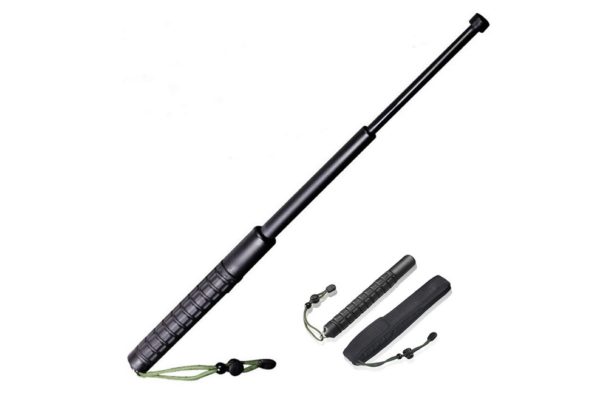
Can You Legally Carry a Collapsible Baton?
Collapsible batons, also called expandable or telescopic batons, have become increasingly popular as personal protection tools. Compact, easy to conceal, and quick to deploy, they appeal to those who want a non-lethal means of self-defense without carrying a firearm.
Outdoor and survival gear reviewers, such as the team at Outdoor Moran, often highlight their advantages: durability, ease of use, and effectiveness in deterring attackers.
But beyond the question of practicality lies a far more complicated one: can you legally carry a collapsible baton? The answer depends heavily on where you live, whether you intend to carry openly or concealed, and how the law in your jurisdiction defines “weapons.”
The Appeal of Collapsible Batons
A collapsible baton typically extends from a compact length of 6–8 inches to a striking length of 16–26 inches with a flick of the wrist. Outdoor Moran points out that leading models, like the ASP Expandable Baton, are lightweight yet sturdy, designed for law enforcement but also available to civilians. For many, this makes them an ideal “middle ground” between lethal weapons like firearms and less effective deterrents like whistles or flashlights.
The appeal is clear: they are intimidating when extended, capable of stopping an attacker through pain compliance, and easy to carry discreetly in a bag or holster.
However, it is precisely these qualities—concealability, striking power, and association with law enforcement—that cause governments to regulate or ban their use.
Legal Status in the United States
In the United States, no single nationwide law governs collapsible batons. Instead, the rules are set at the state and sometimes even city level. This creates a patchwork of regulations that can confuse travelers and residents alike.
In many states, such as Texas and Oregon, expandable batons are legal to own and may be carried under certain conditions. Texas, for instance, allows ownership and carry but requires the baton to be kept in a holster or sheath affixed to the body. Oregon permits open carry but bans concealed carry without exception, treating concealed batons as dangerous weapons under state statute.
Other states impose much stricter rules. New York, Massachusetts, Washington (both state and D.C.), Pennsylvania, Georgia, and Michigan all place heavy restrictions on civilian possession. In some of these, merely owning an expandable baton—even kept at home—may be unlawful. In Pennsylvania and Georgia, for example, collapsible batons are outright prohibited, with no exceptions for self-defense.
Perhaps the most contentious state has been California. For decades, the state classified batons as “clubs,” prohibiting their possession and carry by civilians. In 2024, however, a federal court ruled that the blanket prohibition was unconstitutional, citing Second Amendment protections. While this ruling opened the door for legal ownership and potentially carry, the situation remains in flux. Local enforcement, pending appeals, and clarifying legislation mean residents must exercise caution and confirm the current state of the law before assuming batons are legal.
Even in states that technically allow batons, the manner of carry matters. Many jurisdictions draw a line between open carry, where the baton is visible in a sheath, and concealed carry, where it is hidden on the body. A person openly carrying a baton might not break the law, but concealing it could bring criminal charges. This distinction reflects the way lawmakers view expandable batons—as potential weapons first, self-defense tools second.
The Role of Intent and Justification
One consistent theme across U.S. jurisdictions is that intent and context matter. Even in states where collapsible batons are legal, their use is justified only in narrow circumstances. Laws on self-defense usually require that force be “reasonable” and proportionate to the threat faced. Using a baton in an offensive, aggressive way can transform a defensive tool into a liability, resulting in charges for assault or weapons violations.
For instance, in Florida, owning a collapsible baton is not illegal, but carrying one concealed without a permit can be treated as a crime. If the baton is used in a fight that does not clearly qualify as self-defense, the individual could face felony assault charges. In short, legality is not just about possession—it extends to how, when, and why the baton is carried and deployed.
International Laws
Looking beyond the United States, collapsible batons face even tighter restrictions.
In the United Kingdom, expandable and friction-lock batons are classified as “offensive weapons.” Civilian possession, even in the privacy of one’s home, is banned. The prohibition was first codified in the 1988 Criminal Justice Act and reinforced by updates to weapons laws in 2019. Similarly, in Ireland, telescopic truncheons are explicitly illegal, reflecting a European trend toward restricting non-firearm striking weapons.
Canada treats spring-loaded batons as prohibited weapons. Civilians are barred from carrying them, whether openly or concealed, and even simple possession can lead to criminal charges.
Some countries strike a middle ground. In Sweden, citizens may legally own collapsible batons but cannot carry them in public. This mirrors the approach of many jurisdictions that differentiate between home possession and public carry. In Brazil, by contrast, no general restrictions apply, though private security agencies may regulate what types of batons their personnel can use.
Ownership vs. Carrying
A crucial distinction in most legal systems is the difference between owning a collapsible baton and carrying it in public. Ownership may be permitted in places like Oregon or Sweden, but carrying one outside the home—especially concealed—is treated as a separate, often criminal, act. This reflects lawmakers’ belief that while citizens may collect or store such items, their presence in public increases the risk of misuse or escalation during confrontations.
Practical Considerations
Even if your jurisdiction allows collapsible batons, there are practical reasons to exercise caution. First, enforcement can vary. A police officer may interpret your possession of a baton as suspicious, especially if you are carrying it concealed or in a location known for strict ordinances. Second, public perception plays a role. Unlike pepper spray or a personal alarm, a baton is inherently aggressive in appearance, and producing one—even legally—can escalate rather than de-escalate a confrontation.
Alternatives such as pepper spray often provide similar deterrence with fewer legal risks. Pepper spray is widely legal, especially in the U.S., and is recognized by many law enforcement agencies as an effective, less-than-lethal option for civilians.
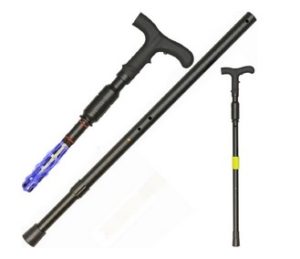
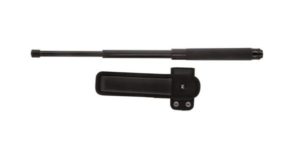
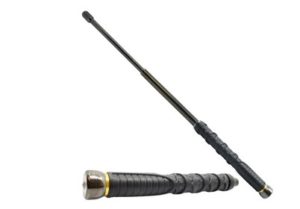
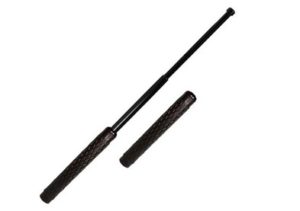
Here is a quick summary of the best collapsible batons
1) ASP Expandable Batons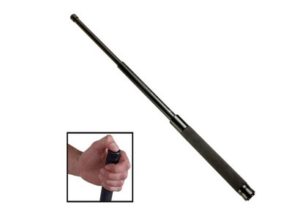 |
|
| 2) Police Force Tactical Expandable Batons
|
|
| 3) ZAP Batons
|
|
| 4) Smith & Wesson Expandable Batons
|
|
| 5) Streetwise Expandable Batons
|
|
| 6) Safety Tech Expandable Baton
|
|
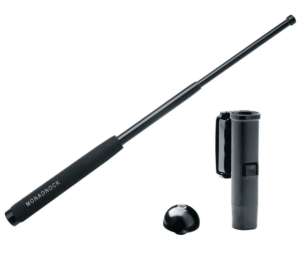
| 7) Monadnock Autolock Expandable Batons
|
|
8) Rothco Expandable Batons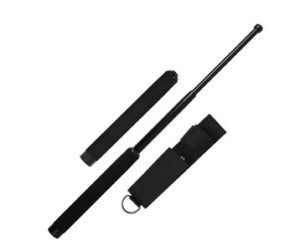 |
|
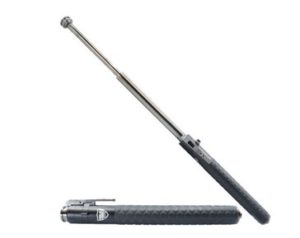
| 9) Guard Dog Security X-Series Heavy Duty Metal Expandable Baton
|
|
Final Thoughts
So, can you legally carry a collapsible baton? The short answer is: sometimes, but not everywhere, and rarely without restrictions. In the United States, laws vary from complete prohibition in places like New York and Pennsylvania, to conditional legality in Texas and Oregon, to a shifting landscape in California. Internationally, most developed nations ban civilian possession outright, with only a handful allowing limited ownership.
The longer answer is that legality depends on three factors: your jurisdiction, how you carry the baton (openly or concealed), and how you intend to use it. Ownership at home may be permitted where public carry is not.
Open carry may be allowed where concealment is criminal. And in every case, misuse outside the bounds of legitimate self-defense can lead to serious legal consequences.
If you are considering a collapsible baton for personal protection, the safest course is to research your local laws thoroughly, consult an attorney if needed, and weigh the risks against alternatives like pepper spray.
A collapsible baton can be a powerful deterrent, but unless you are law enforcement or living in a jurisdiction with clear allowances, the legal risks may outweigh the benefits.

Albert, the founder of Outdoormoran, is a dedicated outdoor enthusiast with a passion for delivering the most current, accurate, and easy-to-understand information on all different outdoor gear and optics. He shares his expertise with beginners by teaching the technical aspects of outdoor gear and optics through his comprehensive collection of guides.