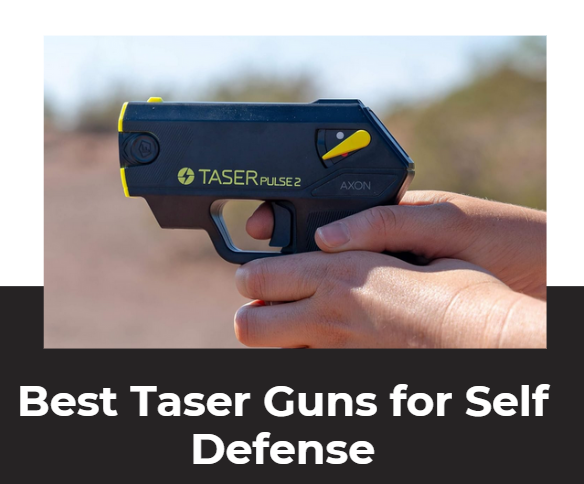
Looking for the best taser guns for self defense? If yes, then you are in the right place.
Personal safety is a crucial consideration in today’s world, and selecting the right self-defense options begins with understanding your needs, environment, and legal limitations.
This buying guide is designed to help you explore the key considerations when evaluating taser guns for self‑defense, including safety features, ease of use, reliability, and legal restrictions, so that you can make informed and responsible choices.
What Is a Taser Gun?
A taser gun is a conducted electrical weapon that delivers an electric charge to disrupt the body’s voluntary muscle control for a short period of time. Unlike impact-based self‑defense tools, a Taser gun is designed to stop an attacker by interfering with the nervous system rather than causing physical injury. Civilian Tasers are typically compact, handheld devices meant for personal protection, often incorporating safety features to reduce accidental discharge and misuse.
How Taser Guns Work
A taser gun works by sending an electrical signal that temporarily overrides the body’s ability to control muscles. When activated, the device delivers this signal through probes or direct contact, causing involuntary muscle contractions that limit movement.
The effect is intended to be short‑term, giving the user an opportunity to escape and seek safety rather than engage further. Importantly, Taser guns are designed for deterrence and escape, not prolonged confrontation.
Who Should Consider a Taser Gun?
Taser guns are versatile tools ideal for:
1. People Looking for Non‑Lethal Self‑Defense. If you want a self‑defense option that doesn’t rely on lethal force, a Taser gun can be appealing. It’s designed to temporarily incapacitate an attacker, giving you time to get away safely.
2. Those Who Want Distance from a Threat. As a taser gun can be used from several feet away, it’s often chosen by individuals who prefer to maintain space between themselves and a potential attacker. This distance reduces the risk of physical confrontation and help you escape danger more effectively.
3. People Who Are Often Alone or Travel Frequently. If you frequently walk alone, whether around a school campus, at night, or in unfamiliar locations, having a self‑defense option can boost your confidence and preparedness. Travelers, commuter students, and shift workers who walk in low‑light areas sometimes consider Tasers for peace of mind.
4. Those Comfortable with Responsible Use. Owning a Taser gun comes with responsibilities. You should be willing to learn how to use it safely, understand local laws and restrictions, and store it securely. If you’re committed to responsible ownership, including training and proper storage, a Taser gun might be a good choice.
5. Individuals Seeking an Alternative to Pepper Spray or Personal Alarms. Some people find that the best Tasers guns for self defense offer greater stopping power and reach than pepper spray or alarms. If you’ve considered other self‑defense tools and want something with more immediate impact, a Taser is worth exploring.
Best Taser Guns for Self Defense
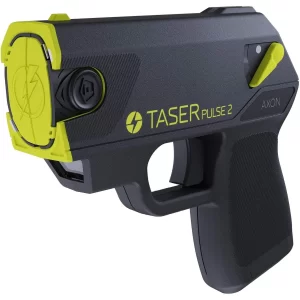
1) TASER Pulse 2 Less Lethal Compact Reloadable Shooting Stun Gun
Get it on the the home security superstore
The TASER Pulse 2 Less Lethal Compact Reloadable Shooting Stun Gun is the best taser gun for self defense. It designed for personal safety users who want a reliable, easy‑to‑carry self‑defense option without the complexity of traditional firearms.
Compact and lightweight, it fits comfortably in a purse, backpack, or glove compartment while still delivering the trusted stopping power TASER is known for.
Furthermore, the Pulse 2 fires probes that can temporarily disrupt muscle control on contact, helping stop a threat from a safe distance. Its ergonomic grip and intuitive trigger make it approachable for first‑time users, while the integrated laser aiming system helps improve accuracy under stress.
Another feature that sets the Pulse 2 apart is its focus on responsible ownership and ease of use. The device connects with a companion safety system that can alert emergency contacts when deployed, adding an extra layer of reassurance. A built‑in warning arc and loud crackle also acts as a visual and audible deterrent before firing.
Pros
- Compact and lightweight for everyday carry
- Less‑lethal option for personal self‑defense
- Laser aiming system improves targeting confidence
- Loud warning arc can deter threats without firing
- Rechargeable and reloadable design
- Safety connectivity features add peace of mind
Cons
- Limited range compared to some larger TASER models
- Single‑shot capability before reloading
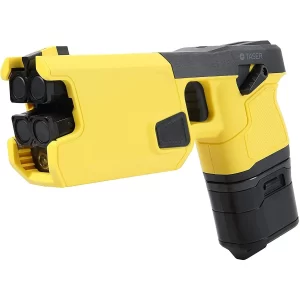
2) TASER 7 CQ Home Defense Shooting Stun Gun w/ Laser
Get it on the Home Security Superstore
Next Read: 7 Best Self Defense Tasers for Women
Key Features to Consider when Choosing the Best Taser Guns for Self Defense
When choosing the best taser guns for self defense, consider these key factors:
Stopping Power and Voltage Effectiveness
For starters, stopping power and voltage effectiveness are among the most important features to consider. While higher voltage helps penetrate clothing, what truly matters is the Taser’s ability to deliver consistent electrical output that disrupts muscle control long enough to allow you to escape. Reliable performance is more important than flashy numbers, especially in stressful, real‑world situations.
Range and Firing Distance
Furthermore, range and firing distance are critical, as they determine how far you can keep a potential threat away from you. Taser guns typically fire probes connected by wires, and models with longer effective ranges provide an added layer of safety by allowing you to defend yourself without close physical contact. A longer range can be especially valuable for outdoor use or low‑light environments.
Build Quality
Another key feature to look at is reliability and build quality. The best taser guns for self defense should be sturdy, well‑constructed, and capable of functioning properly when needed. Durable housing, strong probe deployment, and dependable internal components ensure the device works even if carried daily or stored for extended periods.
Ease of Use
Furthermore, ease of use and ergonomics play a major role, particularly for beginners. A taser gun should have a comfortable grip, intuitive controls, and a simple firing mechanism. In a high‑stress moment, you don’t want to struggle with complicated buttons or awkward handling, so a user‑friendly design is essential.
Power Source
Battery life and power source are also important considerations. Some taser guns use rechargeable batteries, while others rely on replaceable cartridges. A dependable power system ensures the device is always ready when you need it, and clear battery indicators help prevent unpleasant surprises during emergencies.
Safety Features
Next, safety features should never be overlooked when choosing a taser gun. Look for models with built‑in safety switches or mechanisms that reduce the risk of accidental discharge. These features are especially important if the device will be carried in a bag, purse, or vehicle alongside other personal items.
Size
Portability and size matter as well, particularly for everyday carry. Compact and lightweight taser guns are easier to conceal and more convenient to carry, making them more likely to be on hand when needed. A balance between power and portability ensures practicality without sacrificing effectiveness.
Legality
Finally, consider legal compliance and brand reputation. Laws regarding taser guns vary by location, so it’s important to choose a model that is legal where you live. Reputable brands often provide better quality control, warranties, and customer support, giving you greater confidence in your self‑defense choice.
Accessories and Extras
FAQs
Do taser guns cause permanent harm?
Most people consider taser guns non‑lethal self‑defense devices. When used as intended, they temporarily incapacitate a threat without causing lasting injury. Like any self‑defense tool, users should deploy them only when personal safety is at risk.
How far can a taser gun shoot?
Most consumer taser guns have an effective range between several feet and over ten feet, depending on the model. A longer firing range allows you to maintain distance from a potential threat, which is an important factor in personal safety.
Are taser guns legal everywhere?
No. Taser gun laws vary by country, state, or region. Some places restrict ownership, carrying, or use. It’s important to check local laws before purchasing to ensure you are complying with all legal requirements.
Is a taser gun easy for beginners to use?
Manufacturers design many taser guns with beginners in mind, giving them simple controls, ergonomic grips, and built‑in safety switches. Choosing a user‑friendly model can make a significant difference during stressful situations.
Conclusion
Hopefully, you have found this buying guide comprehensive. Choosing the best taser guns for self defense involves more than just looking at voltage or range. It’s about reliability, ease of use, safety, and legal compliance. Pay attention to key features like stopping power, ergonomics, battery life, and safety mechanisms to ensure you have a device that works effectively in emergencies.

Albert, the founder of Outdoormoran, is a dedicated outdoor enthusiast with a passion for delivering the most current, accurate, and easy-to-understand information on all different outdoor gear and optics. He shares his expertise with beginners by teaching the technical aspects of outdoor gear and optics through his comprehensive collection of guides.