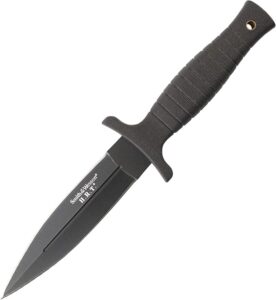
The Smith & Wesson 9″ H.R.T. Double Edged Boot Knife is the best tactical knife for self-defense.
Its high carbon stainless steel blade offers an excellent balance of hardness and corrosion resistance, ensuring long-lasting sharpness even with regular use. Furthermore, the double-edged spear-point design enhances penetration and versatility for defensive applications where quick, decisive performance matters.
At 9 inches overall, the knife provides a solid reach without feeling oversized, striking a practical balance between control and effectiveness. Additionally, the blackened finish reduces glare while adding an extra layer of protection against wear, reinforcing its tactical appeal.
Equally impressive is the knife’s handle design, which emphasizes grip security and user confidence. The textured handle scales provide a firm, non-slip hold, even in challenging conditions, while the integrated finger guard helps prevent the hand from sliding forward during use.
Pros
- High carbon stainless steel blade for long-lasting sharpness and durability
- Blackened finish reduces glare and protects against corrosion
- Textured handle ensures a secure, non-slip grip
- Integrated finger guard enhances safety during use
- Compact 9-inch size offers a good balance of reach and control
- Discreet and convenient carry
- Lightweight and easy to maneuver in tactical situations
Cons
-
The double-edged blade is not legal to carry in some regions
2) Smith & Wesson Accessories Extreme Ops SWA24S 7.1in S.S. Folding Knife
Get it on Amazon
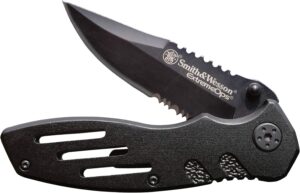
The Smith & Wesson Accessories Extreme Ops SWA24S is a robust folding knife designed for tactical use and everyday carry.
Its 7.1-inch stainless steel handle provides a solid and comfortable grip, making it easy to control during heavy-duty tasks. The 3.1-inch partially serrated clip point blade combines precision with cutting power, allowing users to tackle both fine slicing and tougher materials like rope or cardboard.
Furthermore, the knife’s folding mechanism is smooth and reliable. It offers quick deployment while maintaining safety when closed.
Regarding construction, the knife is built with durability in mind. Its stainless steel construction ensures the knife can withstand harsh conditions without compromising performance.
Beyond its rugged design, the SWA24S excels in portability and practicality. It features a secure locking system that prevents accidental closures, enhancing safety during use. Additionally, the lightweight frame, combined with a discreet pocket clip, makes it convenient for outdoor enthusiasts, first responders, and tactical users.
Pros
- Durable 7.1-inch stainless steel handle
- 3.1-inch partially serrated clip point blade for versatility
- Smooth and reliable folding mechanism
- Secure locking system for safe use
- Lightweight and portable with pocket clip
- Ergonomic handle reduces hand fatigue
Cons
-
Stainless steel requires regular maintenance to prevent minor corrosion
3) CRKT Minimalist Bowie Outdoor Survival Fixed Blade Knife with Sheath
Get it on Amazon
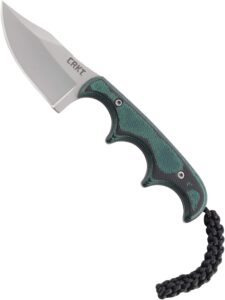
As one of the best tactical knives for self-defense, the CRKT Minimalist Bowie is a versatile and dependable option that’s compact, durable, and easy to carry.
Despite its small size, it boasts a strong, full-tang stainless steel blade that can handle a variety of tasks, from cutting rope and preparing kindling to food prep while camping. Furthermore, the blade’s drop-point design provides excellent control for precision work, while the razor-sharp edge ensures reliable performance even in tough conditions.
Its minimalist handle, typically made of durable synthetic materials, offers a secure grip without adding unnecessary bulk, making it easy to carry for extended periods. The knife also comes with a fitted sheath, allowing safe transport and quick access when needed.
Beyond its utility, the CRKT Minimalist Bowie stands out for its portability and balance. Weighing very little and fitting comfortably in a pocket or on a belt, it’s ideal for hikers, campers, and outdoor enthusiasts.
Pros
- Lightweight and highly portable
- Durable stainless steel blade with sharp edge
- Full tang design ensures strength and reliability
- Compact size ideal for outdoor activities and survival situations
- Secure sheath for safe carry and quick access
Cons
-
Small size limits heavy-duty chopping
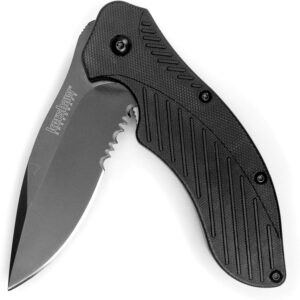
4) Kershaw Clash Black Serrated Pocketknife
Get it on Amazon
The Kershaw Clash Black Serrated Pocketknife is a compact, tactical folding knife designed for versatility and everyday carry.
Its 3-inch drop point blade is made from 8Cr13MoV stainless steel, offering a solid balance between edge retention and ease of sharpening.
Moreover, the blade features a partially serrated edge, making it suitable for cutting rope, fabric, and other tough materials while maintaining precision for finer tasks. The black-coated finish adds a sleek, tactical look and provides additional corrosion resistance for outdoor activities, camping, or emergency situations.
Regarding portability and convenience, the Kershaw Clash stands out. Its lightweight design makes it easy to carry in a pocket or attach with the reversible pocket clip. Besides, the opening mechanism is smooth, allowing quick one-handed deployment, which is essential for fast response scenarios.
Pros
- Lightweight and portable for everyday carry
- Partially serrated blade ideal for tough materials
- Smooth one-handed opening mechanism
- Durable 8Cr13MoV stainless steel with corrosion-resistant coating
- Ergonomic handle for secure grip
Cons
-
The black coating shows scratches over time
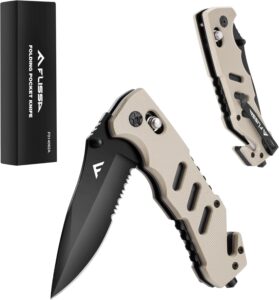
5) FLISSA Folding Pocket Knife
Get it on Amazon
When it comes to versatility, the FLISSA Folding Pocket Knife is hard to beat. The 3-in-1 design perfectly combines the pocket knife with Glass Breaker and Seatbelt Cutter, meeting a variety of daily uses and outdoor needs.
Its sleek folding design makes it easy to slip into a pocket or clip onto a belt, ensuring accessibility whenever you need it. Furthermore, the knife features a sturdy stainless steel blade that delivers reliable cutting performance for a range of tasks.
With a secure locking mechanism, the blade stays firmly in place during use, enhancing safety and control. Moreover, the ergonomic handle offers a comfortable grip, while the integrated clip provides convenient portability without the bulk of larger knives.
While the knife is lightweight, it doesn’t compromise on durability, and its overall design balances portability with functionality. Whether you’re an outdoor enthusiast, a driver looking for emergency preparedness, or someone who values a reliable everyday carry tool, this knife offers a solid mix of features and practicality.
Pros
- Compact and lightweight, easy to carry
- Integrated clip for convenient attachment
- Sturdy stainless steel blade for reliable cutting
- Includes glass breaker and seatbelt cutter for emergencies
- Secure locking mechanism for safe use
- Ergonomic handle for comfortable grip
Cons
-
The blade requires frequent sharpening with heavy use
Next Read: 7 Best EDC Knives for Self Defense
Key Factors to Consider when Choosing the Best Tactical Knives for Self-Defense
The key factors to take into consideration when buying a tactical knife for self-defense are:
Blade Length and Shape
Blade length is the first factor to consider as it plays a major role in balance, control, and legality. For self‑defense purposes, a blade that is neither too long nor too short offers better maneuverability and reduces the risk of losing control.
Common tactical blade shapes, such as drop point ortanto, are designed to provide strength at the tip and versatility for multiple tasks, which can be beneficial in high‑stress situations.
Blade Material and Steel Quality
Next, the type of steel used affects durability, edge retention, corrosion resistance, and maintenance. High‑quality stainless steels resist rust and require less upkeep, while high‑carbon steels often provide superior sharpness and strength. A reliable blade material ensures the knife remains functional over time, even with regular carry or exposure to moisture.
Full Tang vs. Partial Tang Construction
Tang construction refers to how far the blade extends into the handle. Full tang knives, where the blade runs through the entire handle, offer greater strength and stability. This design is generally preferred for tactical knives because it reduces the likelihood of breakage and improves overall durability during demanding use.
Handle Ergonomics and Grip
A secure, comfortable grip is critical for control and safety. The best tactical knives for self-defense should feature ergonomic handles that fit naturally in the hand and reduce fatigue. Textured materials such as rubberized polymers, G‑10, or Micarta help maintain grip even in wet or slippery conditions, which is essential for confident handling.
Fixed Blade vs. Folding Design
Choosing between a fixed blade and a folding knife depends on carry preference and accessibility. Fixed blade knives are typically stronger and faster to deploy, while folding knives are more compact and easier to carry discreetly. A folding knife should have a strong locking mechanism to prevent accidental closure during use.
Sheath or Carry System
Furthermore, a quality sheath or pocket clip greatly affects accessibility and safety. The best tactical knives for self-defense should include a secure carry system that allows quick access while keeping the blade safely stored. Features like adjustable belt clips, retention straps, or compatibility with different carry positions add convenience and reliability.
Weight and Balance
The overall weight and balance of a tactical knife influence how easily it can be handled. A well‑balanced knife feels natural in the hand and allows precise control without being overly heavy. In addition, lightweight designs are easier to carry daily, while still providing the strength needed for demanding situations.
Legal Considerations and Local Regulations
Last but not least, laws regarding knife carry vary by location and may restrict blade length, knife type, or carry method. It’s important to understand and follow local regulations when making a purchase. Selecting a knife that complies with the law ensures responsible ownership and avoids legal complications.
Tactical Knives for Self-Defense Maintenance Tips
-
Clean the blade regularly. Wipe the blade after each use to remove moisture, dirt, or residue. Occasional washing with mild soap and water helps prevent corrosion and buildup.
-
Lightly oil the blade. Apply a thin layer of knife oil or mineral oil to protect against rust, especially in humid environments or if the knife has a carbon steel blade.
-
Sharpen consistently. A sharp edge improves effectiveness and control. Maintain a consistent sharpening angle and touch up the blade before it becomes dull.
-
Inspect for damage. Check the blade, handle, screws, and hardware for cracks, looseness, or wear. Folding knives should be inspected to ensure the lock engages fully.
-
Maintain the handle and grip. Clean textured or rubberized handles to remove sweat and grime. This ensures a secure grip and reduces the risk of slipping during use.
-
Care for the sheath or carry system. Next, keep sheaths clean and dry, and regularly check retention to ensure the knife stays secure but can still be drawn smoothly.
- Store properly. When not in use store the knife in a dry, well‑ventilated area. Avoid long‑term storage in leather sheaths, as they can trap moisture and cause rust.
FAQs
- Are tactical knives legal for self‑defense?
Knife laws vary by country, state, and even city. Some areas restrict blade length, knife type, or how a knife may be carried. Always check local regulations before purchasing or carrying a tactical knife to ensure compliance with the law.
- What blade length is ideal for a tactical self‑defense knife?
Blades in the 3–6 inch range are the best to tactical self-defense knives. They balance control, portability, and effectiveness. Shorter blades are easier to carry discreetly, while longer blades may offer increased reach but could face legal limitations.
- What is the best handle material for a tactical knife?
G‑10, Micarta, and rubberized polymers are highly regarded because they provide a secure, non‑slip grip. These materials perform well in wet or sweaty conditions and improve overall control.
Conclusion
Choosing the best tactical knife for self‑defense requires careful consideration of multiple factors, including blade design, construction quality, ergonomics, and legal requirements.
A well‑chosen tactical knife should feel comfortable in your hand, offer dependable durability, and suit your preferred carry method. Focus on quality materials, thoughtful design, and responsible ownership, to find a tactical knife that provides confidence, reliability, and long‑term value.

Albert, the founder of Outdoormoran, is a dedicated outdoor enthusiast with a passion for delivering the most current, accurate, and easy-to-understand information on all different outdoor gear and optics. He shares his expertise with beginners by teaching the technical aspects of outdoor gear and optics through his comprehensive collection of guides.