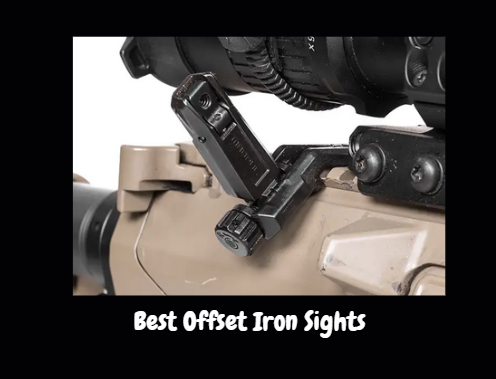
When it comes to enhancing versatility and speed on a rifle, I find offset iron sights to be a game-changer. The best offset iron sights provide me with the flexibility to quickly transition from my primary optic to backup sights with just a slight tilt of my rifle, making them perfect for dynamic shooting situations.
What makes them great is their reliability and ability to stay out of the way until I need them. Additionally, they are easy to install and simple to use.
In this guide, I’ll walk you through the best offset iron sights available, highlight their key features, share my top picks for different budgets and needs, and provide a detailed buying guide along with answers to common FAQs so you can choose the right set with confidence.
Why an Offset Iron Sight?
Here are the main advantages of using offset iron sights:
1. Fast Transition Between Optics and Irons. Offset iron sights allow shooters to quickly switch from their primary optic to backup sights with just a slight tilt of the rifle. This is especially useful if the main optic fails, fogs up, or becomes obstructed, ensuring you stay engaged without losing precious time.
2. Uninterrupted Use of Magnified Optics. Because offset sights are mounted at a 45-degree angle, they don’t interfere with scopes or magnifiers. You can keep a magnified optic zeroed for long-range shooting while relying on offset irons for close-range targets.
3. Clear Sight Picture. Offset iron sights avoid the clutter that sometimes comes with co-witnessing setups, where backup irons align directly with a red dot. By being off to the side, they give you a dedicated and uncluttered sight picture whenever you tilt the rifle to use them.
4. Reliability in Harsh Conditions. Since they are mechanical and don’t rely on batteries or electronics, offset iron sights provide a dependable backup option. Whether in rain, mud, or low-light conditions where optics may fail, offset irons give you a rugged and always-ready solution.
5. Ideal for Dynamic Shooting. Lastly, the best offset iron sights are popular in competitive shooting and tactical environments because they let you instantly switch between long-range precision and rapid close-range shots.
What to Look for in an Offset Iron Sight
When choosing an offset iron sight, here are the key things to look for:
1.Build Quality & Durability. Go for models made from rugged steel or aircraft-grade aluminum that can handle recoil, drops, and harsh conditions.
2. Mounting Compatibility. Ensure the sight fits your rifle’s rail system (usually Picatinny) and sits securely without shifting.
3. Profile & Weight. A low-profile and lightweight design prevents snagging and keeps your setup streamlined, especially when paired with optics.
4. Accuracy & Adjustability. Look for windage and elevation adjustments that hold zero consistently, even after repeated folding and deployment.
5. Ease of Use. Furthermore, smooth deployment and quick transitions from your optic to the offset sights are crucial for speed in dynamic shooting.
6. Crisp Sight Picture. Choose a sight that offers a clear aperture or post that works well with your vision, especially under fast target acquisition.
Best Offset Iron Sights
1) Magpul Industries MBUS Pro Offset Deployable Iron Sight
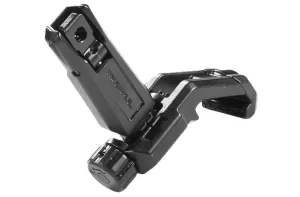
The Magpul Industries’ MBUS Pro Offset Deployable Iron Sight is the best offset iron sight.
Built for AR-platform rifles and optimized for AR-15 users, this right-handed front sight is designed for offset mounting on a Picatinny rail, providing shooters with a reliable backup option when using optics or magnified scopes. Additionally, it deploys quickly and locks solidly into place, making it an intuitive choice for shooters who need a dependable mechanical option behind their primary sighting system.
Construction and durability matter for backup iron sights, and this MBUS Pro delivers. The sight is made from steel, which provides toughness and long-term durability under heavy use. Furthermore, the black finish helps minimize glare and visual distraction.
The front post is a traditional post shape, familiar to most shooters and easy to align visually when switching from optic to iron. With its deployable design, the sight stows cleanly when not needed and deploys with a positive motion when a quick fallback is required.
Mounting and compatibility are also straightforward. Designed for Picatinny attachment, the MBUS Pro Offset fits most modern AR-platform setups without fuss. Moreover, the offset orientation places the sight at a 45-degree angle from the primary sighting plane, allowing shooters to acquire a co-witness or quickly transition between an optic and iron sights without changing cheek weld.
Pros
- Robust steel construction for durability and longevity
- Deployable design that stows out of the way but locks up quickly when needed
- Picatinny attachment for broad compatibility with modern rails
- Offset mounting orientation that enables fast transitions between optic and iron
- Traditional post shape and black finish for familiar, low-glare target acquisition
Cons
- Steel construction adds weight compared with lighter polymer alternatives
- Right-handed orientation may not suit left-handed shooters without sourcing a left-hand version
2) Troy Offset Deployable Iron Sight SSIG-45S-HRFT-00
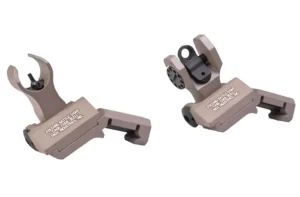
The Troy Offset Deployable Iron Sight SSIG-45S-HRFT-00 is a precision-engineered backup aiming device intended for AR-style platforms. It’s designed to provide a reliable secondary sighting option mounted at a 45° angle, allowing quick transitions without moving the main optic.
One notable feature is its deployable design. You can fold or deploy the sight as needed, keeping it out of the way when unused and rapidly bring it into position when required. The design ensures that mounting and stowing are simple and mechanical, minimizing interference with adjacent accessories.
Furthermore, the elevation and windage adjustments are included, so the sight can be zeroed independently from the primary optic. The detents for deploying are firm but not overly stiff, striking a balance between resistance to accidental deployment and ease of use under stress. The sight’s geometry and height are engineered to place the aiming point at a comfortable offset over closely mounted rails or accessories.
Construction quality is a strong suit. The materials and machining are precise, with tight tolerances and robust finish. The sight can stand up to shock, recoil, and rough handling without losing zero. The finish is corrosion-resistant, and the design sheds debris well.
Pros
- Excellent mechanical durability and resistance to wear and shock
- Folding / deployable action keeps the sight tucked when unused
- Good zero-hold and repeatability under recoil
- Independent elevation and windage adjustment for fine tuning
- Minimal parallax and clear aiming post
- Compatible with standard rail systems and co-exists with other accessories
Cons
- Adds extra bulk to the rail system and may incrementally shift balance
- Deploy / stow detents might stiffen slightly over long use
3) Troy 45 Degree Folding Battle Sights HK Front/Round Rear Iron Sights
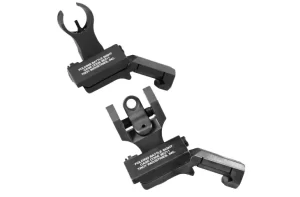
Next, we have the Troy 45 Degree Folding Battle Sights with HK-style front and round rear. These sights are a reliable choice for shooters who want quick target acquisition when switching from optics to backup iron sights.
Designed to mount at a 45-degree offset, the sights allow you to tilt your rifle slightly and instantly engage with iron sights without removing your scope or red dot. Their folding design keeps them low-profile when not in use, and they deploy smoothly when needed, making them highly practical for both tactical and recreational shooting.
Furthermore, the construction is solid, with an all-metal build that ensures long-term durability. Troy is well known for its precise machining, and this model maintains that standard, offering a secure fit and consistent alignment.
The HK-style front sight post is enclosed in a protective hood, giving a clear sight picture while also guarding the post from potential damage. The round rear aperture provides a clean and intuitive view, which helps with faster alignment under pressure.
Another strength of these sights is their compatibility with standard Picatinny rails, allowing them to be installed easily on a wide variety of rifles. Their offset angle makes them useful for shooters who run magnified optics but want a rapid close-quarters backup solution.
Above all, the folding mechanism locks firmly in place, preventing accidental deployment or collapse during use, which adds to the overall reliability of the system.
Pros
- Durable all-metal construction built to last
- Quick transition between optics and iron sights
- Protective hooded HK-style front sight for improved durability
- Round rear aperture offers a clean sight picture
- Easy installation on Picatinny rails
- Low-profile folding design stays out of the way when not needed
Cons
- Higher price compared to budget offset sights
4) Magpul Industries MBUS Pro Offset Deployable Iron Sight
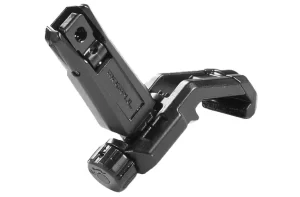
The Magpul MBUS Pro Offset is a deployable iron sight designed to be mounted at a 45° angle beside primary optics.
In many setups it serves as a backup in configurations where a secondary sight is needed without obstructing the main optic’s field of view. Its design emphasizes compactness, ruggedness, and precision.
One notable feature is the sight’s low profile when stowed. When folded, it sits close to the rail, minimizing snag risks. When deployed, it flips into place quickly, allowing fast transitions. The deployment mechanism is spring-assisted and smooth, so it feels positive and crisp.
Regarding construction, the sight is machined from aluminum and finished with a durable anodized surface. The materials and construction feel premium. The aperture is small enough to offer precise aiming, while still usable for quick acquisition when necessary.
Above all, it is easy to install and the adjustments for elevation and windage are built in. The clicks are tactile and incremental, which helps with zeroing and repeatability.
Pros
- Compact stowed profile reduces snagging and keeps clearance tight
- Crisp, positive deployment mechanism that locks securely
- Precise, tactile adjustment for windage and elevation
- Durable aluminum construction with protective finish
- Lightweight and minimal addition to overall weight
- Maintains zero under recoil and repeated use
- Offset orientation enables smooth transitions from main optic
Cons
- The aperture might be too small for shooters favoring very fast, instinctive sighting
- Offset mounting consumes rail space or may require repositioning of other accessories
5) Leapers UTG ACCU-SYNC Offset Deployable Iron Sight
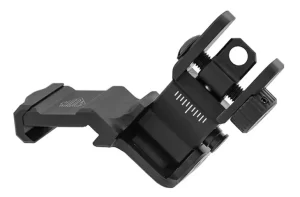
As one of the best offset iron sights, the Leapers UTG ACCU-SYNC Offset Deployable Iron Sight is designed to serve as a backup or supplementary aiming solution when mounted off the central axis of a Picatinny rail, typically at 45° angles.
It folds down when not in use and deploys quickly when needed, giving operators the flexibility to switch between optics and iron sights without major adjustments. Furthermore, the sight rotates or swings out into position from its folded state, making it fast to bring into use when the primary optic fails or is obscured.
Its folding mechanism is solid enough to hold zero through repeated cycles and the adjustment knobs for windage and elevation are tactile and offer crisp clicks, so fine tuning is more manageable than many generic backup sights.
Another feature is the material and finish. The body is constructed of aircraft-grade aluminum to reduce weight while maintaining strength. The finish resists wear and corrosion, which is critical in harsh environments.
Pros
- Good deployment speed and solid folding mechanism
- Adjustable windage and elevation with crisp tactile feedback
- Lightweight aluminum construction with durable finish
- Compatible with standard offset mounting positions
- Low profile when stowed, minimal snagging
Cons
- Not as precise or sharp as high-end aperture sights
- Small sight window may feel cramped under stress
6) GG&G Transition Offset Fixed Iron Sight
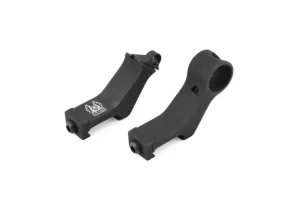
The GG&G Transition Offset Fixed Iron Sight stands out as a durable and dependable option for shooters who prefer a fixed offset sighting system.
Designed for rapid transitions, this sight allows you to switch from your primary optic to iron sights with a simple tilt of your rifle. Its fixed design ensures there is no need for deployment, making it faster and more reliable in scenarios where split-second accuracy matters.
Construction-wise, it is built from high-strength aluminum. The solid construction provides both ruggedness and a lightweight profile. Furthermore, the finish resists wear and harsh environmental conditions, ensuring consistent performance in the field.
Another key advantage is its compatibility with a wide range of rifles and optics setups. The sight maintains a low profile when mounted, preventing unnecessary bulk on your rail. Its fixed configuration eliminates moving parts, which not only improves durability but also ensures it holds zero even after heavy use.
Above all, the offset angle is carefully engineered to deliver a natural sight picture when transitioning, reducing the learning curve for shooters new to offset systems.
Pros
- Durable aluminum construction that withstands recoil and harsh use
- Fixed design ensures immediate readiness without flipping or adjusting
- Reliable zero retention even after extended shooting sessions
- Smooth and natural transition angle for quick sight alignment
- Lightweight and low-profile build that minimizes rail clutter
Cons
- Lacks the foldable feature offered by some competing models
- Fixed offset may not appeal to those who prefer a more streamlined rail setup
7) Tiger Rock Tactical 45 Degree Offset Fixed Iron Sight
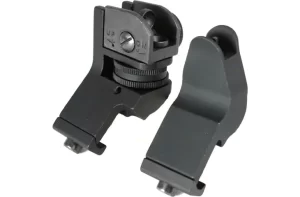
The Tiger Rock Tactical 45 Degree Offset Fixed Iron Sight offers a dependable option for shooters looking to upgrade their AR-15 setup with a reliable backup sighting system.
Constructed from 6061-T6 aluminum, the Tiger Rock sights strike a balance between strength and lightweight performance. The material ensures they can withstand regular use and handling while keeping weight down, an important consideration for anyone who spends extended time carrying or maneuvering their rifle. Besides, the non-reflective matte black finish adds a professional look while preventing glare in different lighting conditions.
Unlike flip-up designs, the Tiger Rock sights remain fixed in place at a 45-degree offset. This design choice eliminates an extra step in the transition process, making them faster and more intuitive to use. Simply tilt the rifle slightly and you’re instantly on target with the irons, making them a solid choice for shooters who prioritize speed and simplicity.
Furthermore the sights attach easily to Picatinny or Weaver style rails, ensuring wide compatibility with many AR-15 configurations. Both front and rear units are fully adjustable for windage and elevation, allowing you to dial in accuracy to match your needs. This combination of adjustability and fixed positioning makes them versatile across a variety of shooting scenarios.
Pros
- Durable 6061-T6 aluminum construction
- Lightweight design suitable for extended use
- Fixed 45-degree offset allows fast transitions without flipping sights
- Non-reflective matte black finish reduces glare
- Compatible with Picatinny and Weaver style rails
- Fully adjustable for windage and elevation
Cons
- Fixed design may not appeal to those who prefer flip-up sights
- Not as low-profile as folding alternatives
8) TacFire 45 Degree Offset Fixed Iron Sight
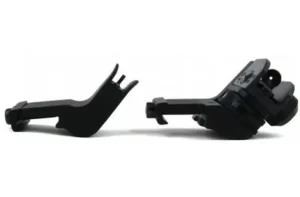
The TacFire 45 Degree Offset Fixed Iron Sight is our last recommendation for the best offset iron sights. It offers a dependable and straightforward solution for shooters who want a reliable backup to their primary optic.
Designed for quick transitions, these fixed sights mount securely at a 45-degree angle, giving you an immediate alternative sighting system without needing to remove your main scope or red dot. As such, they are useful in dynamic shooting scenarios where speed and versatility matter most.
Regarding construction, the sights are built from durable aluminum alloy. They deliver solid balance between strength and weight. Furthermore, the fixed design eliminates moving parts, reducing the risk of failure in demanding conditions.
The low-profile construction ensures they won’t interfere with your primary optic setup, while the 45-degree cant allows for a natural tilt of the rifle when switching to irons. The standard height alignment makes them compatible with most rifles, providing consistent performance out of the box.
The simplicity of these sights is also part of their appeal. Unlike flip-up models, there is no need to deploy or fold them during use. They are always ready, offering peace of mind in situations where every second counts. Their straightforward adjustment system also makes it easy to zero for accurate shots at short to mid-range distances.
Pros
- Rugged aluminum construction ensures durability
- Always ready due to fixed design with no deployment needed
- Quick transition from primary optic to backup sights
- Lightweight and low-profile design
- Affordable price point for budget-conscious shooters
Cons
- Lacks the flexibility of foldable or adjustable models
- May not suit those who prefer a clutter-free rail setup
Next Read: 7 Best Flip Up Iron Sights
Factors to Consider when Choosing the Best Offset Iron Sights
Build Quality and Durability
The best offset iron sights must endure recoil, field conditions, and frequent handling. Strong materials such as steel or aircraft-grade aluminum ensure the sights resist bending, cracking, or loosening. A protective finish also safeguards them against rust, scratches, and long-term wear, which is especially valuable in outdoor or tactical environments.
Ease of Deployment
The ability to quickly flip or transition to offset sights can be crucial in high-pressure moments. Smooth deployment systems that engage easily without snagging or delay provide reliability. Whether the sights are fixed or flip-up, their operation should feel intuitive and fast.
Compatibility with Rail Systems
Furthermore, the sights should mount securely to common rail types such as Picatinny, without the need for modifications. Compatibility makes installation straightforward and allows the shooter to use the sights across multiple rifles. This adaptability provides both convenience and long-term value.
Adjustability for Accuracy
Accurate shooting requires precise adjustments for windage and elevation. Quality offset sights offer clear, tactile adjustment mechanisms that maintain zero over time. This stability ensures reliable performance even after extensive use, transportation, or repeated deployment.
Low-Profile Design
Next, compact, unobtrusive sights minimize bulk and avoid interference with optics or accessories. Low-profile designs reduce snag risks and improve overall handling. By staying out of the way until needed, they offer efficiency without adding unnecessary weight or clutter.
Sight Picture and Visibility
Fast and accurate target acquisition depends on a clear sight picture. The best offset sights should provide well-designed apertures and crisp alignment for reliable visibility under various lighting conditions. A balanced design helps shooters transition from rapid, close-range engagements to more precise shots at medium ranges.
Ergonomics and Shooter Comfort
Moreover, the angle and placement of offset sights must feel natural to use. Ergonomically sound designs prevent awkward head tilts or strained shooting postures. Smooth edges and a comfortable setup enhance ease of use while reducing fatigue during longer shooting sessions.
Weight and Balance
Lastly, consider weight and balance. Lightweight sights help maintain a rifle’s natural balance and maneuverability. Excess weight on the rail can affect handling, particularly in rapid-fire or tactical situations. A good pair of offset sights adds minimal bulk while preserving durability and performance.
FAQs
- What are offset iron sights used for?
Offset sights act as backup aiming systems, typically mounted at a 45-degree angle. This allows quick transition from primary optics if they fail or become impractical at close range.
- Do offset iron sights work with scopes or red dots?
Yes. Offset sights are designed to complement optics, providing a reliable alternative when magnified or electronic sights are unsuitable.
- Can offset sights be used for long-range shooting?
No. Offset sights are best suited for close to mid-range engagements. For long distances, primary optics provide greater precision, while offset sights serve as a fast, secondary aiming option.
Conclusion
To wrap it up, offset iron sights stand out as a practical solution for shooters who want fast target transitions without removing their primary optic. Their angled design allows quick switching between optics and irons, making them especially useful in dynamic shooting environments.
Built for durability, reliability, and versatility, these sights ensure dependable backup performance in case optics fail.
For the best overall pick, the Magpul Industries MBUS Pro Offset Deployable Iron Sight deliver excellent construction, precision, and ease of use.
For those on a budget, the Leapers UTG ACCU-SYNC Offset Deployable Iron Sight offer affordability without sacrificing performance.
Meanwhile, shooters seeking a premium option will find the Troy 45 Degree Folding Battle Sights HK Front/Round Rear Iron Sights a top choice, thanks to their rugged build and professional-grade reliability.

Albert, the founder of Outdoormoran, is a dedicated outdoor enthusiast with a passion for delivering the most current, accurate, and easy-to-understand information on all different outdoor gear and optics. He shares his expertise with beginners by teaching the technical aspects of outdoor gear and optics through his comprehensive collection of guides.