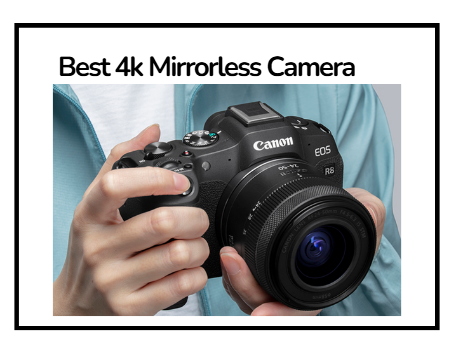
In this guide, we take a close look at the best 4K mirrorless cameras and explain why they have become a top choice for photographers and video creators alike.
I will focus on how these cameras combine excellent image quality, advanced autofocus, compact designs, and powerful video features to deliver professional-looking results without the bulk of traditional systems.
Throughout this article, I will cover the key features that matter most in a 4K mirrorless camera, highlight top-performing options for different shooting styles, provide a clear buying guide to help you choose with confidence, and answer common questions so you know exactly what to expect before making a decision.
Here is a summary of the Best 4k Mirrorless Cameras:
- Canon EOS R100 Mirrorless Camera – Best budget-friendly entry-level 4K mirrorless camera – Get it on Amazon
- Sony Alpha 7 IV Full-frame Mirrorless Interchangeable Lens Camera – Best premium hybrid camera for photography and video – Get it on Amazon
- Sony Alpha ZV-E10 APS-C Interchangeable Lens Mirrorless Vlog Camera – Best 4K mirrorless camera for vlogging and content creation – Get it on Amazon
- Fujifilm X-S20 Mirrorless Digital Camera – Best overall balance of performance, portability, and advanced video features – Get it on Amazon
- Panasonic LUMIX G7 4K Digital Camera – Best affordable 4K camera for manual control and learning video basics – Get it on Amazon
- Sony Alpha a6400 Mirrorless Camera – Best compact 4K mirrorless camera with fast autofocus and action performance -Get it on Amazon
Best 4k Mirrorless Cameras
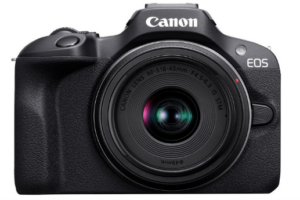
1) Canon EOS R100 Mirrorless Camera
Get it on Amazon
The Canon EOS R100 Mirrorless Camera earns its place among the best 4K mirrorless cameras for beginners by combining strong image quality, modern autofocus, and a highly portable design at an accessible price. Built around a 24.1-megapixel APS-C CMOS sensor and powered by the DIGIC 8 image processor, it delivers detailed stills with pleasing background blur and natural color, outperforming smartphones and many compact cameras with ease.
Designed with mobility in mind, the EOS R100 is the smallest and lightest body in the EOS R series. Its compact mirrorless form factor makes it ideal for travel, everyday photography, and casual video work, while the comfortable grip provides a steady and confident shooting experience.
The Canon RF mount also opens the door to a growing lineup of interchangeable lenses, allowing users to expand creatively over time.
For video, the EOS R100 offers solid 4K recording at up to 24 frames per second, along with Full HD video at 60 fps and HD recording at up to 120 fps for smooth slow-motion footage.
This makes it a practical 4K camera for entry-level content creators who want higher resolution video without the complexity or cost of advanced cinema-focused models.
Autofocus performance is another strong point. Dual Pixel CMOS AF covers a wide area of the frame and supports human face and eye detection, along with animal and vehicle detection.
This system ensures fast, accurate focus for both stills and video, while continuous shooting at up to 6.5 frames per second helps capture fleeting expressions and action moments.
The EOS R100 is also well equipped for modern connectivity and usability. A high-precision 0.39-inch OLED electronic viewfinder with approximately 2.36 million dots allows precise composition, while Silent Mode enables discreet shooting in quiet environments.
Pros
- 24.1MP APS-C CMOS sensor delivers sharp images with natural background blur
- Compact and lightweight body ideal for travel and everyday use
- Reliable Dual Pixel CMOS AF with face, eye, animal, and vehicle detection
- 4K video recording with Full HD and high-frame-rate HD options
- Canon RF lens compatibility with room to grow
- Built-in Wi-Fi and Bluetooth for easy sharing and remote control
Cons
- 4K video limited to 24 fps
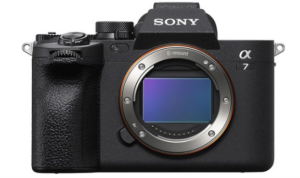
2) Sony Alpha 7 IV Full-frame Mirrorless Interchangeable Lens Camera
Get it on Amazon
The Sony Alpha 7 IV stands out among the best 4K mirrorless cameras by delivering a refined balance of high-resolution photography and advanced video performance. It uses a 33-megapixel full-frame back-illuminated Exmor R CMOS sensor that produces detailed images with excellent color accuracy, strong low-light performance, and a wide dynamic range exceeding 15 stops.
This makes it well suited for everything from landscape and portrait work to demanding commercial shoots.
Image processing is handled by the next-generation BIONZ XR engine, offering up to eight times more processing power than previous generations. This boost enables faster sensor readout, reduced rolling shutter, improved color reproduction, and responsive camera operation.
The processing power also supports advanced image recognition and autofocus calculations in real time, resulting in smooth performance for both stills and video.
Video capabilities are a major strength of the Alpha 7 IV. It records up to 4K at 60 frames per second with 10-bit 4:2:2 color sampling using full pixel readout, delivering rich color depth and flexibility for post-production.
For 4K at 30p and 24p, the camera uses 7K oversampling without pixel binning, producing highly detailed footage with minimal artifacts. This level of video quality places it firmly in the professional hybrid category.
Color science is enhanced through the S-Cinetone profile, which provides natural skin tones, soft color transitions, and pleasing highlights inspired by Sony’s professional cinema cameras.
This allows creators to achieve a cinematic look straight out of the camera while still retaining room for grading when needed.
Autofocus performance is equally impressive. The Alpha 7 IV features a fast hybrid AF system with 759 phase-detection and 425 contrast-detection points covering approximately 94 percent of the image area.
Real-time Eye AF works reliably for humans, animals, and birds, even when subjects are not facing the camera directly. Touch Tracking makes it easy to lock onto and follow subjects smoothly during both photo and video recording.
Pros
- High-resolution 33MP full-frame sensor with excellent dynamic range
- Advanced 4K video with 10-bit 4:2:2 recording and 7K oversampling
- Powerful BIONZ XR processor for fast performance and low latency
- Accurate and reliable Real-time Eye AF for people, animals, and birds
- Natural cinematic color with S-Cinetone profile
Cons
- Menu system may feel complex for new users
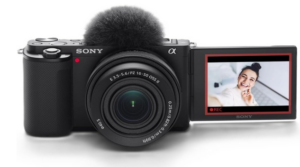
3) Sony Alpha ZV-E10 – APS-C Interchangeable Lens Mirrorless Vlog Camera
Get it on Amazon
The Sony Alpha ZV-E10 earns its place among the best 4K mirrorless cameras by delivering high-quality video and stills in a compact, creator-focused design. Built around a 24.2-megapixel APS-C Exmor CMOS sensor and powered by the fast BIONZ X image processor, it produces sharp images with pleasing depth of field, clean low-light performance, and natural color.
The larger sensor size compared to typical compact cameras gives vloggers and photographers more creative control over background blur and overall image quality.
Video performance is a major strength of the ZV-E10. It records 4K movies oversampled from 6K using full pixel readout without pixel binning, resulting in detailed footage with reduced noise and improved clarity. This makes it well suited for YouTube content, travel videos, and everyday filmmaking.
The camera also supports a wide range of aspect ratios and file formats, giving creators flexibility in how their content is captured and shared.
Sony has tailored the ZV-E10 specifically for vlogging and online content creation. The Product Showcase Setting smoothly shifts focus from a presenter’s face to an object held in front of the camera, making it ideal for reviews and demonstrations.
A dedicated Background Defocus button allows instant switching between a sharp background and a softly blurred look, helping users achieve a professional visual style without manual adjustments.
Ease of use extends beyond recording. The vari-angle flip-out LCD makes framing simple when filming solo, while built-in audio support and external microphone compatibility improve sound quality.
Live streaming is also straightforward, requiring only a single USB cable and no additional hardware or software, making the ZV-E10 an accessible option for creators who want to go live quickly and reliably.
Pros
- 24.2MP APS-C sensor delivers sharp images and strong background separation
- Detailed 4K video oversampled from 6K with full pixel readout
- Creator-friendly features like Product Showcase and Background Defocus
- Interchangeable Sony E-mount lens system for creative flexibility
- Simple USB live streaming without extra equipment
Cons
- No electronic viewfinder
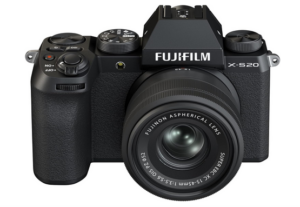
4) Fujifilm X-S20 Mirrorless Digital Camera
Get it on Amazon
The Fujifilm X-S20 secures its position among the best 4K mirrorless cameras by combining strong performance, advanced video features, and excellent portability. Weighing just 491 grams, it is easy to carry while still offering a deep, comfortable handgrip that provides confident handling, even when paired with larger lenses.
The 26.1-megapixel APS-C X-Trans CMOS 4 sensor delivers detailed images with Fujifilm’s renowned color science, producing vibrant yet natural results straight out of the camera.
Paired with the X-Processor 5 imaging engine, the X-S20 offers fast and responsive performance for both photography and video. Continuous shooting reaches up to 20 frames per second using the electronic shutter, making it suitable for capturing action and fleeting moments. Autofocus performance benefits from a new algorithm that brings advanced subject detection to the X-S series, allowing reliable tracking of people and other subjects with minimal effort from the user.
Image stability is a key strength of the X-S20. Its five-axis in-body image stabilization system has been improved to provide up to seven stops of compensation, helping reduce camera shake during handheld shooting and low-light photography. This makes the camera especially appealing for creators who shoot on the move or prefer working without additional stabilization equipment.
Video creators will find the X-S20 highly capable. It supports internal recording of up to 6.2K at 30p in 4:2:2 10-bit color, as well as smooth 4K recording at up to 60p. A dedicated Vlog mode simplifies content creation by enabling quick background defocus and easy product focus during presentations or unboxing videos.
The vari-angle touchscreen allows flexible framing, while extensive connectivity options, including USB-C streaming and microphone and headphone jacks, support professional workflows.
Battery life has also seen a major improvement. The upgraded NP-W235 battery allows up to 750 frames in normal mode and up to 800 frames in economy mode, reducing downtime and making the X-S20 more reliable for extended shoots and travel.
Pros
- Excellent 26.1MP image quality with Fujifilm color science
- Advanced autofocus with subject detection and fast tracking
- Strong video capabilities with 6.2K and 4K 60p recording
- Effective in-body image stabilization with up to seven stops
- Long battery life for extended shooting sessions
Cons
- No weather sealing
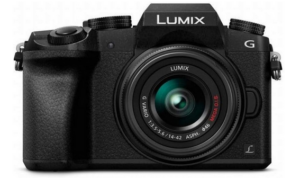
5) Panasonic LUMIX G7 4K Digital Camera
Get it on Amazon
The Panasonic LUMIX G7 earns its place among the best 4K mirrorless cameras by offering dependable photo and video performance in a compact and affordable Micro Four Thirds body. It features a 16-megapixel sensor without a low-pass filter, allowing it to capture sharp images with strong detail, good dynamic range, and clean results with minimal artifacts.
This makes the camera a solid option for photographers and videographers who want quality results without stepping into higher-priced professional systems.
Video recording is a core strength of the LUMIX G7. It supports 4K QFHD video recording at 3840 x 2160 resolution, delivering crisp footage suitable for content creation, travel videos, and casual filmmaking.
Panasonic’s 4K Photo modes add extra creative flexibility by allowing users to extract high-resolution still images from 4K video recorded at 30 frames per second, making it easier to capture split-second moments that might otherwise be missed.
The G7 is designed with hands-on control in mind. Front and rear dials allow quick adjustment of aperture and shutter speed, while white balance and ISO can be changed easily on the fly.
Customization is extensive, with multiple function buttons that can be assigned to frequently used settings, giving photographers and videographers efficient control during shooting sessions.
Framing and monitoring are handled by a high-resolution OLED electronic viewfinder with approximately 2.36 million dots and a 3-inch touch-enabled LCD that tilts and swivels.
Both displays remain clear even in bright outdoor conditions, supporting accurate composition and comfortable shooting from a variety of angles.
Connectivity and expandability round out the package. Built-in Wi-Fi allows for wireless image transfer and remote camera control, while ports for an external microphone, remote release, USB, and micro HDMI support more advanced video setups. Compatibility with fast UHS-I and UHS-II SD cards ensures reliable recording of high-resolution 4K footage.
Pros
- Sharp image quality from a 16MP Micro Four Thirds sensor
- Reliable 4K video recording with useful 4K Photo modes
- Intuitive manual controls with strong customization options
- High-resolution electronic viewfinder and flexible touchscreen LCD
- External microphone support and solid connectivity options
Cons
- No in-body image stabilization
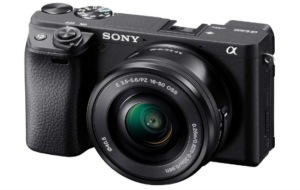
6) Sony Alpha a6400 Mirrorless Camera
Get it on Amazon
The Sony Alpha a6400 earns recognition as one of the best 4K mirrorless cameras thanks to its balance of speed, image quality, and compact design. It is built to suit photographers and videographers who need reliable performance in a lightweight body.
The camera delivers crisp, detailed imagery with pleasing color reproduction, making it suitable for everyday shooting, travel, and creative projects.
Image capture is supported by a fast sensor and processing pipeline that enables up to 11 frames per second continuous shooting while maintaining accurate focus and exposure.
This responsiveness makes the a6400 well suited for action, street photography, and moments that unfold quickly. The metering system uses a wide evaluative zone layout to help ensure consistent exposure across varied lighting conditions.
Autofocus performance is a major strength. With 425 phase-detection and 425 contrast-detection points covering approximately 84 percent of the sensor area, the camera maintains confident subject tracking across most of the frame. This wide coverage improves reliability when composing off-center subjects and supports smooth focus transitions for video recording.
Video capabilities add to its appeal as a 4K mirrorless option. The a6400 supports a variety of creative movie functions, including time-lapse and slow or quick motion recording without the need for post-processing. These features allow creators to produce dynamic content efficiently, whether filming short clips or longer-form projects.
Usability is enhanced by a tiltable LCD screen that adapts well to vlogging, still photography, or professional-style video recording.
The included accessories, such as a rechargeable battery, AC adapter, and shoulder strap, make it ready to use out of the box, while its compact form factor keeps it easy to carry throughout the day.
Pros
- Fast continuous shooting with reliable autofocus tracking
- Wide autofocus coverage for flexible composition
- Useful built-in video functions for creative filming
- Compact and lightweight body suitable for travel and vlogging
- Tiltable LCD screen for flexible framing
Cons
- Lacks in-body image stabilization
Next Read: 10 Best Sony Mirrorless Cameras
Factors to Consider when Choosing the Best 4k Mirrorless Cameras
When choosing the best 4K mirrorless camera, several core factors determine how well the camera will meet your photography and video needs.
Sensor Size and Image Quality
Sensor size directly affects image detail, dynamic range, low-light performance, and depth of field control. Larger sensors generally capture more light, producing cleaner images with less noise and more natural background blur.
Resolution also matters, as higher megapixel counts allow for sharper stills and greater flexibility when cropping, while good color science ensures pleasing results straight out of the camera.
4K Video Quality and Recording Options
Not all 4K video is equal. Important factors include frame rates, color depth, and how the camera reads data from the sensor. Oversampled 4K footage usually appears sharper and cleaner, while higher frame rates allow smoother motion and slow-motion effects. Support for advanced color sampling and higher bit depth provides more flexibility for editing and color grading.
Image Processor Performance
The image processor influences how quickly and efficiently the camera handles data from the sensor. A powerful processor enables faster autofocus calculations, reduced rolling shutter, improved noise control, and smoother overall operation.
It also supports advanced video features and helps maintain responsiveness during continuous shooting or long recording sessions.
Autofocus Speed and Accuracy
Autofocus performance is crucial for both stills and video, especially when tracking moving subjects. A wide autofocus coverage area improves composition freedom, while intelligent subject detection helps maintain focus on people, animals, or other moving elements. Reliable autofocus reduces missed shots and improves confidence during fast-paced shooting.
Image Stabilization
Image stabilization plays a major role in achieving sharp images and smooth video, particularly when shooting handheld. In-body stabilization helps counter camera shake across multiple axes, while lens-based stabilization adds further support.
Effective stabilization is especially valuable in low-light conditions and during video recording without external support equipment.
Ergonomics and Ease of Use
Comfortable handling and intuitive controls make a significant difference during long shooting sessions. A well-designed grip, accessible dials, customizable buttons, and a responsive touchscreen help users adjust settings quickly.
A flexible display also supports creative angles, self-recording, and efficient workflow for both photography and video.
Video and Audio Connectivity
Connectivity options determine how easily a camera integrates into a professional or creator workflow. Support for external microphones and headphones improves audio quality, while HDMI and USB connections enable monitoring, recording, or live streaming.
Wireless connectivity allows quick file transfer, remote control, and efficient sharing to mobile devices or cloud services.
Battery Life and Portability
Battery performance affects how long you can shoot without interruption, which is especially important for video recording and travel use.
A camera that balances strong battery life with a lightweight, compact body is easier to carry and more practical for everyday shooting. Efficient power management reduces downtime and supports longer creative sessions.
Best 4k Mirrorless Cameras FAQs
What makes a mirrorless camera good for 4K video recording?
A good 4K mirrorless camera combines high-quality sensor readout with strong processing power to produce sharp, detailed footage. Important elements include oversampled 4K recording, support for higher frame rates, good color depth, and minimal rolling shutter. Reliable autofocus and effective heat management also play a key role in maintaining consistent video quality during longer recordings.
Is a 4K mirrorless camera suitable for both photography and video?
Yes, many 4K mirrorless cameras are designed as hybrid tools that perform well for both still photography and video. They typically offer high-resolution sensors, fast continuous shooting, advanced autofocus systems, and professional video features. This makes them ideal for users who want one camera for photos, vlogging, content creation, and filmmaking.
Do beginners need advanced 4K features like 10-bit recording and log profiles?
Beginners do not necessarily need advanced 4K features to get excellent results. Standard 4K recording with good autofocus and stabilization is often more than enough for learning and everyday content creation. Advanced features such as higher bit depth and log profiles become more useful as users gain experience and want greater flexibility for color grading and professional-level editing.
Final Thoughts

Albert, the founder of Outdoormoran, is a dedicated outdoor enthusiast with a passion for delivering the most current, accurate, and easy-to-understand information on all different outdoor gear and optics. He shares his expertise with beginners by teaching the technical aspects of outdoor gear and optics through his comprehensive collection of guides.